


Fate of 133 ordinances: The 30-day test of the new parliament


When the interim government assumed office following the upheaval of July-August 2024, it took on a nation still trembling from shock. Institutions were fragile, the bureaucracy uncertain, and public expectations overwhelming. Citizens demanded justice, reform, and visible change, and they demanded them quickly. In such moments, governments instinctively reach for speed. Constitutionally, speed comes in the form of ordinances.
Article 93 of the constitution allows the president to promulgate ordinances when parliament is not in session and when “circumstances exist which render immediate action necessary.” The provision exists for instability and vacuum—it is a constitutional safety valve. But it is also limited. Ordinances cannot amend the constitution. They cannot override constitutional prohibitions, and they are inherently temporary.
 For all latest news, follow The Daily Star's Google News channel.
 Over the 18 months of the interim government, 133 ordinances were issued. The number is significant enough to prompt reflection: were there truly 133 instances of urgent necessity? Or did urgency gradually evolve into a governing habit? The interim authorities may argue, reasonably, that extraordinary circumstances required rapid intervention. Yet, constitutional systems are defined not only by how they respond to crises but also by how they restore normalcy afterwards. That restoration now begins.
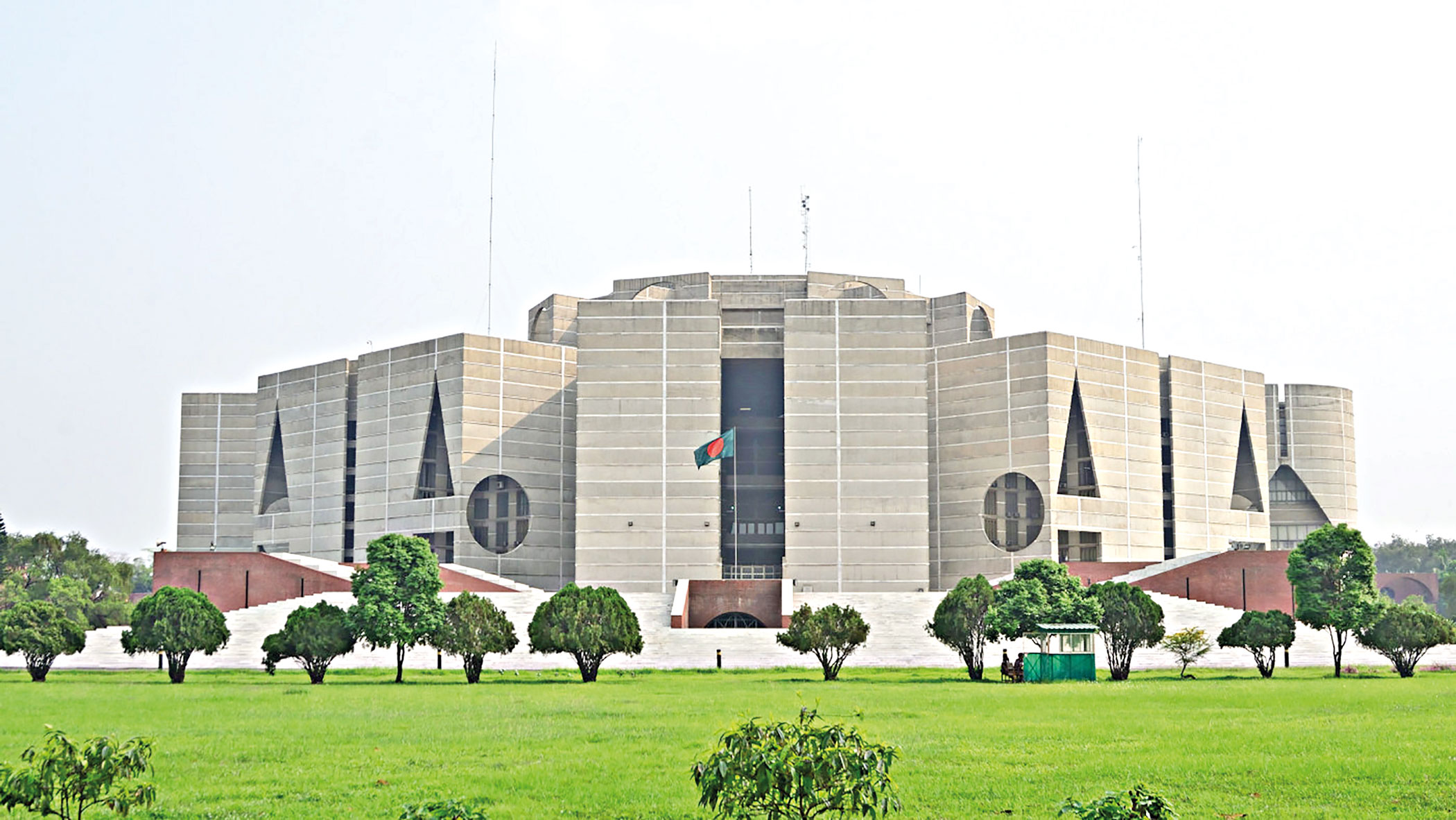
On March 12, when the 13th parliament convenes, every ordinance must be laid before it. From that first sitting, a 30-day clock begins. Under Article 93(2), unless parliament approves an ordinance within that period, it automatically ceases to have effect. No dramatic vote is required. No formal repeal motion is necessary. This provision is not procedural trivia—it is a structural safeguard. Executive acceleration must eventually yield to legislative scrutiny.
Parliament now faces difficult choices. It may reject certain ordinances outright. It may selectively convert some into bills and enact them after debate and committee review. Or it may allow some to lapse. None of these options are cost-free. If ordinances expire, questions will arise about actions already taken under their authority: appointments made, bodies constituted, restrictions imposed, cases withdrawn. The disappearance of the legal basis does not automatically dissolve practical consequences. Courts may be asked to determine the continuing validity of steps taken under by-then-defunct instruments. Each ordinance carries distinct legal implications.
Some of these measures are politically and constitutionally sensitive. The ordinance granting immunity related to the July uprising is perhaps the most emotionally charged. It provided for the withdrawal of cases against participants and barred new proceedings in certain circumstances. For many families, the uprising came to symbolise personal loss as more than a thousand lives were lost while several thousands of others were injured. The ordinance was seen by many as moral recognition of that sacrifice.
Yet, constitutional democracies operate on legal principles that must endure beyond emotion. Broad criminal immunity, especially when granted through an ordinance, raises difficult questions about compatibility with constitutional guarantees and the rule of law. Even if parliament converts the ordinance into a statute, judicial scrutiny may follow. Courts assess legality through constitutional standards, not historical sympathy.
Another significant ordinance established a Constitution Reform Assembly pursuant to the July National Charter and a referendum in which a “Yes” vote prevailed. Referendums generate political momentum, but constitutional amendment procedures must be defined within the constitution itself, so parliament must determine whether the institutional pathway created through the ordinance aligns with those procedures. Given the ongoing controversy surrounding this assembly now—with the newly elected parliamentarians of the Jamaat-led alliance having taken oath as its members, but BNP and allies choosing not to do so on account of it being “unconstitutional” at this moment—the need for clarity and structural coherence cannot be emphasised enough.
There are also socially sensitive ordinances. The one raising the age limit for entry into public service from 30 to 32 years was widely welcomed by young aspirants who felt disadvantaged by disrupted academic cycles. Allowing it to lapse may provoke frustration. Retaining it requires administrative recalibration. The parliament must weigh public expectation against institutional sustainability, recognising that popularity cannot be the sole measure of permanence. Similarly, the ordinance restricting political activities of the ousted Awami League carries profound democratic implications. While the popular pressure that led to the ordinance needs to be acknowledged, the question now is whether its continuation would serve our democracy in the coming days, or if it’s time to revisit it in light of ongoing ICT trials and post-election realities. Whatever the parliament decides, it will no doubt shape our future political trajectory.
The broader issue transcends individual ordinances, however. It concerns the hierarchy of governance. The interim administration governed without parliament and relied heavily on executive authority. That reliance was constitutionally permissible in the absence of a functioning legislature. But the restoration of parliament changes the constitutional balance. The logic of urgency must now give way to the logic of deliberation.
The practical challenge is formidable. Converting so many ordinances into statutes within 30 days requires more than procedural speed. The legislative process involves ministry review, cabinet approval, drafting, committee scrutiny, debate, passage, and presidential assent. Meaningful examination cannot be reduced to ritual. If parliament validates measures without scrutiny, critics may argue that executive exceptionalism has simply been retroactively endorsed. If it allows many to lapse without preparation, governance gaps and legal uncertainty may follow.
What is ultimately at stake is the constitutional culture. Emergency governance may justify exceptional measures, but exceptionalism cannot become routine. Bangladesh, from that respect, now stands at a crucial juncture. The transition of 2024 reshaped political alignments, the election last month restored parliamentary form, and the coming 30 days in parliament will determine whether legislative authority is meaningfully reasserted.
Thirty days may seem brief, but constitutionally they will be decisive. They will require lawmakers to separate urgency from necessity, popularity from legality, and political advantage from institutional stability, compelling a choice between governing by acceleration and governing by principle. The fate of 133 ordinances, therefore, will be watched closely. It will signal whether the country’s constitutional order can move from emergency improvisation to accountable, deliberative governance.
Zillur Rahman is a political analyst and president at the Centre for Governance Studies (CGS). He is the host of ‘Tritiyo Matra’ on Channel i. His X handle is @zillur.
Views expressed in this article are the author's own.
Follow The Daily Star Opinion on Facebook for the latest opinions, commentaries, and analyses by experts and professionals. To contribute your article or letter to The Daily Star Opinion, see our guidelines for submission.
Comments