


Gangster imperialism and the threat to global peace and security

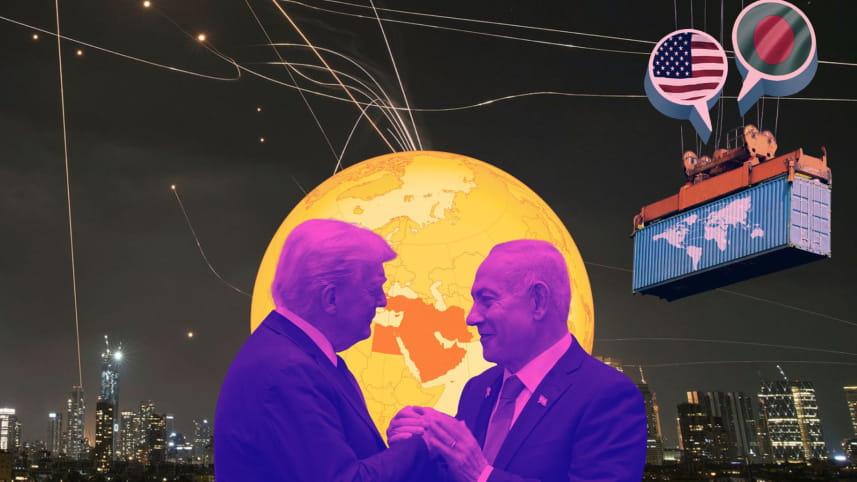
The way a neighbourhood thug flaunts his power, boasts about violence, bullies at will, harasses, assaults, or kills—while proudly disregarding any law or rule—is eerily similar to what we are now witnessing from the president of the world’s most powerful state and his allies. Their greatest pride lies in possessing the most advanced weapons capable of killing people and destroying nations far beyond their borders. Their primary ambition is to ensure corporate empires across the globe, eliminate all competition, impose sanctions at will, launch military campaigns freely, and make everyone bow in fear. And it is affecting the entire world.
But this is not merely about one person’s thuggery. It reflects a global order. When we see prominent elites, media outlets, international organisations, and leaders of various states in Europe and elsewhere endorsing or enabling this conduct, it becomes clear that this is the latest face of imperialism openly adopting the methods of gangsterism. In this order, “peace” means war, “development” means human and environmental catastrophe, “commitment” means deception, and the highest use of resources is channelled into weapons and destruction.
 For all latest news, follow The Daily Star's Google News channel.
 In January, the United States launched a bloody military assault on Caracas, the capital of Venezuela, abducted President Nicolás Maduro, and flew himto New York to face criminal charges. Alongside decades-long sanctions, it continues to threaten and attack Cuba and other countries such as Brazil and Mexico. Then, at the end of February, while so-called peace negotiations with Iran were underway, the US, alongside Israel, attacked Iran. At least a thousand, including school students, were killed, along with Iran’s Supreme Leader Ayatollah Ali Khamenei. The US president and the Israeli prime minister even publicly celebrated the attack.
One major reason for this audacity is the loyalty of Iran’s neighbouring states. Saudi Arabia alone has purchased over $60 billion worth of weapons from the US in recent years. Qatar, Bahrain, Kuwait, and the UAE have similar agreements with the US. All of these countries host US military bases. Their support is a key pillar behind US and Israeli military actions against countries like Iraq, Palestine, and Iran.
But can such invasions, abductions, and killings be carried out at will? Where are the international institutions, law, human rights, and sovereignty? The United Nations appears largely ineffective. The European Union has shown little willingness to confront US or Israeli violations on human rights grounds. Notably, both Donald Trump and Benjamin Netanyahu face convictions or investigations in their own countries for various offences. If international courts functioned properly, they would stand trial as war criminals. There is already a ruling implicating Netanyahu in the Gaza killings.
The US role in global violence is not new. During the final days of World War II, it dropped atomic bombs on Hiroshima and Nagasaki, killing hundreds of thousands instantly. Later, in Vietnam, Indonesia, Nicaragua, Iraq, and numerous other countries, millions were killed, and entire societies were destroyed, often with decisive US involvement.
After September 11, 2001, the US launched military operations in Afghanistan. Even then, discussions among the US officials included plans for deadly attacks on Iraq, Libya, Syria, and Iran. In March 2003, Iraq—already weakened by sanctions—was invaded and occupied. The justification was fabricated claims about weapons of mass destruction. None were ever found, however. Years of propaganda terrified ordinary people, redirected massive public resources from education and healthcare into war, and culminated in invasion, mass killing, and occupation—based entirely on deception. Yet no US administration or president has been held accountable for these war crimes.
After Iraq came Libya and Syria, and now Iran faces sustained aggression. Countries have been torn apart. Countless men, women, children, and elderly people have been killed or injured. Enormous wealth has been destroyed, ecosystems devastated, and societies traumatised. It is clear that Saddam Hussein, Muammar Gaddafi, and Bashar al-Assad were not targeted for autocratic rule; their “crime” was refusing to remain compliant with US dominance. When compliant, notorious leaders can be tolerated. Under the banner of fighting terrorism, secular governments in Iraq, Libya, and Syria were replaced by sectarian and extremist forces.
In Iran today, the US-led bloc is openly calling for regime change. In recent years, millions of Iranians have protested economic hardship and repression, but that does not mean they wish to hand their country over to US control or to its preferred proxies. The model of governance the US envisions can be seen in neighbouring Middle Eastern states such as Saudi Arabia, Qatar, the UAE, and Bahrain. Actually, democracy or religion is not the real issue for them. The issue is securing rulers who will protect imperial interests. In 1953, the elected government of Mohammad Mossadegh in Iran was overthrown, and the puppet Shah was installed. Since the 1950s, across Asia, Africa, and Latin America, military and monarchical dictatorships have often been empowered by US-European imperial forces. A vast global surveillance and intelligence network reinforces this structure. There is no example where US aggression has brought genuine democratic transformation.
Bangladesh is not outside this dynamic. Under the banner of the “war on terror,” US troops, technology, and immunity agreements were introduced here over two decades ago. Recently, the interim government took further risky steps. While many countries resisted providing military support to the US-led International Stabilisation Force (ISF) for Gaza, Bangladesh’s interim government initially expressed interest in joining. Furthermore, although the US Supreme Court declared Trump’s global tariff aggression illegal, the interim government appeared eager to appease him. Just days before the February 12 elections, it signed agreements with the US that may bind Bangladesh into long-term economic and political dependency. Incidentally, the successive BNP government did not signal any intention to back out from it either.
Trump and Netanyahu claim Iran poses an existential threat to them. In reality, it is their actions that now threaten global security. The US-led bloc seeks to eliminate those who reject imperial authority. Without strengthening resistance against the imperial agenda and aggression around the world, there is no other path to safeguarding humanity and the planet itself.
Anu Muhammad is a former professor of economics at Jahangirnagar University.
Views expressed in this article are the author's own.
Follow The Daily Star Opinion on Facebook for the latest opinions, commentaries, and analyses by experts and professionals. To contribute your article or letter to The Daily Star Opinion, see our guidelines for submission.



Comments