


The journey from presence to power
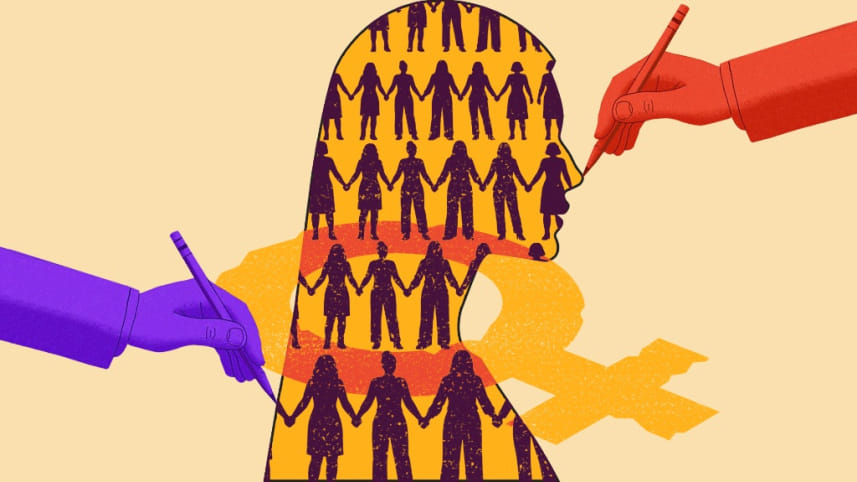
The Daily Star recently organised a roundtable titled ‘Post-Uprising Election: Women’s Political Participation and the Road to Inclusive Democracy.’ We invited women candidates who participated in the 13th parliamentary election to share their thoughts about their campaigning experience, the challenges they each faced, and what inspired them despite all the hurdles.
‘Political parties' attitude still not conducive to women’s participation’
 For all latest news, follow The Daily Star's Google News channel.
 From the moment the July charter was issued, discussions erupted surrounding women’s participation in direct elections. But as things progressed, their participation declined and eventually only 78 contested the election. It was clear that the state’s policies do not provide equal opportunities for men and women.
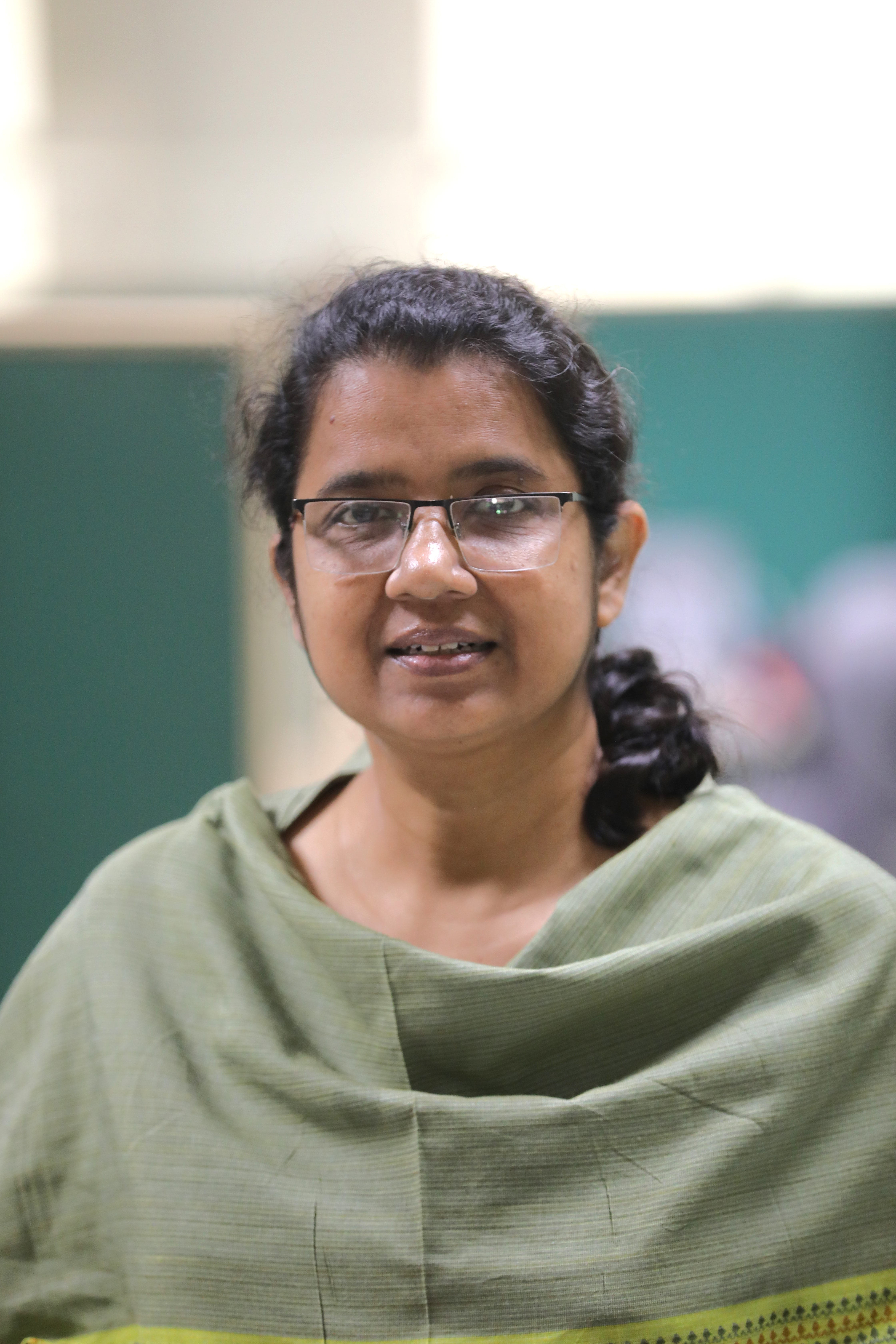
In Bangladesh, coalition-based politics and alliances with major political parties have so far been the criteria by which ordinary citizens evaluate a candidate. Another issue is the amount of financial resources made available. In my party’s case, we simply did not have the funds needed to reach approximately 350,000 voters in 18 days. Furthermore, society still visualises men as leaders or heroes, and this is reflected within political parties. For example, one party stated that women cannot reach the highest positions of state leadership. These attitudes hinder women's journey as active citizens.
When I was visiting different wards and interacting with voters, I initially felt that everything—from my gender to my attire—was subject to evaluation. Dhaka-12 is also a very important, economically central area and if we look back on the last 15 years, those who have held control were mostly men. So, calculations about muscle power were a significant factor. The attitude of political parties itself is crucial because, ultimately, they decide the state policies. And their attitude is still not conducive to women’s political participation.
In this regard, I feel that women need to be much more involved. My participation was part of a movement, given that the number of women directly participating in elections is still so low. Still, I feel that contesting the election presented a new opportunity. After all, in the last 15 years, we rarely had the chance to go to a ward or neighbourhood and promote our political vision or party agenda in terms of what we think, how we want to change Bangladesh, and what our agenda is for women and workers. Back then we often faced barriers—people even threw bricks at us. But this time, I felt that in all six wards, largely with my party’s help, we were able to reach people, exchange ideas, share our manifesto and, to the extent possible, establish interaction and communication, particularly with women and workers. Many people, independently and even outside my party, were organising in various places. This was very inspiring for me. Even if women’s overall participation was low, the new participants displayed political commitment and were inspired by the uprising. So, this sets a positive precedent for the future.
‘The system is rigged to keep you out of it.’
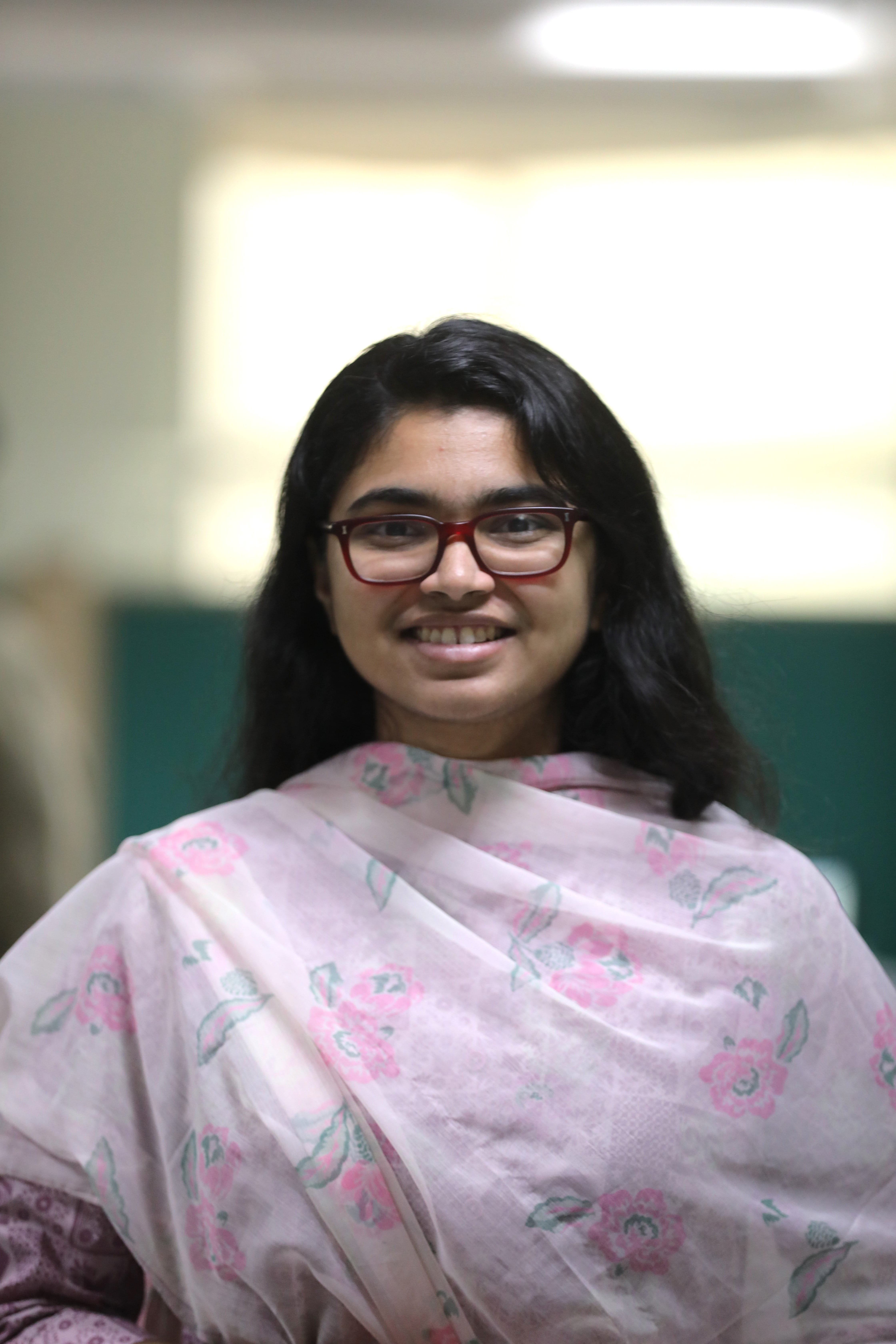
In my campaign, what we found is that our current system often penalises people for following the rules; if you do not follow the rules, there are little or no consequences. We tried to conduct the election campaign with as little disruption as possible. For example, the Election Commission had a rule that no paper posters could be used and we followed that rule. We did not use loudspeakers, either. Instead, we simply went door to door. We visited people where they live and work, and tried to understand their problems.
Perhaps because I was a woman candidate, women voters and residents of the constituency felt comfortable approaching me and speaking about their problems. For example, when we visited a park, women told us that there were no toilets for them. This is such a basic issue, but they had not had the space to voice this before.
Ultimately, how many women candidates contest the elections and how many are elected are symptoms of broader inequalities in society. Women lack access to education, healthcare, and also the networks where decisions are made. Some women, through individual brilliance, manage to break through and that benefits society as a whole. But structurally, the inequalities have not improved much.
Another issue is the metric we use: the number of women in parliament. It is a convenient metric, but it measures presence, not power. Even if women are members of parliament, are they involved in decision-making? They are not. Power in a political party lies in its decision-making bodies. How many women are in those bodies? Many important decisions take place in party backrooms where coalitions are decided, alliances are negotiated, and financial decisions are made. How many women do you see there?
Even though women’s parliamentary presence has increased via reserved seats in recent years, that does not translate into real power. Reserved seats do not have constituencies, and those MPs depend on party machinery to get nominated.
Our campaign itself was really positive: we had a lot of participation from women across the country. One of our intentions was to challenge the idea that politics is something negative. Politics governs our lives, and it is where we should feel that we belong, where we have a place and a voice.
But the current structures do not incentivise keeping people at the centre. For example, if a candidate violates election rules, they face no consequences. In that situation, people’s agency—their right to have minimal disruption in their daily lives—is ignored. Another major challenge is campaign financing. There are limits on how much candidates can spend, but those limits are almost never followed. If I try to stay within campaign finance limits and maintain transparency, my opponent who does not follow the rules is not penalised. I raised money through crowdfunding and people donated to support the campaign. But if the rules are merely decorative, and the real game is played with off-the-books money, how can you honestly compete in that system? The system is rigged to keep you out of it.
We need cross-partisan understanding and commitment not just to create new rules but also, equally importantly, to follow them. We need political commitment from all stakeholders, not just political parties, but also the informal networks that finance these campaigns and benefit from keeping the system the way it is. Until we are able to have meaningful conversations around this, the system is unlikely to change. Women may have presence, but we will not have power.
‘If I had not had that outburst, it would not have been possible for me to keep going’
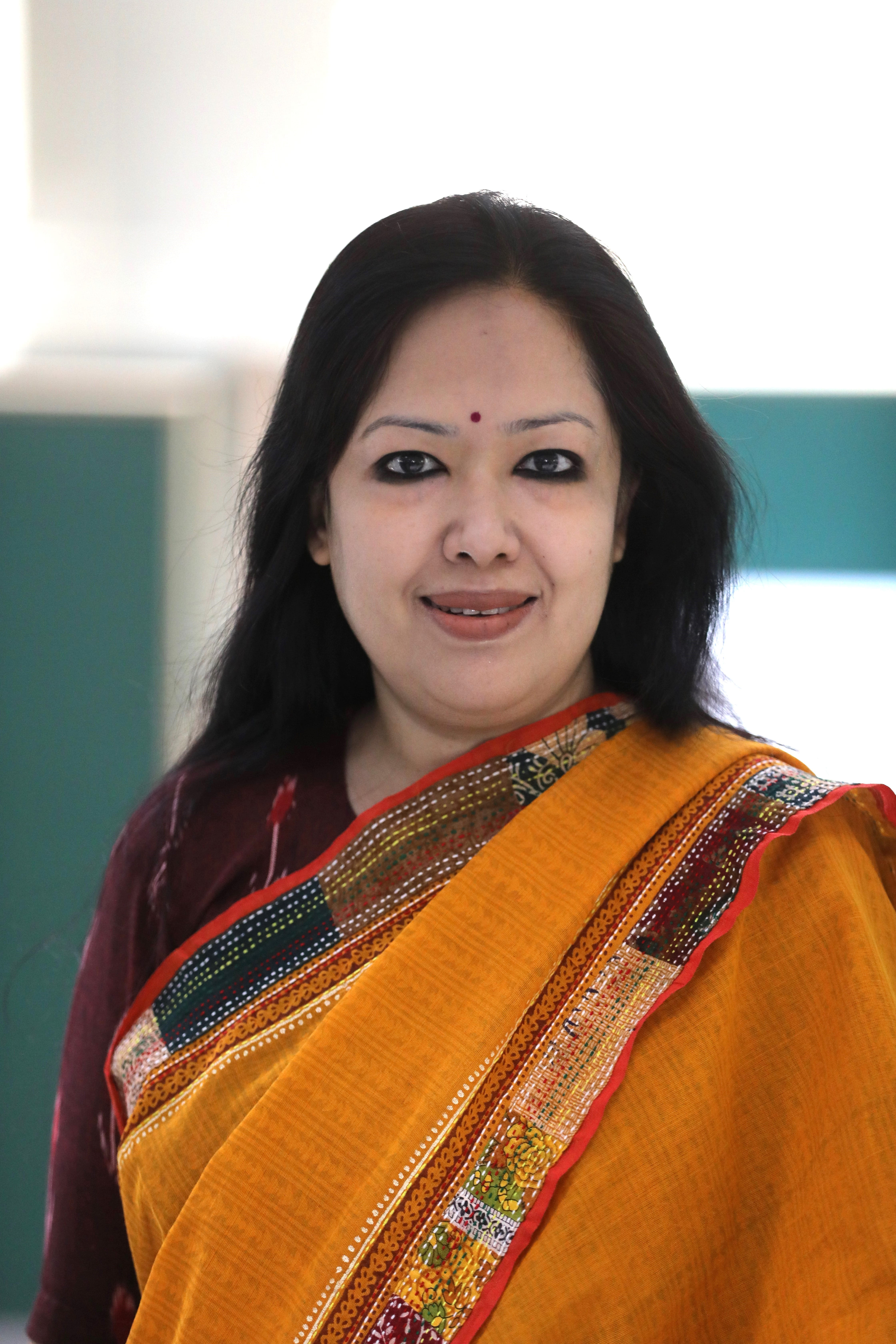
The main problem I faced during the campaign was discrimination. Even though I was conducting my campaign following the rules, my opponents openly violated them every day. They delivered hateful speeches and attacked me personally using abusive language, and the administration simply ignored it. We filed complaints, but received no remedy.
Since I was an independent candidate, it seemed like I had to follow every single law in the most meticulous way possible in order to campaign. Right from the first step, I faced discrimination.
Then something happened—I had an outburst during one incident, which the whole of Bangladesh saw. But if I had not had that outburst, it would not have been possible for me to keep going in the election. I had to give my supporters the feeling that no matter what the administration did, I was there to protect them. I had to do it, and I will do it again in the future. What the so-called civil society thinks about me because of the outburst does not matter. Unless you are doing politics on the ground, you cannot comprehend it.
The second issue was the abnormal level of campaign spending. Whatever the legal spending ceiling is, the reality is that it is almost impossible to run an election without spending several crores. In plain sight, going outside the law, voters are given money by candidates. Gifts are sent directly to voters’ homes. These may look more “decent” than direct cash, but they serve the same purpose.
The third issue is that during the last 10 days of the campaign, you are expected to spend at least Tk 10 lakh every day. “Expected” meaning that if you don’t, the campaign simply cannot be run. Now, where exactly this money goes and who receives it—and whether it even reaches voters—is something a candidate cannot really question. Because the moment you question the people handling the money, it means you are showing distrust, and they may stop working for you the next day.
This is where women candidates fall behind. Where will they get this money? And who will invest that money in them? Investment usually happens when investors expect profit in return. In reality, many women contest elections only so they can later secure a reserved seat in parliament. So if the candidate herself, her family, and society do not fully believe in her chances, why would the business community invest in her campaign? That makes funding much harder for women.
Another barrier appears during campaigning itself. In my constituency, there are villages to which I had to travel by boat for over an hour, after which I had to ride in an autorickshaw over muddy, dusty terrain where there is essentially no road. How many families in Bangladesh would allow their daughters to travel like that? Because I do not have a family structure controlling me, my responsibilities and accountability are entirely my own. But these obstacles make politics for women truly like climbing a mountain.
Ultimately, what voters really consider is who can provide them protection. So, you must present yourself as that strong voice and convince them that you will protect them against all odds. Sometimes women struggle to present themselves in that way. In my case, when necessary, I behave like a tough street enforcer. It is not something someone taught me to do; it is how I am by nature. If you can position yourself well—being the way each situation demands—and reassure voters that you will stand by them, and if you remain honest, then you can earn their trust.
‘Educated and younger voters tend to desire change more strongly’
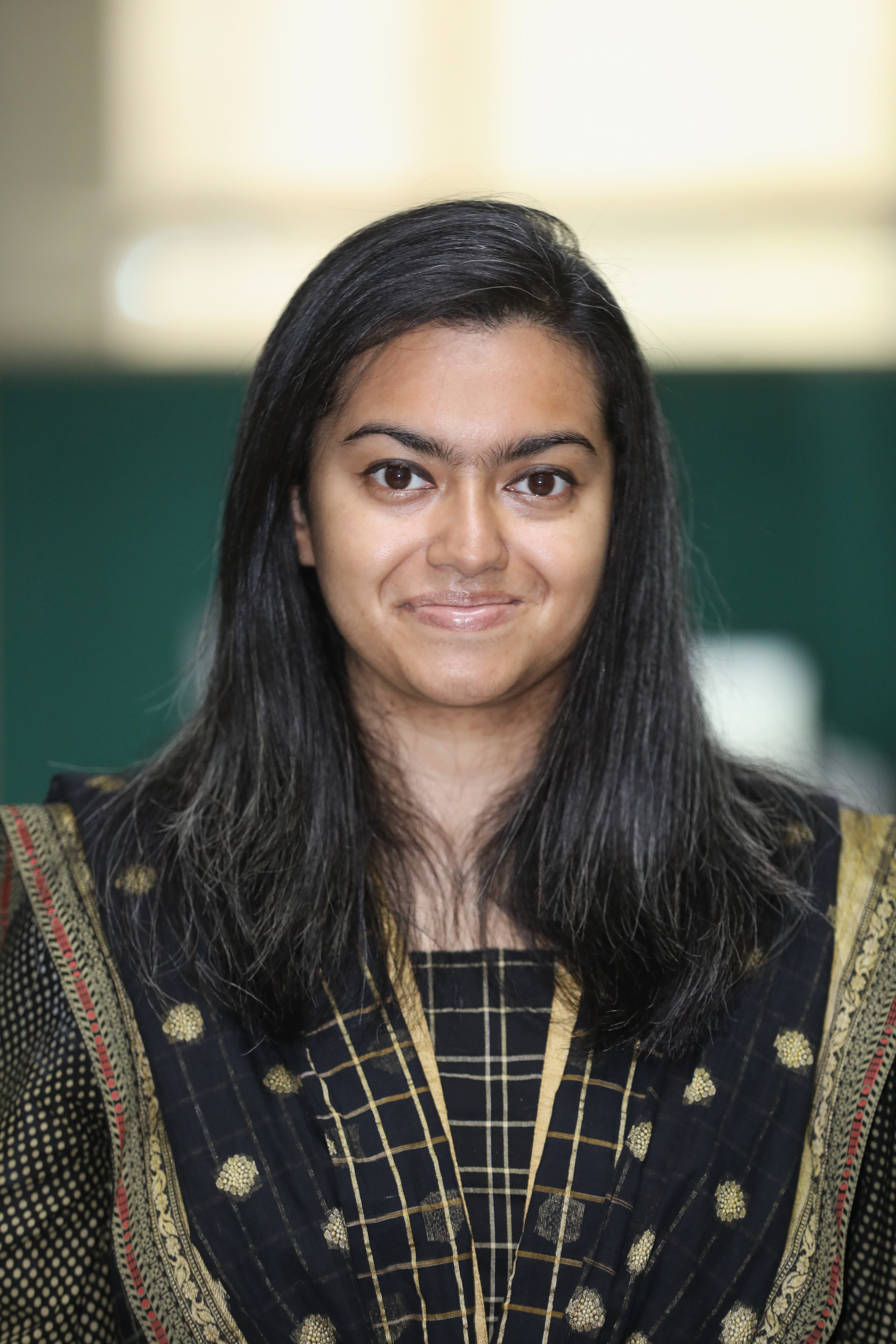
There are official limits for campaign spending, and while we tried to follow those rules—women candidates tend to be more naturally compliant with regulations—we saw that others did not follow them. For example, the rules allowed no more than 20 billboards to be put up for each candidate. We placed exactly 20 billboards across the whole of Dhamrai. But some of our competitors put up 20 billboards in just one union. When we reported this to the administration, they told us to count them, take photos, and submit proof, which is an unrealistic request. This shows how systemic bias operates, and how the system often favours those with money and muscle power.
Another challenge was the mindset in rural areas. In villages, even though a woman has already gone through the nomination process and become an official candidate, voters still expect her to prove her competence repeatedly. This mindset is even stronger among political actors. Since I was a candidate from the 11-party alliance, I had to coordinate with all 11 parties. However, two of those parties refused to withdraw their candidates because they did not want to accept female leadership. This created confusion among voters, particularly in rural areas where many people rely primarily on religious schooling and may not have access to broader education. As a result, some people did not go to vote at all. Together, those two candidates received around 12,000 votes—votes that otherwise might have gone to our alliance.
Campaign finance was another major challenge. When investors cannot see a clear return from supporting a woman candidate, they hesitate to invest. Ironically, investors still support candidates with known records of corruption because they expect profits later. This shows how deeply corrupted the system itself is.
One particularly disturbing issue we observed was something known as “vote trading.” This often occurs the night before the election: individuals collect voter ID cards, often belonging to the women in their households, and negotiate with candidates on how many votes they can “deliver.” The women whose IDs are used often have no idea that this is happening. In Dhamrai, where about 52 percent of voters are female, many women, especially those who lack education or financial independence, are easily manipulated by male family members.
Finally, while many voters do want change, others remain attached to the existing corrupt system and are not ready to accept new political approaches. Educated and younger voters tend to desire change more strongly. However, the political awareness of women in rural areas is still very low compared to women in urban areas. This creates a chain effect on voter awareness all the way to representation in parliament. Changing this system will take time. But change always begins with small steps, and those steps have already started.
‘The only challenge that is clearly gender-specific is the sexualised scrutiny women face'
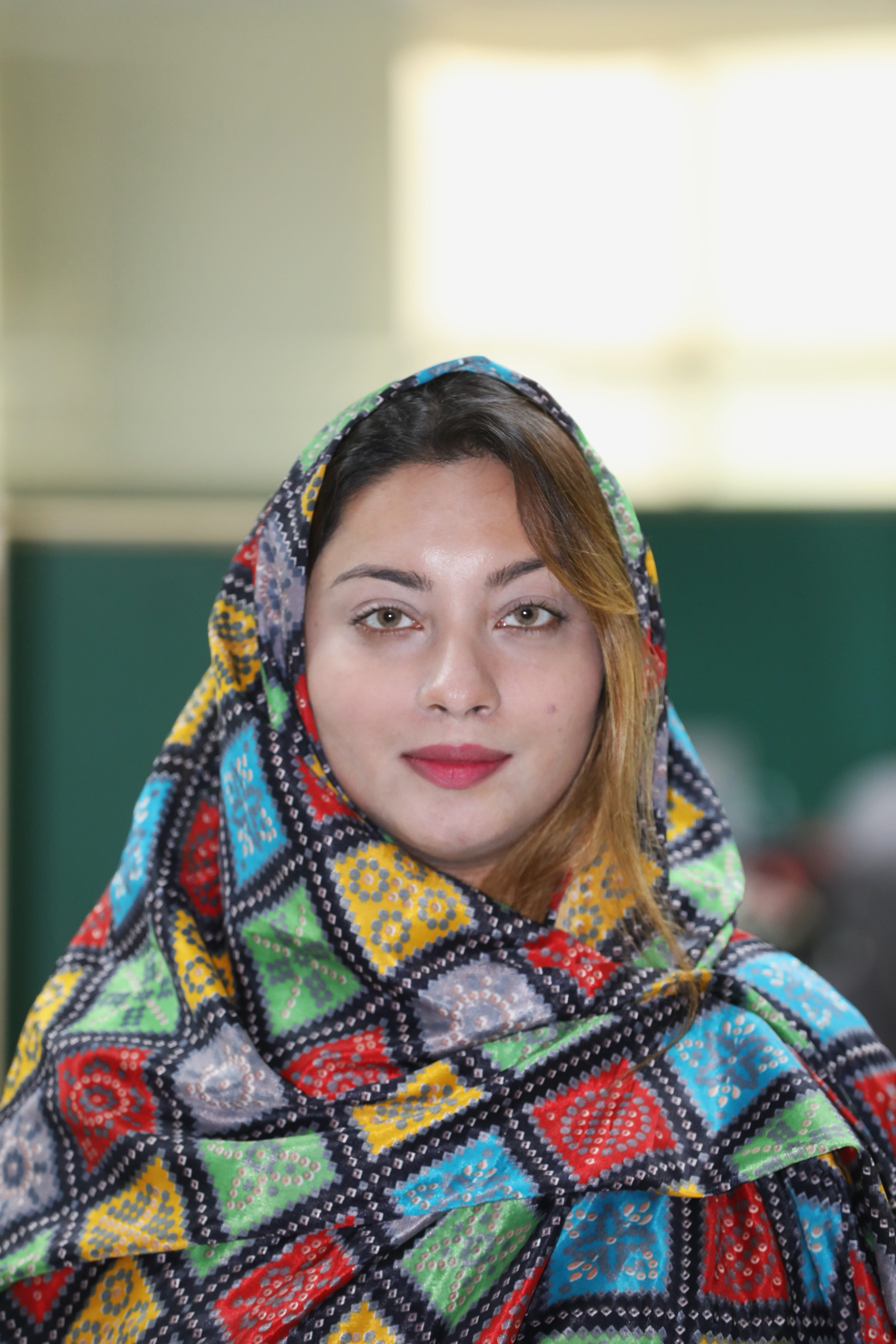
An election has two primary components. One is muscle power, which can mean money, organisational backing, or structural support. The other is security, both online and offline. These factors affect both men and women. So when we talk about women-specific problems, they are not always strictly gender-specific problems; these are often power-related problems.
In Bangladesh's elections, there are designated vote banks which function through the networks of patronage and political families. Many voters depend on particular candidates for jobs or financial benefits. For years they have received gifts during Eid, Shab-e-Barat, and other occasions from particular candidates. When they speak publicly about these candidates, they speak of how kind they are. The fact that these practices are unethical and illegal rarely enters public perception. People simply see these candidates as generous and helpful.
Dhaka-8 may be one of the most educated areas in Bangladesh, but it has never elected a woman MP. I researched the history of women candidates in the area and found that before me, no woman had ever received more than 100 votes. The issue is that people in the area have never imagined a woman as a “guardian”. Major political parties have never presented a woman as the leader who will represent and protect voters in a constituency. So even though I lost electorally, I believe my candidacy introduced the idea that a woman can also be a protective political figure.
As for the challenges I faced, many people may associate my name with controversy. I would describe myself as a survivor of state repression. But the accusations and cases against me were part of state mechanisms, whereas my rival candidates had over 200 criminal cases against them. Yet, public discussion focused on what misdeeds I might have committed, while no one questioned those hundreds of cases against my opponents. In fact, some voters see these cases as evidence of strength. When women candidates speak about policies and governance instead of aggression, voters sometimes view that as weakness. Sometimes it feels like one must deliberately break rules or act aggressively just to survive politically.
Another challenge I faced was intimidation. I received direct threats from activists affiliated with major political parties, both online and offline. Some even came to my home and tried to pressure me to allow their representatives to act as my polling agents. Security was also a major issue. Because of past conflicts with the state, I did not receive adequate protection. As a woman candidate, it was extremely difficult to campaign alone among hundreds of thousands of voters without security. Some of my female volunteers were harassed in the field.
The only challenge that is clearly gender-specific is the sexualised scrutiny women face. If a male candidate survives violence, he is seen as heroic. But if a woman experiences harassment, people blame her for entering politics at all. This attitude needs to change. That said, we also need institutional reforms, especially around campaign funding. If the state or EC created a fair public funding system for candidates, many more women would feel safe entering politics.
Comments