


Sweetened ice and other lessons in kindness
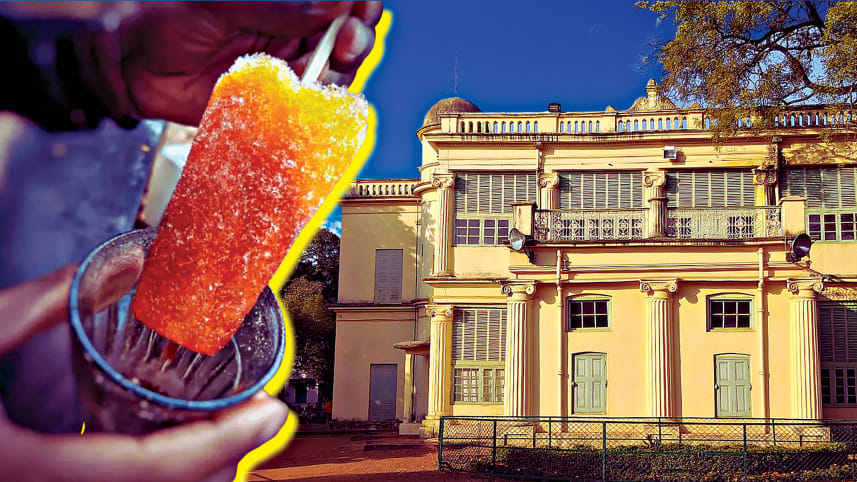
A recollection of life in Santiniketan would be incomplete without a mention of Nabadwip da. His little stall witnessed so many of our evenings, filled with steaming cups of lebu cha, buttered toast sprinkled with sugar, sponge roshogolla, fish chop, kochuri with mind-blowing tamarind chutney, and shingara (the samosa is a pale rival).
A few days ago on a dreary, grey Sunday, as I was busy with my weekend chores and preparing for the week ahead, I received a call from my sister. Among the many things she said was, “You remember Gopal da? He passed away.” A rush of memories came flooding over me, memories I had not even realised were still tucked away in a quiet corner of my mind.
 For all latest news, follow The Daily Star's Google News channel.
 Gopal da used to sell ice cream at my school in Santiniketan. This is a place that had an immense influence on me. I do not know if the current generation at school would even call it an “ice cream” at all. It was sweetened ice on sticks, white or brightly coloured. We desperately craved Gopal da’s ice cream. On summer days, after class, we used to gather around Gopal da’s ice cream cart. As hostel students, we were not allowed to keep money with us. If one of us had some money, we felt on top of the world knowing we could pay for our ice cream. Although it was never enough to buy an ice cream each, we would probably get one for four or five of us. I vividly remember a few of us licking the same sweetened coloured ice, giggling for no reason, hiding the ice cream behind our backs if one of our teachers happened to be passing by, on their way home.
On days when we had no money, we would gather around Gopal da and plead for a free ice cream “O Gopal da, dao na ekta free (please, Gopal da, just one).” Sometimes he would wave us away with a firm voice, “no free ice cream today,” but sometimes, I think, the sight of our faces, children living so far from home, melted his heart. He never asked for money for these small indulgences, and we never thought of repaying him in later years. Perhaps that is what it means to make someone your own.
Gopal da’s ice cream had the power to take away our sadness, whether it was because of a teacher’s ire or from the quiet disappointment of being unnoticed by the boy I liked. It washed away my small troubles and brought happiness back into my days.
In Santiniketan, there were several people like Gopal da, who watched over us with a tenderness that asked for nothing in return. At the end of the month, when money had almost run out, they would feed us without complaint, as though our hunger too, belonged to them. One such figure in our world was Yusuf da, our own baker, who came with unsliced bread (a strong competition for baguette), cream rolls, fruit cake, and other goodies that brightened our days.
As younger students, we had no real access to Yusuf da. He catered mostly to our seniors, the didis, who were allowed to keep money with them. So, when we reached high school (Classes 11 and 12), it felt as though we had arrived at a long-awaited freedom. We could now buy from Yusuf da ourselves.
How vividly I can still see him, tall and slender, in a white checked shirt and flowing white pyjamas we laughingly call ghagra pyjamas, carrying on his head a basket filled with small wonders. The very sight of him would bring us joy. We bought from him throughout the month and paid later, never troubling ourselves to count too carefully, and he, in turn, never charged us more than what was due. There was, between him and us, that simple and precious thing on which childhood often rests without knowing its value: trust.
A recollection of life in Santiniketan would be incomplete without a mention of Nabadwip da. His little stall witnessed so many of our evenings, filled with steaming cups of lebu cha, buttered toast sprinkled with sugar, sponge roshogolla, fish chop, kochuri with mind-blowing tamarind chutney, and shingara (the samosa is a pale rival). In those days Santiniketan had hardly anything one could truly call a restaurant. Nabadwip da’s stall was our go-to place, our evening refuge, simple, familiar and full of comfort. When our parents or other family members came to visit, we might occasionally go to Bolpur for the excitement of a restaurant meal. On most days, it was his shop that sustained us, not merely with his food, but with his warmth and homeliness, which have become inseparable from Santiniketan itself.
Nabadwip da was a quiet witness to our vibrant fearless youth, to our desire to understand the world and in our own way to change it for the better. He also witnessed our serious relationships, our hesitant date evenings in which friends often played their part, sitting with us with curiosity and amusement. He always seemed to know who was falling for whom. And when our hearts were broken and our little worlds felt shattered, his bright smile and a cup of lebu cha worked wonders. He knew not only the secrets of our young hearts, but of our families as well.
He kept a monthly account of what we owed him. If a payment was delayed, he would simply smile gently and remind us, there were never threats of not giving us tea or snacks, no harsh words. Such gestures, small as they may seem, were part of the tenderness with which Santiniketan held us in those years.
Their mock anger and boundless affection were part of our growing up.
I know Santiniketan shaped my life in many ways, but the news of Gopal da’s passing made me realised how deeply the people at Santiniketan, in their own quiet ways, took part in my growing up. Our teachers, some still with us, some who have since passed away, opened the doors to a larger world; and people like Gopal da, Yusuf da, and Nabadwip da taught us about tenderness, trust, and empathy, those invisible threads that bind one human being to another.
We never thought that they had no right to admonish us, or that our relationship with them was merely transactional. Instead, they drew us into their web of affection and made us feel that we belonged. In ways I perhaps understood only much later, they helped make me who I am. They taught me the meaning of human kindness.
When I heard of Gopal da’s death and felt all these memories come rushing back, I was struck by the realisation of how deeply they too are woven into my girlhood, into the very fabric of my growing up.
Gopal da, Yusuf da, and Nabadwip da, thank you.
Anindita Roy is a public health specialist working with an international organisation in Geneva, Switzerland.


Comments