


The challenges before the prime minister

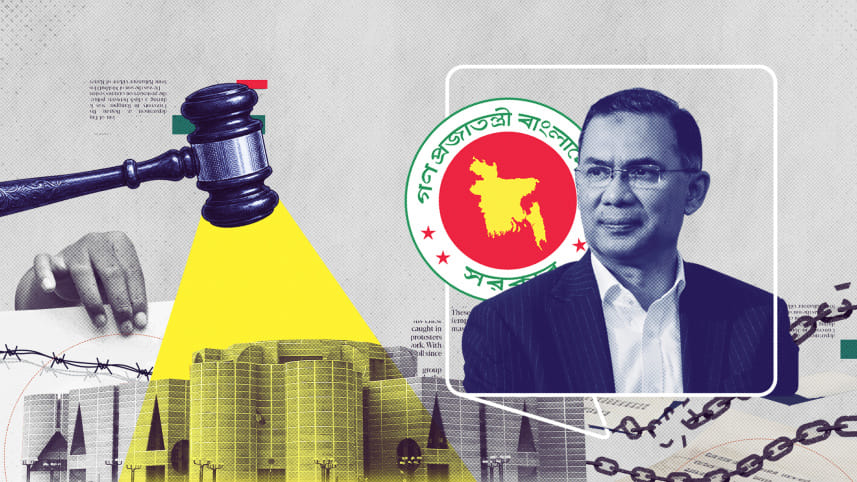
The new dispensation—new election, new parliament, new leadership at the helm of the country, and new possibility of accountable governance—can truly be called a product of public will. Tarique Rahman’s emergence as the new leader is also part of that change, which was impossible to imagine before the fall of Sheikh Hasina but appeared inevitable after. In fact, when we participated in the February 12 election, the prospect of his becoming the next prime minister seemed like a foregone conclusion. Such was the transformative nature of the change of fortune.
During his campaign as well as following his massive electoral victory, Tarique has given the impression of being a sober, reflective, and clear-thinking leader. He can be credited to have made a good start. Those have led to questions on which the prime minister must seriously introspect.
 For all latest news, follow The Daily Star's Google News channel.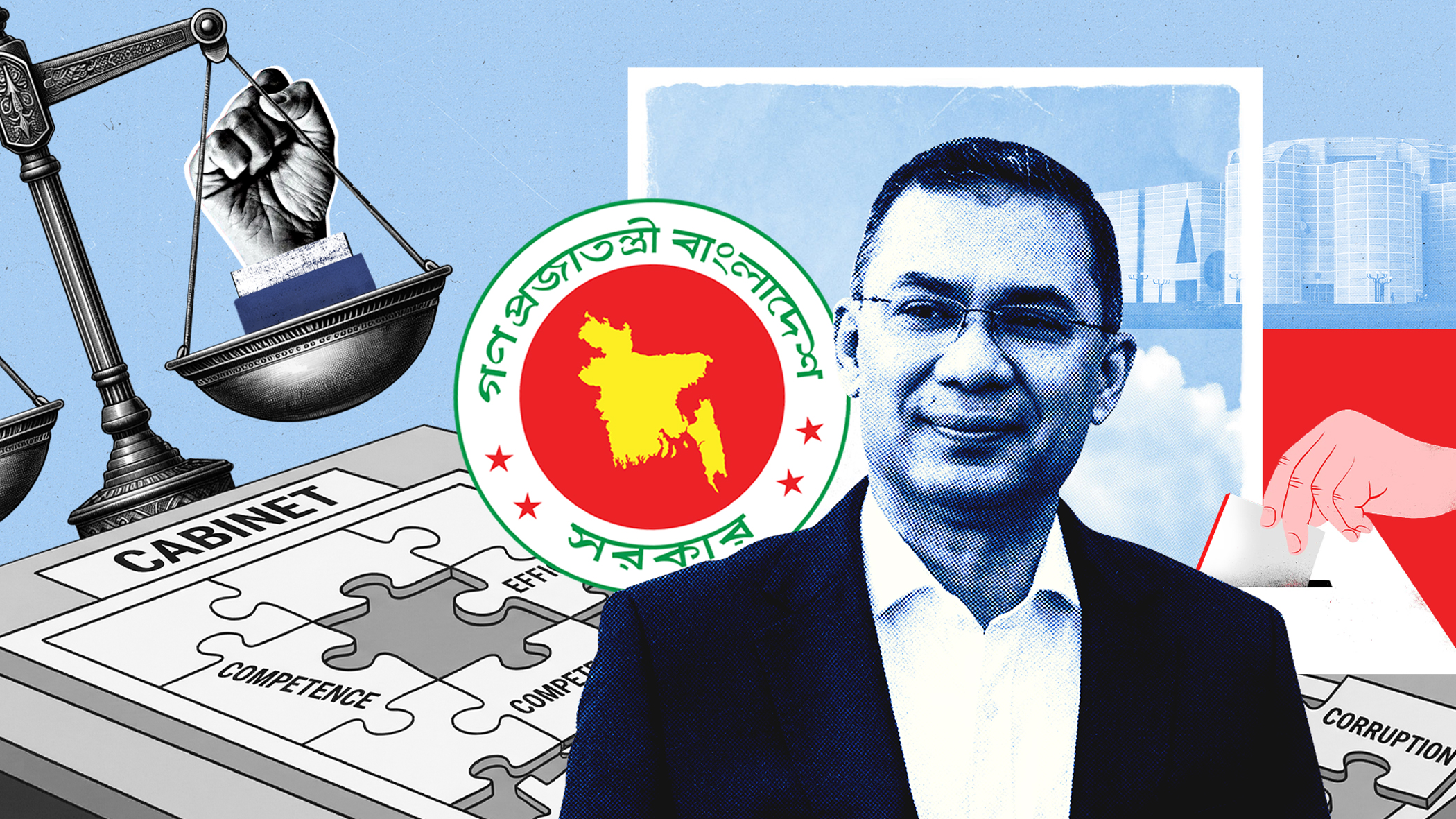
Normally, for anyone, first-time premiership can be quite challenging. It becomes far more so in case of a country like ours. Of course, we love Bangladesh with all our heart, but our mind never fails to warn us about the tremendous complexity of administering our beloved country. To start with, taking care of such a huge population—close to 18 crore—that lives within such a limited terrain—over 147,000 sq-km—and faces relentless natural calamities makes successful governance extremely difficult. Our industrial growth, though impressive compared to many other countries, suffers from a shortage of capital, lack of skilled workers, supply shortages, inadequate infrastructure, and vital management flaws, not to mention a short supply of energy. Added to that is the political instability that seems to be our fate. In fact, this new government has inherited over 15 years of corruption followed by 18 months of not so effective governance.
Whatever normal challenges the new prime minister would have encountered have now multiplied severalfold with the international order being sent on a wild spin by the whimsical and indecipherable decisions of the US president who appears to be serving the interest of Israel more than that of the US.
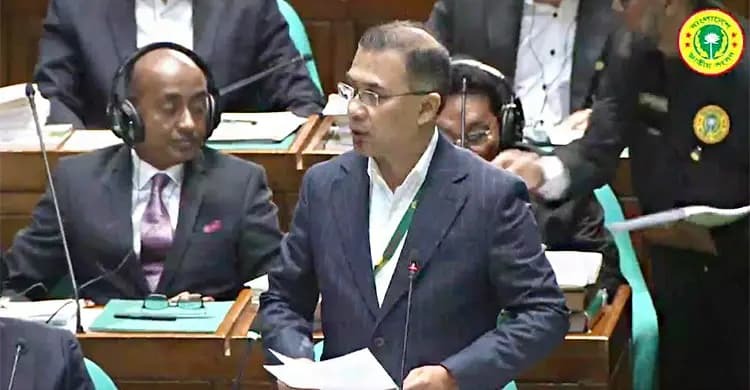
High unemployment, weak investment, the need for job creation, curbing inflation, export diversification, and stabilising the banking sector are among the most urgent economic challenges the BNP government faces. On the political side, rebuilding democratic institutions and allowing diversity of views and dissent will take time, but the early signs of that must appear from the very start. One of the most challenging tasks that Tarique Rahman is likely to face is handling parliament with an opposition which, if I am not mistaken, will be robust under Jamaat-e-Islami’s leadership. The question is: does the ruling party have enough experienced parliamentarians who know how to manoeuvre through the challenges that are likely to come?
We are looking forward to the workings of the new parliament, which had its inaugural session yesterday. We hope to finally have a parliament that truly represents the electorate, and not just the party that our MPs are nominated from. After the restoration of the parliamentary system in 1991, we had continuous elections—the last three being highly manipulated—and parliaments had to go through a lot of troubles and tribulations. But what we really did not have was a proper opposition. Despite the shrinking of space by ruling parties, they were responsible for wasting too much time boycotting the sessions, and hardly utilised parliament for debating issues of public concern and or revealing corruption or misuse of public money by the government.
We hope that we will not have a repeat of the culture of “opposition for opposition’s sake,” meaning never examining the government’s plan or proposal in terms of its true worth, as if the role of the opposition is nothing but to oppose anything that the government proposes. This leads to a wastage of time and resources and gives birth to a quarrelling culture, as opposed to a debating culture, which often leads to bitterness and abusive verbiage.
However, in delivering good governance, the biggest problem—one that will be most difficult to solve—will come from the prime minister’s own party. There will be two groups of BNP who will embarrass the government. The grassroots activists, unless firmly stopped from the very beginning, will try to take official procedures in their own hands, misinterpret them, distort them, and turn village- or upazila-level projects and regular government programmes into money-making machines.
The other group, consisting of the senior and mid-level ones, the party members who have suffered physically, financially and politically during the Awami League’s oppressive rule, will plead for favours in the guise of “compensations.” They will present the case of genuine oppression and “demand” favours from the party leader, putting him in severe moral dilemma. They will collectively and individually make the case, “We have suffered so much for nearly two decades, our freedom had vanished, our finances depleted and peace of mind evaporated. Now we need and deserve some special favours.” They will probably not say it but imply that “you are where you are because we endured what we endured.” Tragically, our past experiences prove that this is how the rot begins. First it will be minor favours, then it will be small business deals, and then a larger picture will emerge jeopardising the prospect of good governance.
Along with the party “claimants” will come the professionals who may have not joined the party but helped it silently and covertly. They will want their jobs, positions, privileges, and accumulated financial benefits back—in some cases with retroactive promotions. Such demands could create disarray within the administration and mark the first signs of the politicisation of the bureaucracy.
All the above “demands” will present a big moral dilemma for the prime minister. He will feel guilty if he does not respond, but he will damage his reputation and effectiveness if he does.
Our past teaches us that this is how corruption begins in a new administration. Slowly but surely, the party loyalists and their business backers become the conduit for most, if not all, government contracts. They not only monopolise them but also delay their implementation, resulting in cost escalation that damages financial discipline and control.
If there is one vital lesson to learn from Sheikh Hasina’s regime, it is to control the party apparatus from the very start. Think of the Awami League, the Chhatra League, the Jubo League, and all the other “Leagues”—Sramik, Krishak, Olama, Swechchhasebak, etc—and think of how they corrupted and destroyed its credibility and made controversial the very regime that they were supporters of. If the prime minister just examines the cronyism that has long persisted in three sectors—banking, power, and telecom—he will have a most clear and compelling picture of how one’s own party members drag their government down.
I know many of my long-term friends in the BNP will take umbrage at what I am saying and discard them all. Just one pointer: Awami League leaders did the same. Need I elaborate more?
Controlling corruption will be the prime minister’s toughest fight, and it will have to be mostly against his own supporters, coupled with the corrupt and self-serving businessmen who will use the party apparatus to promote their own interest, harming that of the country. In the process, they will corrode the premier’s credibility and make his government unpopular.
As we stated in the beginning, the latest election, the new parliament, and the new government are all a product of public will, which is applicable not only for the new leader but for us all. We now have dreams of a future that will be corruption-free, nepotism-free, partisanship-free, and free of fear and oppression. Tarique Rahman has options that no previous party leader had. He is new, fresh, untried, and comes from a long period of forced exile that has given him a chance to study and introspect about his country, from a place that has a long tradition of democracy, tolerance, and free speech. This is rare in our political history; it gives him an opportunity to give the nation a fresh start.
For that to happen, he will need to do many things, but the very first one will have to be to restrain his party, his supporters, people who extended favour to him, and even those who stood by him at his most perilous moments. This is most tough, but if it is not done, then we will slide down the very same lane of corruption and cronyism that caused the fall of Sheikh Hasina and her party. Tarique Rahman will have to put his party under discipline and accountability. And he has to do it now. As the saying goes, “Strike the iron while it is hot.” He is at the height of his popularity, acceptability, and power. He must make all tough decisions now.
Here again, history must be his guide, which proves that toughest decisions must come at the earliest moments of any government that is at its peak of popularity. With time, the popularity will inevitably erode. Then tough actions will become less and less possible.
Mahfuz Anam is the editor and publisher of The Daily Star.
Follow The Daily Star Opinion on Facebook for the latest opinions, commentaries, and analyses by experts and professionals. To contribute your article or letter to The Daily Star Opinion, see our guidelines for submission.


Comments