


An uncompromising leader who carved our democratic path


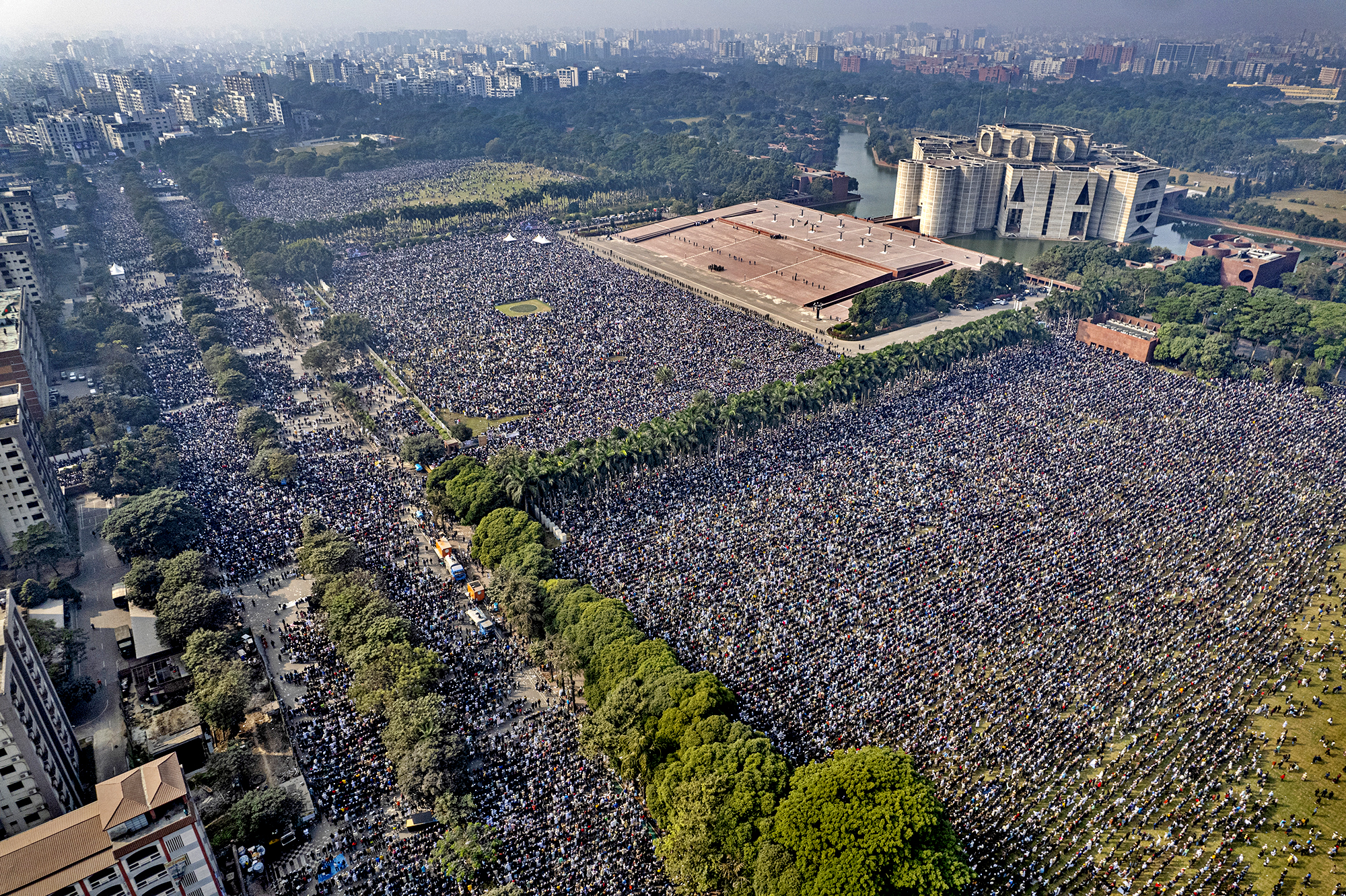
Bangladesh stands in grief today. The void created by the death of a political leader is always profound, but the demise of BNP Chairperson and former Prime Minister Khaleda Zia has multiplied that emptiness for many, for she was not merely the head of a political party, but also an uncompromising leader of the masses as well as an embodiment of humanity who fought for the people rising above partisan identity.
Khaleda Zia's uncompromising stance against autocracy, fascism, and domination repeatedly showed the nation a path out of democracy-starved circumstances and infused it with the inspiration of liberty and freedom. Her long political journey, people-centric leadership, and steadfast role in upholding Bangladesh's independence and sovereignty will remain an enduring inspiration. Her absence is irreparable. With her passing, Bangladesh has lost a guardian—one who embraced the nation with compassion and accountability.
 For all latest news, follow The Daily Star's Google News channel.
 In the long journey of people's emancipation and politics, Khaleda Zia never accepted defeat; at the same time, she proved that victory means living eternally in the hearts of the people and in history.
She did not inherit her rise to power; she earned it through struggle, sacrifice, and dedication. After the assassination of President Ziaur Rahman in 1981, she wished to return to private life, but the reality of that momentdid not grant her that opportunity. A woman who had spent 21 long years as a homemaker became the party's senior vice-chairperson in 1983.
In 1984, after being elected BNP chairperson unopposed, she demonstrated that politics is not merely a profession, but a profound responsibility. She assumed leadership at a moment of acute political crisis, when the country was captive to the brutal reality of military rule. Her entry into politics was one of duty and accountability, not personal ambition; later, it transformed into a long, arduous and thorn-strewn journey towards establishing democracy.
During the dark years of military autocracy in the 1980s, Khaleda Zia emerged as a foremost voice of democracy. She remained firm and uncompromising throughout the nine-year movement against HM Ershad's rule. Her decision not to participate in elections under that autocratic regime in 1986 was politically risky but morally significant. She did not compromise in exchange for power, nor did she retreat from the movement despite arrests and repression.
The 1991 election was a watershed moment in Bangladesh's democratic history. In that election, Khaleda Zia contested from five constituencies and emerged victorious in all, a clear reflection of the people's trust in her.
After assuming office as the first woman prime minister in Bangladesh, her most significant contribution was the reintroduction of parliamentary democracy. Ending the presidential system and restoring parliament to the centre of state power was a historic decision, proving that even in power, she believed in the decentralisation of authority.
Another crucial example of Khaleda Zia's political wisdom was the introduction of the caretaker government system. In 1996, in the face of political unrest and opposition demands, she incorporated this system into the constitution. Despite having the chance to cling to power, opening the path for a neutral electoral system remains an example in South Asian politics. This decision established her as a true statesperson.
At the heart of her governance philosophy lay economic democratisation. The introduction of VAT, capital market reforms and the establishment of the Privatisation Board were aimed at freeing the economy from elite control. Alongside market-oriented reforms, she sought to maintain social balance. The expansion of the ready-made garments industry and the establishment of the Ministry of Expatriates' Welfare during her regime brought tangible change to the lives of millions.
Human empowerment was central to Khaleda Zia's politics. The "Food for Education" programme was a landmark initiative in addressing poverty and illiteracy simultaneously. Food assistance conditional on education laid the foundation for subsequent education policies, while free education and stipend programmes for girls played a crucial role in challenging social conservatism. She firmly believed that a nation's progress depends on women's education.
Her role in women's political empowerment is also undeniable. Increasing reserved seats for women in parliament was not merely a numerical decision; it was a recognition of women's participation within the state structure. This decision further institutionalised their participation in the political process.
Khaleda Zia deserves a mention in the history of world politics. Following Pakistan's former Prime Minister Benazir Bhutto, she became the second woman to serve as prime minister of a Muslim country. Her leadership also received international recognition; her inclusion among the world's influential women reflected that acknowledgment. In a 1993 report in The New York Times, Khaleda Zia was praised for her contribution to women's empowerment in Muslim-majority countries. Later, she was listed multiple times among Forbes magazine's World's 100 Most Powerful Women.
Despite prolonged imprisonment, serious illness, and political repression, Khaleda Zia did not leave the country. The safe path of exile was open to her, but she chose her country and people. And in the end, it was on this soil that she breathed her last.
Khaleda Zia contested 23 elections (in terms of parliamentary seats) in her lifetime and won all 23—a unique record in Bangladesh's politics. There were times when she held almost 40 election rallies in a single day. She served as prime minister three times, but even at the height of her power, she did not hesitate to reveal her vulnerability.
Despite long persecution and hardship, she rarely complained nor voiced grievance over the oppression or injustice inflicted upon her. This silent endurance distinguishes her not only as a successful politician but also as a statesman with a unique character.
The love people had for Khaleda Zia was spontaneous, genuine and almost storybook-like—earned through compassion, empathy and social virtue. The immense sacrifices she made in the struggle for the country and democracy will remain an example worth citing in our political history.
Today, she is no more. But the questions she has left behind stand before us: can we uphold the dignity of parliamentary democracy? Can we restore political civility? Khaleda Zia's life teaches us that democracy is not a gift; it must be achieved through struggle and sustained through morality and accountability. She has now departed, but in the history of Bangladesh's democracy, she will remain one of its brightest stars.
AKM Wahiduzzaman is information and technology affairs secretary at the Bangladesh Nationalist Party (BNP).
Views expressed in this article are the author's own.
Follow The Daily Star Opinion on Facebook for the latest opinions, commentaries, and analyses by experts and professionals. To contribute your article or letter to The Daily Star Opinion, see our guidelines for submission.
Comments