


A stunning turnout at a leader’s final rites
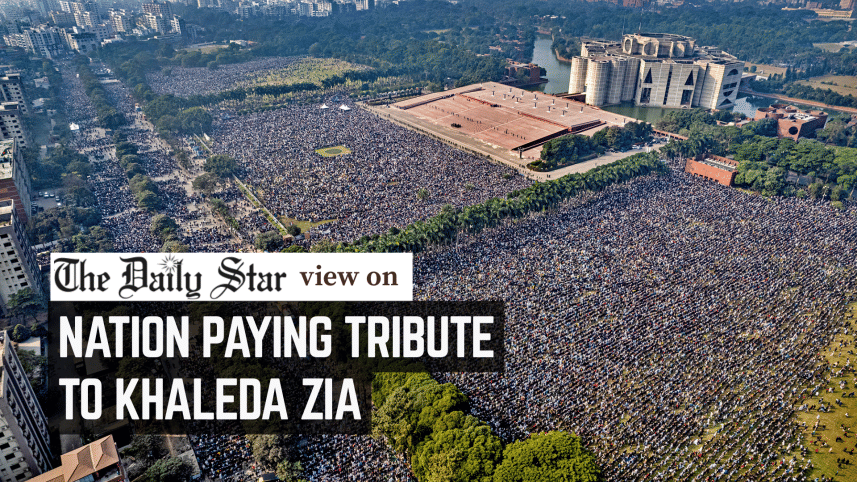
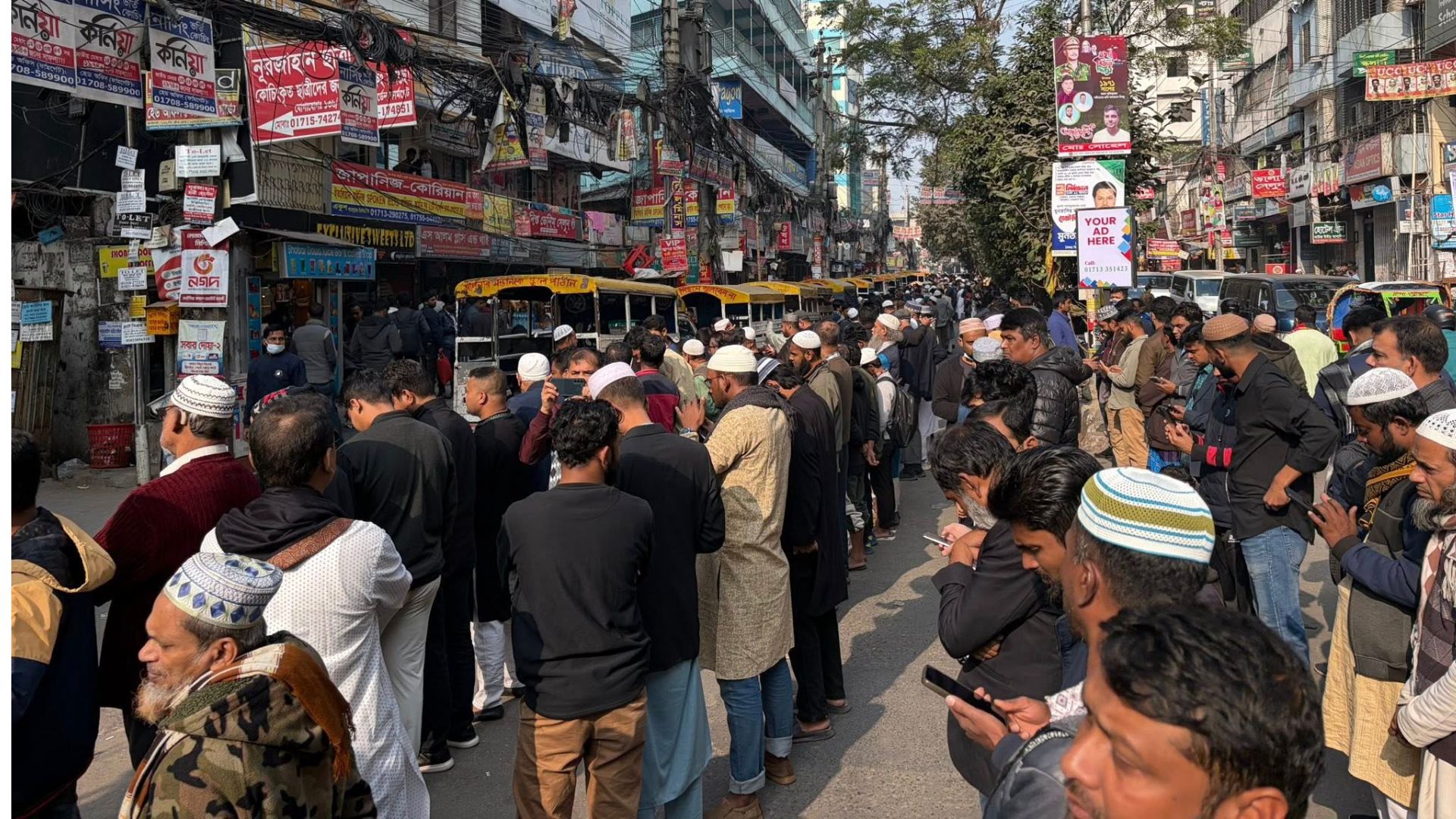
A funeral with such an overwhelming turnout as witnessed on Wednesday is rare. It speaks volumes about the personality that evoked such an outpouring of love and respect. The janaza of Begum Khaleda Zia—three-time prime minister and the uncompromising leader of the Bangladesh Nationalist Party (BNP)—was attended by millions of people not only from Dhaka but from many other districts as well. Central Dhaka came to a standstill as waves of people walked on foot to get to the janaza venue in time. With Manik Mia Avenue and adjacent areas filled to the brim, those who could not reach the venue stood together on the streets to join the prayer. She was laid to rest with full state honours.
 For all latest news, follow The Daily Star's Google News channel.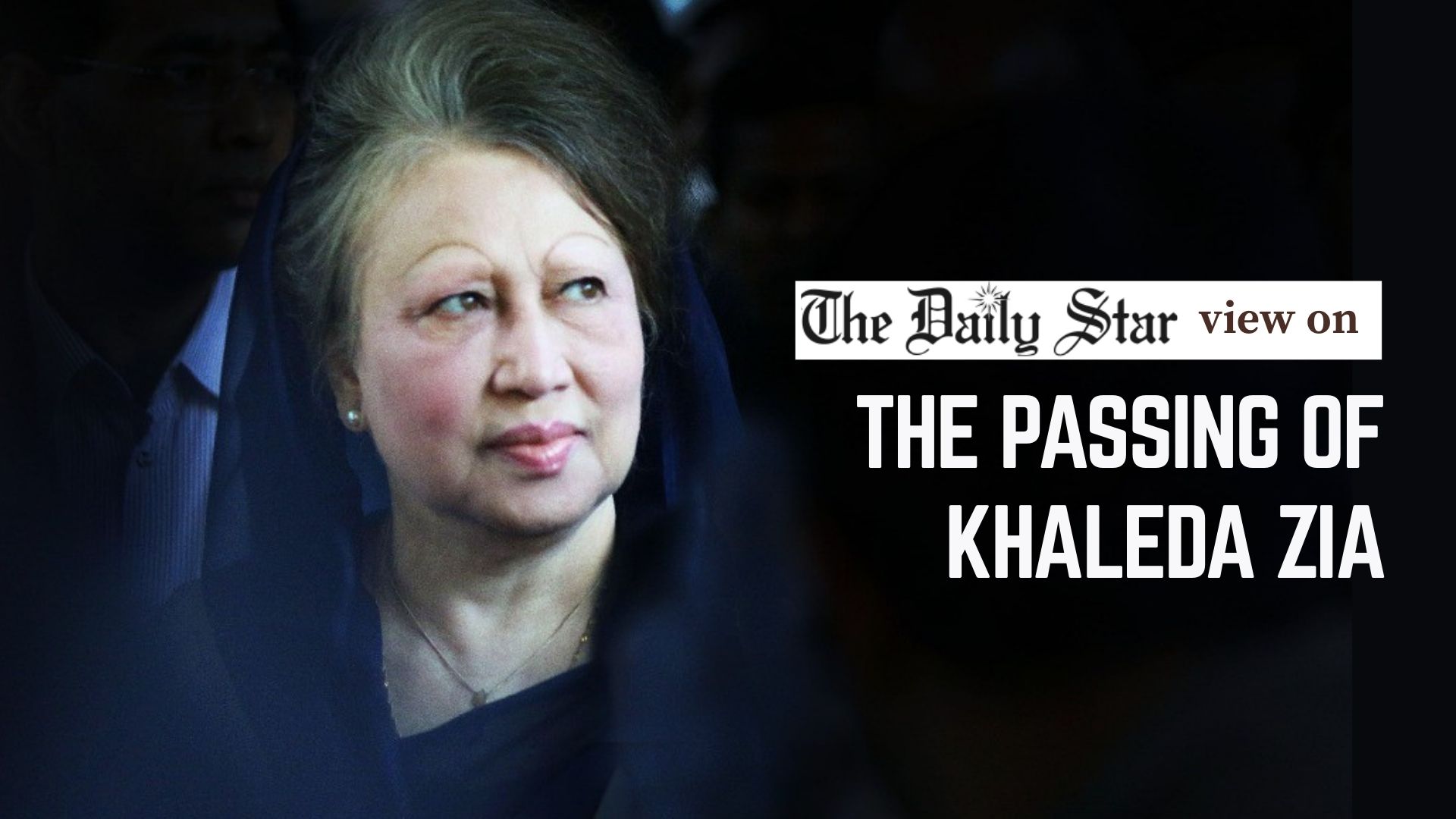
The presence of Chief Adviser Professor Muhammad Yunus, other advisers, and diplomats from 32 countries—along with visits by India's External Affairs Minister S. Jaishankar, Pakistan's National Assembly Speaker Sardar Ayaz Sadiq, Sri Lanka's Foreign Affairs Minister Vijitha Herath, Nepal's Foreign Minister Bala Nanda Sharma, Bhutan's Foreign Affairs and External Trade Minister Lyonpo D.N. Dhungyel, and the Maldives' Minister of Higher Education, Labour and Skills Development Ali Haidar Ahmed—highlighted the respect commanded by Khaleda Zia not only in Bangladesh, but across the region. International media gave extensive coverage to the first woman prime minister of Bangladesh and a steadfast champion of democracy.
Khaleda Zia enjoyed immense popularity among her party members and voters, whether as prime minister or leader of the opposition. But Wednesday's spontaneous congregation went beyond political allegiance. It was an outpouring of people's empathy and love for a maternal figure and commanding leader whose personal tragedies evoked deep compassion, making her all the more human. She had to endure the exile of her eldest son, Tarique Rahman, and her own prolonged persecution at the hands of her arch-rival, Sheikh Hasina. She was forced out of her home, falsely convicted on corruption charges, incarcerated and kept in solitary confinement, placed under house arrest during the Covid pandemic, and denied permission to seek medical treatment abroad for illnesses aggravated by the poor conditions of her prison cell. She also had to bear the loss of her second son while her office was under siege by security agencies, leaving her confined and isolated.
While her political rival never missed an opportunity to make derogatory public remarks about her, Khaleda Zia did not stoop to the same level and maintained a stoic dignity. It was this dignified and restrained response to sustained cruelty that endeared her further to the people. Her measured reaction on August 5, 2024 when she was freed—calling for a new Bangladesh and urging the nation to shun the politics of retribution—placed her on a moral high ground that her political rival was never able to attain.
The BNP, and especially Tarique Rahman, while grieving the loss of a matriarch, now face the challenge of upholding the commendable legacy Khaleda Zia leaves behind. It is also incumbent upon the nation to honour her staunch commitment to democracy and national unity, particularly as the country enters an electoral race that promises to be exceptionally challenging.
Comments