


Trade probe against Bangladesh is baffling
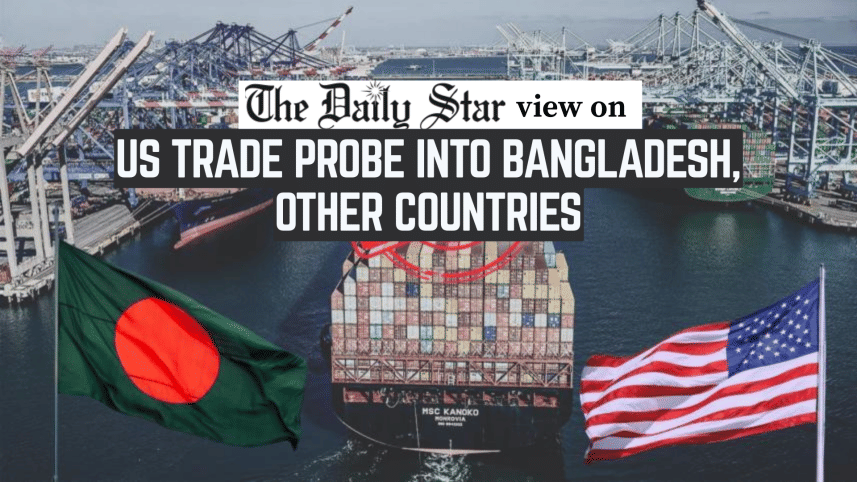
Bangladesh’s inclusion in the trade investigation initiated by the Office of the United States Trade Representative (USTR) comes as a surprise. The probe was launched on Wednesday against 15 other countries as well, including China, the European Union, Vietnam, Mexico, Japan and India—countries that have bilateral trade surpluses with the US ranging from $500 million to $1 trillion, compared to our $6.15 billion.
The USTR, in a statement, said it would dig into the acts, policies, and practices of these economies relating to structural excess capacity and production in certain manufacturing sectors that threaten American manufacturing. It also said “large or persistent trade surpluses” of these countries with the US are an indicator that “excess capacity and production exist” in certain manufacturing sectors of these economies. In other words, the US is arguing that these trading partners are producing more goods than they can consume domestically, incentivised by state subsidies, suppressed wages, and lax labour laws, and are exporting the surplus to the US at very low prices.
 For all latest news, follow The Daily Star's Google News channel.
 In Bangladesh’s case, its trade surplus with the US, according to the USTR, is led by the textile sector and government cash incentives for dozens of export products, including domestic textiles and leather. They even cite excess capacity in the country’s cement industry—a curious inclusion, since Bangladesh is not among the US’ top exporters for cement. Canada, Turkey, Mexico and Vietnam are, and except for Turkey, the other three have large trade surpluses with the US. Furthermore, the American diagnosis suffers from a fatal flaw when applied to the RMG sector. Bangladesh’s RMG industry is almost entirely based on orders from international buyers. Therefore, it is neither profitable nor logical for manufacturers to “overproduce.”
Besides, the USTR’s insinuation of lax labour standards relies on outdated stereotypes. In preparation for graduating from the Least Developed Country (LDC) status, Bangladesh has actively tightened its belt and modernised its laws. In fact, it is the first country in Asia to have ratified all fundamental International Labour Organization (ILO) conventions, including vital measures on occupational safety and workplace harassment. Export incentives, too, were significantly slashed three years ago.
The Trump administration’s recent move to investigate these economies using a 1974 trade law highlights a broader, troubling shift in Washington: the weaponisation of trade law to mask a desperate hunt for tariff revenue. For Bangladesh, it appears to be a tactic to keep the new government under pressure. As an economist pointed out, these investigations are rarely objective. What our government must do is engage in proactive and regular dialogue with the US, ensuring that our case is properly presented and fairly assessed. In the new world order, countries have little choice but to employ every diplomatic tool available to survive.


Comments