


How Bangladeshi NRBs observe Ramadan far from home


It is that time of the year when the Bangladeshi diaspora misses the tantalising aroma of masala chickpeas, mutton haleem, crispy eggplant fritters, and warm jilapi. They profoundly miss sitting around the dining table with family to break their fast, as the melodious voice of the local muezzin recites the Maghrib prayer. They greatly miss the excitement of Eid shopping and the overall festive atmosphere that fills the holy month of Ramadan.
We spoke to some of our non-resident Bangladeshi (NRB) men and women to learn what they miss and how they observe Ramadan away from home.
 For all latest news, follow The Daily Star's Google News channel.
Mushfiqur R Bhuiyan, Toronto, Canada
Mushfiqur R Bhuiyan is a Corporate Client Group director at Royal Bank of Canada. Bhuiyan, who moved to Canada in 2019, says that Ramadan days are just like any regular working day for him. “Unlike in Bangladesh, where a revised office schedule is introduced during Ramadan, here, it is business as usual, which means that I am extremely sleep-deprived during this holy month,” he said.
On working days, Bhuiyan and his family of four eat their iftar at home. On weekends, however, they try to go the local mosque for the evening meal. “Huge gatherings of Indian, Bangladeshi, and Pakistani Muslims take place at the local mosque every Ramadan weekend, so on weekends, we try to attend one of these community gatherings. Some halal restaurants here offer all-you-can-eat iftar during Ramadan, so on some Saturdays or Sundays, we also enjoy going to one of these restaurants,” he said.
Bhuiyan, who tries to perform his Isha and Taraweeh prayers at mosque during Ramadan, misses Bangladesh terribly during this time of the year. “Attending the Taraweeh prayer at our local mosque in Dhaka made me feel whole and connected. There, I would be surrounded by my own people, family, friends, and neighbours. I miss it here,” he said. He also misses iftar get-togethers with his friends and colleagues.
Last but not least, Bhuiyan misses Dhaka’s bustling iftar bazaar. “After finishing office early, I would buy jilapi, haleem, doi bora or egg chop for home. Every iftar meal in Dhaka was like a feast,” he said.
However, since Ramadan abroad is quite lonely without friends, family, and iftar parties, he believes he demonstrates greater sacrifice and self-restraint in Canada.
Shama Ahmed, Minnesota, USA
Shama Ahmed, who is a senior accountant at Northrop Grumman Corporation, an American aerospace and defence company, says that Ramadan in the US is not remotely as festive as it is in Dhaka. Giving up food and water is no issue for her; it is sleep deprivation that afflicts her most during Ramadan, as there is no special office schedule. “It is business as usual here, so I am terribly sleep-derived during the month of Ramadan,” she said.
Asked what she and her family enjoy for iftar, she said, “For iftar, we usually have chhola or chotpoti and lots of fruits. It is only on some days that I cook khichuri, haleem or noodles for iftar.”
“We eat fried foods only once in a while during Ramadan,” she added.
Like all non-resident Bangladeshis, Ahmed misses Bangladesh and its festive Ramadan ambiance during this time of the year. “In Dhaka, the air would fill with the aroma of iftar as early as midday. Here, you do not experience the same Ramadan vibes,” she said.
Ahmed misses Dhaka’s iftar bazaars and all the iftar delights that one can find during this time. “Dhaka’s iftar bazaars are a feast for the eyes,” she said.
She also misses having iftar with her parents and all the special dishes that her late mother used to prepare. “I especially miss her doi bora. My doi bora is never as good as hers,” she said.
Ahmed, however, thinks that there is one positive aspect of observing Ramadan away from Bangladesh and its alluring iftar bazaars, that is, she can stay away from all the delectable yet unhealthy deep-fried iftar delicacies. “One good thing about Ramadan here is that we eat healthy, and actually lose some weight. In Dhaka, I often gained weight during Ramadan!” she said.

Sharif Mohammad Ruhul Quddus, England, United Kingdom
Dr Sharif Quddus is a speciality doctor at the Department of Neurology and General Internal Medicine at the Royal Cornwall Hospital Trust in England. This Ramadan has been particularly hectic for Dr Quddus and his wife, who had their second child just three months ago.
Asked about the typical workday for a Bangladeshi Muslim doctor in the West, Dr Quddus said, “As a doctor, my day begins before dawn. After sehri, I barely get any time to rest. I leave home at 7 in the morning for a busy clinic day or a long list of referrals.”
“Hospitals do not slow down for Ramadan anywhere in the world. People fall ill and seek medical care all the time, Ramadan or not,” he added.
The hospitals in the UK allow Muslim employees a short recess to break their fast and say their Maghrib prayer during Ramadan, which greatly helps practicing Muslims like Dr Quddus. “On most Ramadan days, I break my fast at work, but eat my iftar after returning home from work,” he said.
Like other NRBs, Dr Quddus, too, profoundly misses Bangladesh during this time of the year. “Back in Dhaka, iftar meant a full table, shared laughter, and family conversations. Ramadan was more than just fasting, it was about togetherness, celebration, and meeting friends,” he said. What he misses most during Ramadan is his father making dua for the whole family before iftar.
Dr Quddus also misses the sights, sounds, and smells that envelop Dhaka during Ramadan. “Unlike here, lively streets, colourful clothes on display, glittering women’s jewellery, hum of shoppers bargaining with shopkeepers, and the aroma of iftar delights make every day of Ramadan a festive occasion in Bangladesh,” he said.
He deeply acknowledges the invaluable contribution of his wife, whose hard work makes it possible for him to fulfil his professional responsibilities and still fast during Ramadan. “My wife manages the household, nurtures our toddler and new born, prepares our meals for iftar and sehri, and ensures that everything runs smoothly so that I can concentrate on my professional duties,” Dr Quddus said.
Mahnoor Ali, Shanghai, China
Mahnoor Ali, who moved to Shanghai, China less than two years ago because of her husband’s employment, is still adapting to her new reality. This is her second Ramadan in Shanghai, and she is a little less homesick than she was a year ago.
“I miss Dhaka every day, but I seem to miss it more during Ramadan, when the entire city wears a festive look,” she said.
Ali worked for a financial institution in Dhaka. On Ramadan days, after office ended early, she would stop by the stalls of iftar vendors to check what they had to offer and buy anything that she liked. “Jilapi is my most favourite iftar item. I do not find jilapi here and I miss it so much,” she said. She recalls the special zarda that her mother used to prepare for her during Ramadan.
Among other things, Ali misses Dhaka’s Eid shopping scene. “I miss Dhaka’s Eid fashion trends and shopping scene, when shops and malls across the country are bedecked with lights, festoons, streamers, banners and hanging swirls, adding extra joy to Eid preparations,” she said.
Eid ul-Fitr is a lonely affair for Ali in Shanghai. Last Eid ul-Fitr fell on a working day, so her husband had to go to the office, and her son to school. “I was alone at home until late afternoon. Never before did I spend an Eid morning all by myself,” she said.
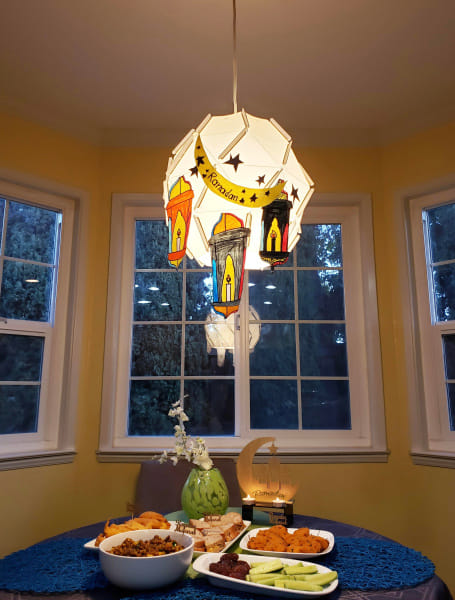
However, in her new reality, thousands of miles away from home, Ali now tries to observe Ramadan and celebrate Eid ul-Fitr in her own way. She tries to make traditional iftar items and has decorated their apartment with Ramadan décor. She plans on buying fresh flowers on Chaand Raat, like she did in Dhaka, to bring holiday vibes to her new home in Shanghai.
Our NRBs miss their families the most during Ramadan, and the Eid that follows. The heart feels heavy and the distance more pronounced during these special occasions. And they fondly reminisce about the times they have left behind; the shared laughter, the lively conversations, and the comforting presence of friends, family, and relatives in their lives. However, life goes on, and our NRBs come to terms with their new reality, observing Ramadan and celebrating Eid ul-Fitr in their own distinct ways.
Comments