


Can simple outdoor play really protect your child from needing glasses?
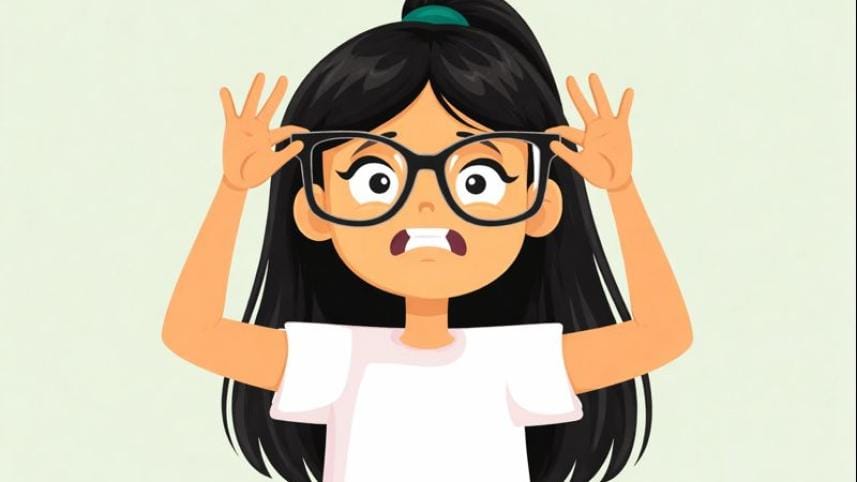
A growing number of children are struggling to see the whiteboard clearly, even if they can read a book just fine. This isn't a coincidence. Doctors across the world are reporting a sharp rise in childhood myopia, commonly known as near-sightedness, and recent studies suggest this shift is happening faster than expected.
Myopia usually begins in childhood, often between the ages of six and fourteen. A child with myopia can see nearby objects clearly, but distant ones appear blurry. What concerns experts today isn't just how common the condition has become, but how early it is starting and how quickly it is progressing.
 For all latest news, follow The Daily Star's Google News channel.
 For decades, genetics was considered the primary cause. Children with one or both parents who are near-sighted are indeed at higher risk. But genes alone cannot explain the sudden surge. Researchers now point to environmental changes — particularly how children spend their time — as the main driver.
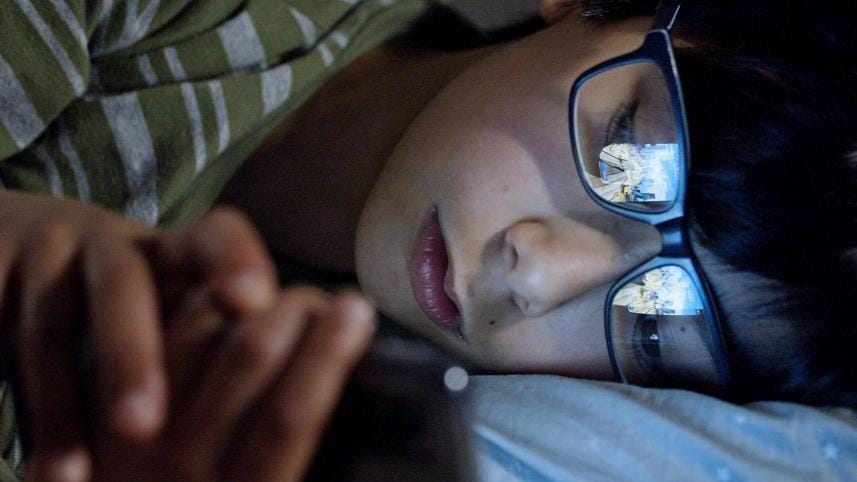
One of the strongest links is prolonged close-up work. Reading, writing, and especially screen use requires the eyes to focus at a short distance for long periods. A recent study found that each additional hour of daily screen time increases a child's risk of developing myopia. During the COVID-19 pandemic, this problem intensified as children spent months indoors attending online classes, often with little outdoor activity.
Time spent outdoors appears to be one of the most protective factors. Natural daylight plays a role in regulating eye growth during childhood. When children spend more time outside, their eyes are less likely to elongate — the structural change that causes myopia. Even an extra hour outdoors each day has been shown to reduce risk.
This is why myopia is now being described as a lifestyle-related condition, not just a vision problem. Modern childhood has shifted indoors. Homework, entertainment, and socialising increasingly happen on screens. Outdoor play, once a default part of daily life, has become optional.
The concern doesn't stop at needing glasses. High or progressive myopia can increase the risk of serious eye diseases later in life, including retinal detachment, glaucoma, and early-onset cataracts. This makes early detection especially important.
At home, small changes can make a meaningful difference. Encouraging children to take breaks during close-up tasks reduces strain. Many doctors suggest the "20-20-20" rule: every 20 minutes, look at something at least 20 feet away for 20 seconds. Just as important is prioritising outdoor time — not as a reward, but as a necessity for healthy development.
Parents often worry that limiting screen time means limiting learning. Experts argue otherwise. The issue isn't screens alone, but balance. Vision health improves when near work is offset with distance viewing and exposure to daylight.
The rise in childhood myopia is not about blame but about awareness. Children's eyes are still growing, and their environments shape how that growth happens. By recognising the risks early and adjusting daily habits, parents can help protect something their children will rely on for the rest of their lives: clear, healthy vision.
Comments