


US is weaponising an old trade law, and Bangladesh is in the crossfire
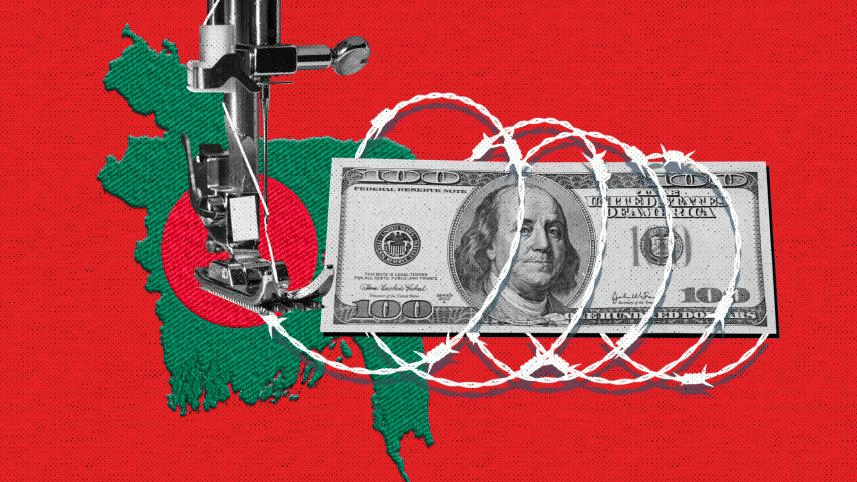
A new trade storm is gathering in Washington, and Bangladesh is directly in its path.
On March 11, the United States launched a sweeping investigation into 16 countries, from industrial giants like China and the European Union to developing exporters such as Bangladesh and Cambodia.
 For all latest news, follow The Daily Star's Google News channel.
 The official accusation? These countries are artificially propping up their industries, creating a "structural overcapacity" (essentially, making way too many products) that hurts American factories.
To understand why the US is suddenly targeting Bangladeshi export subsidies and even cement factories, we need to look at the calendar. Recently, the US Supreme Court struck down the legal tool the White House had been using to impose punitive tariffs on other countries. Then the Trump administration turned to a temporary measure to impose those tariffs, currently set at 10 percent globally. That measure will expire on July 27, which is why the US government revived an old legal tool known as Section 301 of the Trade Act of 1974. This incredibly powerful law gives the US president massive leeway to punish other countries for "unfair" trade practices, and it doesn't require approval from Congress or the courts.
Dr Deborah Elms, head of trade policy at the Hinrich Foundation, explains that the US is keeping this investigation on a very short leash. "The USTR’s goal is to replace these [expiring] tariffs with new measures by July," she wrote in an article on her organisation’s website on March 12. Because they are in such a rush, the US government is throwing everything at the wall to see what sticks, accusing these 16 countries of a wild variety of offences just to justify new taxes.
Washington’s use of Section 301 has mutated over the years. For decades after the World Trade Organisation (WTO) was formed in 1995, Section 301 was mostly a bureaucratic stepping stone. The US government primarily used it to gather evidence before politely taking a formal trade dispute to the international WTO courts.
That polite era ended during the first Trump administration. Washington stopped asking the WTO for permission and turned Section 301 into a unilateral sledgehammer. The most famous example was the 2018 trade war, when the US bypassed global courts and slapped punishing tariffs -- ranging from 7.5 percent to 25 percent -- on $370 billion worth of Chinese goods over intellectual property theft, according to the US Congress website. They also briefly used it to tax European goods in 2020 over a dispute involving airplane subsidies.
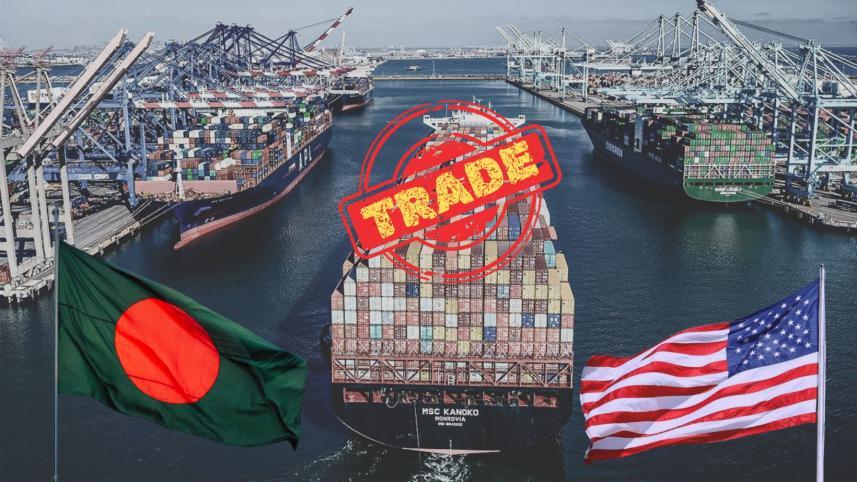
When the Biden administration took over, they didn't put the weapon away. In May 2024, after a formal review, Biden not only kept those Trump-era China tariffs but actively spiked some of them (like jacking up taxes on Chinese electric vehicles).
Now, by scooping up 16 incredibly diverse economies -- lumping a vulnerable, developing garment hub like Bangladesh into the same regulatory basket as China, Germany, and India -- the US is breaking all historical precedents. Washington is no longer using Section 301 to fix specific, targeted trade violations; it is using it as a frantic, sweeping dragnet to replace the universal tariff revenue it just lost in the Supreme Court.
Stephen Lamar, the president of the American Apparel & Footwear Association, said that his group was discouraged by the proposed tariffs and that the administration should slow down and work with various stakeholders, including Congress, according to a New York Times report. He likened the process to the administration trying to “glue together shattered glass in a messy fix.”
“We understand the administration is hurriedly trying to recreate the tariff rates it had sought to establish under a scheme now deemed illegal by the Supreme Court,” he said. “In this effort, the process increasingly feels like answers in search of an investigation rather than an investigation in search of answers.”
However, in recent days, some commentators in Bangladesh have gone on social media to downplay the threat as a non-event. Their logic is: Because we are on a list with 15 other countries like China and India, we are safely hidden in the crowd. Don't panic and don’t go into a frenzy.
This is a dangerous mindset.
Simply put, Section 301 is not a group punishment. The US can use this law to slap high taxes directly on Bangladeshi exports. As Dr Elms warns, the current US administration "appears keen to retaliate first and discuss mostly later," and any penalties they apply "are likely to be long-lasting."
If the US slaps new taxes on Bangladeshi clothes just as the country loses its special LDC trade privileges, it could be a fatal blow to factory margins and millions of jobs.
Because this is a rushed political scramble, the US government's arguments for targeting Bangladesh are economically unreasonable. They accuse Bangladesh of overproducing goods and using government cash incentives to dump cheap products on the world.
So why don’t accusations against Bangladesh make no sense?
1. You can't “overproduce” made-to-order shirts
The US treats Bangladesh’s ready-made garment (RMG) sector as if it were a Chinese steel mill churning out metal to oversupply the market. But the garment industry doesn't work that way. It is entirely made-to-order. A factory in Dhaka doesn't sew a thousand shirts unless an American brand like Target or Walmart explicitly places an order for them. You cannot accuse Bangladesh of "overproducing" goods that American companies specifically asked for.
2. The arbitrary cement logic
In its official complaint, the US literally pointed to unused capacity in Bangladesh’s cement industry as proof of unfair trade. This shows how little homework Washington did. Cement is heavy and expensive to ship. Bangladesh makes cement strictly to build its own local bridges and roads; it doesn't ship it to California. Suggesting that cement mills in Dhaka are a threat to American workers is arbitrary.
3. Bangladesh is following the rules
The US is seemingly unhappy about the cash incentives the Bangladeshi government gives to its exporters. But under global trade rules, poor countries (least developed countries, or LDCs) are legally allowed to use these incentives to grow their economies. Furthermore, because Bangladesh is graduating from LDC status in 2026, it is already in the process of cutting these subsidies anyway. The US is basically trying to penalise Bangladesh for a completely legal programme that Dhaka is already shutting down.
With public hearings starting on May 5 in Washington, and a tight mid-April deadline for written defences, Dhaka has to move fast. Relying on friendly diplomatic chats or just complaining that the US is being unfair will not work. To survive this trade trap, Bangladesh needs to show up with hard data and a clear strategy: Bangladeshi diplomats should confer with American CEOs and immediately team up with major US clothing brands, if possible. Those executives need to say: If you tax Bangladesh, you aren't bringing factory jobs back to America. You are just forcing American families to pay more for their kids' school clothes.
Bangladesh must focus on the "made-to-order" reality. Show the US the paper trail proving that every garment leaving the port was explicitly requested by a US buyer. Instead of hiding the export cash incentives, Bangladesh should proudly show the data proving they are perfectly legal under international law, and highlight the exact timeline of how the country is already phasing them out. The US's main target right now is China. Bangladesh needs to politely remind Washington that it is a friendly, developing nation helping American companies diversify their supply chains. Punishing Bangladesh only pushes global trade back into Beijing's hands. Bangladesh's representatives shouldn't get emotional or play the victim. They need to show up with a factual takedown of the US government's flawed math.


Comments