


Odyssey of the golden Greek

History occasionally produces figures who seem less like mere mortals and more like characters wandering out of classical drama.
Aristotle Onassis was one such apparition.
 For all latest news, follow The Daily Star's Google News channel.
 Magnate, seducer of fortune, connoisseur of spectacle and ultimately a man chastened by grief, he possessed the improbable aura of a myth carved in modern steel and oil.
His life glittered with such abundance, audacity and social magnetism that he appeared less a businessman than a legend wandering through the twentieth century in dark glasses and immaculate suits.
To call him merely a shipping magnate is technically correct but curiously insufficient.
Fortune came to him not as a quiet accumulation but as a grand tide, lifting him from the uncertainty of exile to the rarefied circles of the world’s elite.
His story, as it unfolded, would come to embody a certain dazzling archetype.
Apprenticeship of ambition
Aristotle Socrates Onassis was born on January 20, 1906 in the vibrant port city of Smyrna, a cosmopolitan crossroads where Greek and Ottoman influences mingled.
His early life, however, was disrupted by the violence and upheaval of the Greco-Turkish War, which forced thousands of Greeks from their homes. The Onassis family, once prosperous, lost nearly everything.
The young Aristotle left for Buenos Aires in search of opportunity. He arrived with modest resources but formidable resolve.
Like many immigrants before him, he began at the lowest rungs, working as a telephone operator while quietly learning the mechanics of commerce.
His first ventures involved the tobacco trade, where he demonstrated a precocious instinct for negotiation and risk.
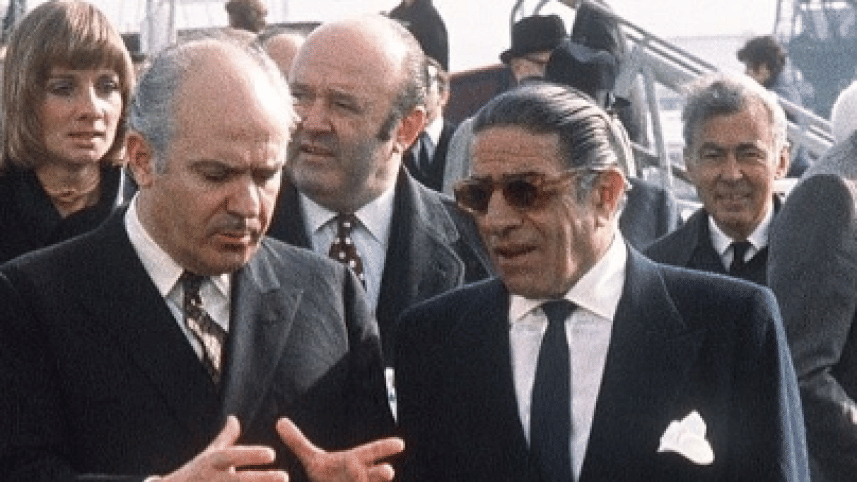
Yet Onassis’s ambitions stretched far beyond the warehouses and counting houses of the tobacco business. His gaze was fixed on something grander -- the sea.
By his mid-twenties he had begun investing in shipping.
The timing was uncannily astute. The global oil economy was expanding, yet the infrastructure to transport it lagged behind.
Onassis saw the gap and plunged into it with fearless calculation.
He began acquiring tankers -- often older vessels bought cheaply during the economic turbulence of the interwar years.
Where others saw rusting hulks, he saw floating vaults of profit.
Soon he was building an armada.
The early twentieth century was an era when oil was rapidly becoming the lifeblood of industry.
Nations were hungry for energy, and the transport of crude across oceans would become a strategic necessity.
Onassis recognised this transformation with remarkable clarity.
As global demand for petroleum surged after the WWII, Onassis expanded his fleet into one of the largest private shipping empires in existence.
His vessels traversed the world’s sea lanes, carrying oil from the Middle East to Europe and the Americas.
In business circles he developed a reputation for audacity and shrewdness. Contracts were negotiated with tenacity; competitors were outmanoeuvred with tactical brilliance.
Golden Greek
By mid-century, the once-impoverished refugee had become one of the most powerful figures in international shipping..
His fleet of supertankers carried oil across oceans with relentless efficiency.
In an industry governed by tides, politics and unpredictable markets, Onassis navigated with dazzling boldness.
He negotiated oil transport deals with Middle Eastern producers, struck controversial arrangements with governments, and pushed relentlessly for scale.
His ships were among the largest afloat, technological behemoths that redefined maritime logistics.
But business alone did not explain the magnetism that surrounded him.
Onassis possessed a theatrical sensibility for power.
He cultivated a public persona that mingled extravagance with mystery.
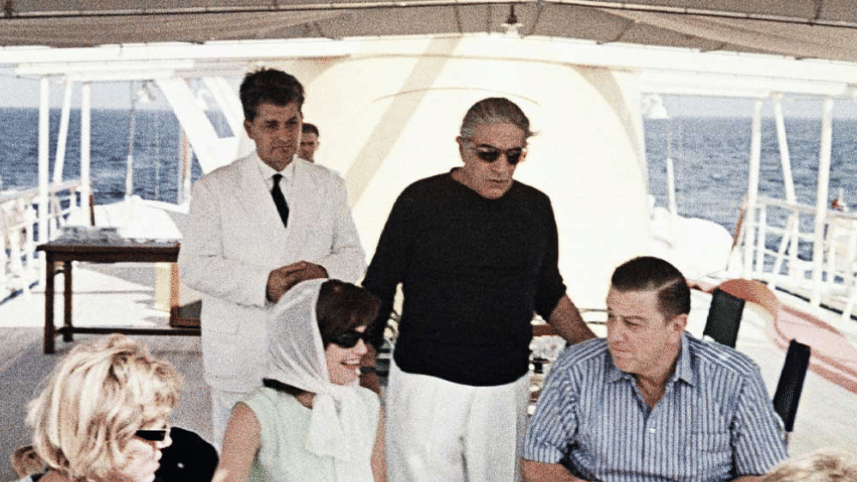
At the centre of this glamorous orbit was his celebrated yacht, the Christina, named after his daughter, a floating palace that hosted a cavalcade of artists, aristocrats, politicians and film stars.
Guests spoke of evenings scented with Mediterranean air and conversation drifting from politics to poetry.
The yacht became a symbol of Onassis himself -- opulent, cosmopolitan and faintly legendary.
Winston Churchill was entertained there; opera diva Maria Callas wandered its decks; industrialists and aristocrats competed for invitations.
Wealth had turned Onassis into a global curiosity.
He became known, almost mythically, as the “Golden Greek”.
Yet Onassis’s fame did not arise solely from his commercial success.
Wealthy industrialists existed in abundance. What distinguished him was the extraordinary aura he cultivated around his life.
He dressed with understated elegance, favouring finely tailored suits and the now-iconic glasses that lent him an air of enigmatic detachment. He moved through society with a languid confidence that suggested the world was, if not exactly his possession, at least his playground.

Public fascination with Onassis was further heightened by his romantic life, which unfolded with an almost operatic intensity.
His affair with the celebrated soprano Maria Callas captured the imagination of Europe and America alike.
Their liaison fused music, glamour and emotional turbulence, creating a narrative that newspapers followed with avid curiosity.
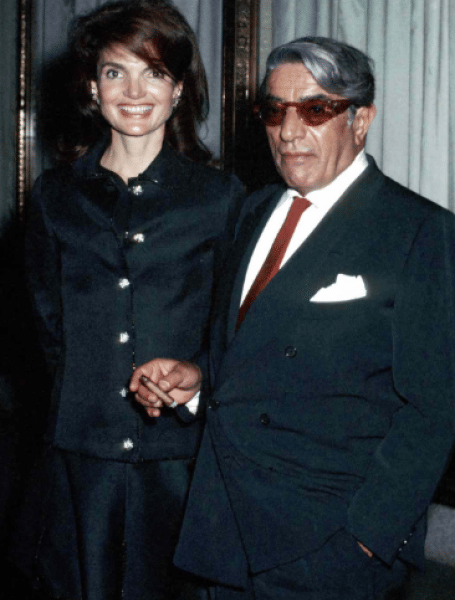
In 1968 he astonished the world by marrying Jacqueline Kennedy Onassis, widow of the late American president John F. Kennedy.
The union electrified international media.
To many observers it seemed the ultimate convergence of wealth, celebrity and political symbolism.
Yet behind the romantic headlines stood a calculating strategist who understood precisely how visibility could enhance mystique.
A modern-day Greek tragedy
Classical Greek tragedy turns upon a familiar arc -- meteoric ascent followed by an inexorable reckoning.
Aristotle Onassis’s later years seemed eerily scripted by that ancient template.
In 1973, his son Alexander -- the heir to the shipping empire and the figure upon whom Onassis had placed immense emotional investment -- died in a plane crash.
The loss devastated him.
Friends later remarked that the once irrepressible tycoon seemed suddenly diminished, his vitality drained by grief.
The empire endured, but the man who had built it appeared to wither in the aftermath.
Wealth, which had conquered oceans and courts alike, proved powerless against personal catastrophe.
Two years later, on March 15, 1975, Aristotle Onassis died in Paris.
He was 69.
The odyssey continues
Even decades after his death, the fascination persists.
Onassis’s story resonates because it contains elemental contrasts. Refugee and billionaire. Romantic and strategist. Empire-builder and bereaved father.

It is a narrative that mirrors the paradoxes of the twentieth century itself -- an age of upheaval, ambition and spectacle.
In the end Aristotle Onassis embodied the ancient Greek notion that prosperity carries within it the seed of vulnerability.