Confronting gender inequality in Bangladesh’s labour laws
On this International Women’s Day, it is both timely and necessary to reflect on how far Bangladesh has come in recognising women’s contributions to the workforce, and how far we still need to go to ensure that the law truly protects them.
At the outset, it must be remembered that labour laws in Bangladesh primarily cover the formal sector, which represents only around 15 per cent of the total workforce, according to various estimates. A large proportion of informal sector workers, many of whom are women, remain outside the effective protection of the law.
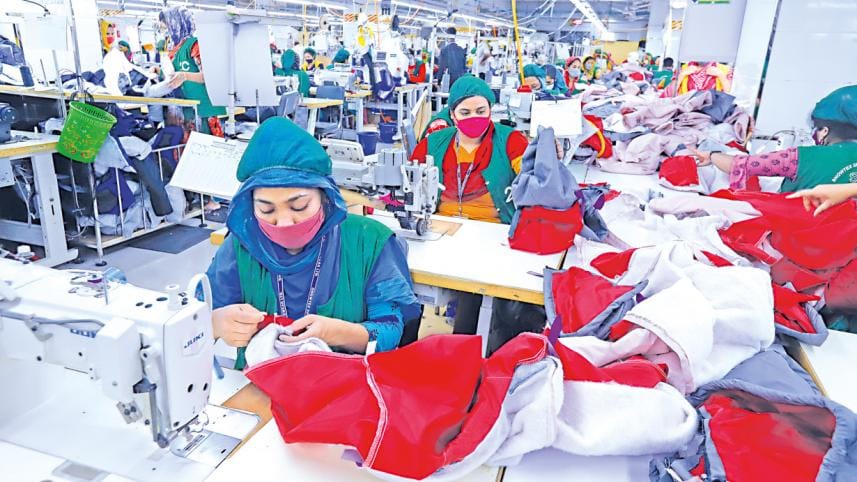
Workers’ rights in Bangladesh are primarily governed by two key statutes: the Bangladesh Labour Act, 2006 and the Bangladesh EPZ Labour Act, 2019. The latter regulates workers employed in Export Processing Zones, which collectively employ more than 500,000 workers, the majority of whom are women. In this write-up, I primarily examine the provisions of the Bangladesh Labour Act, 2006, noting that, in many instances, the issues affecting EPZ workers closely resemble those found under the same framework. Many of these legal gaps are particularly significant in sectors where women form a large share of the workforce, including export-oriented manufacturing such as the ready-made garment industry.
The Bangladesh Labour Act, 2006, underwent a major amendment in November 2025, which introduced several progressive reforms. However, important gender gaps remain embedded in both the structure and implementation of the law. These gaps, whether in maternity protection, workplace safety, union representation, or wage equality, continue to disadvantage women workers in practice. Among the many issues that warrant attention, only a few are examined here.
Domestic workers: Partial recognition, partial protection
One notable development is the recognition of domestic workers, who are overwhelmingly women, as workers under the law, albeit for a limited purpose. The amendment extends the application of Chapters XII, XIII, and XIV of the Act to domestic workers, thereby granting them rights relating to compensation for workplace injuries and the right to organise and bargain collectively.
This is undoubtedly a positive step. However, the non-application of other core protections under the Act significantly limits the practical benefit of this recognition. Domestic workers remain excluded from broader protections concerning working hours, leave, termination safeguards, and many welfare provisions. As a result, their recognition as workers remains incomplete, and so too does the protection available to them.
Disparity in maternity benefits
Maternity protection remains one of the most visible areas of gender disparity. Under the recent amendment, maternity leave for women workers has been increased from 112 days to 120 days. While this represents progress, it falls short of the 180 days demanded by workers’ organisations. More importantly, it stands in stark contrast to the entitlement of government employees.
Female government officials are entitled to six months, or 180 days, of maternity leave under the Government Servants Leave Rules. In contrast, women workers in the private sector covered by the Bangladesh Labour Act receive only 120 days of leave. This creates an unequal standard of maternity protection between public and private sector employees, raising serious concerns under the constitutional guarantee of equality.
Beyond the difference in duration, the 2025 amendment introduced a new method for calculating maternity benefits under Section 48(2), which may reduce workers’ monetary entitlements in many cases. Previously, maternity benefits were calculated on the basis of the average wages earned during the three months immediately preceding the notice of maternity leave. The total wages received during that period were divided by the actual number of working days, thereby reflecting the worker’s real earnings pattern.
Under the new amendment, the daily average wage is calculated by dividing the last drawn total monthly gross wage by 26.
While this formula appears standardised and simpler, in practice it may reduce the total amount payable. Thus, although the duration of leave has been modestly increased, the change in the calculation method may effectively reduce the financial protection available to women workers during maternity. For low-wage women workers, even a small percentage reduction can significantly affect their economic security at a critical time in their lives.
Violence and harassment at the workplace: Progress with gaps
The amendment has introduced important provisions addressing workplace violence and harassment. Three new definitions — violence and harassment, gender-based violence and harassment, and sexual harassment — have been incorporated into the Act, closely aligning with international standards, including ILO Convention No. 190.
The definition of sexual harassment reflects principles articulated in the landmark High Court decision in Writ Petition No. 5916 of 2008, which laid down binding guidelines for preventing sexual harassment at workplaces and educational institutions. The new Section 332KA mandates the formation of a five-member Complaint Resolution Committee, with a majority of women, a woman chairperson, and external members with experience in gender issues.
This alignment represents a strong and modern legislative step. However, important procedural gaps remain. The amendment does not clearly specify what actions an employer must take after the committee submits its findings. Without detailed procedural rules and clear enforcement guidelines, even strong definitions may fail to ensure effective protection.
Women’s representation in trade union leadership
Section 176 provides that, where women constitute at least 20 per cent of an establishment's workforce, at least 10 per cent of the members of the union’s Executive Committee must be women.
This provision reflects a positive effort to promote women’s participation in trade union leadership. However, although women are present in the executive committees of several federations, very few occupy key decision-making positions such as president or general secretary at the national or sector level. In the absence of clear operational mechanisms to ensure compliance, the provision risks remaining aspirational rather than transformative.
Equal pay for equal work: A principle without a roadmap
Section 345 enshrines the principle of equal pay for equal work, requiring equal wages for work of the same nature, value, or standard. While this is a strong normative commitment, the law provides no guidance on how work of equal value should be assessed, how wage comparisons are to be conducted, or how discrimination claims should be investigated and remedied. Without clear criteria, monitoring mechanisms, and effective remedies, the principle risks remaining largely declaratory.
The tea industry: A sector requiring urgent reform
Immediate and focused attention must also be given to the tea industry, where the majority of tea garden workers are women. A careful review of the Bangladesh Labour Act, 2006, reveals ambiguities and inconsistencies in provisions relating to housing, gratuity or pension, casual leave, and annual leave that disproportionately affect tea workers.
In particular, given the unique and generational nature of tea garden employment, where employer-provided housing is inseparable from livelihood, stronger safeguards are essential to protect tea workers from eviction upon termination of service. For many tea worker families, loss of employment effectively means loss of shelter and social security. Tea workers are also excluded from the ten days of paid casual leave granted to other workers under Section 115. Furthermore, while most workers earn one day of annual leave after 18 days of work, tea workers must work 22 days to earn a single day of annual leave.
These long-standing disparities are not merely technical inconsistencies. Addressing them requires urgent legislative reform to ensure fair and equal treatment of tea workers, consistent with the broader principles of equity and non-discrimination reflected in the labour law framework.
Formal equality is not enough
Bangladesh has made important progress in reforming its labour law. Yet gender gaps persist not only in the law's text but also in its structure and implementation. From unequal maternity standards and reduced benefit calculations to procedural ambiguities in harassment cases, weak enforcement of union representation provisions, and structural discrimination in certain sectors, significant challenges remain.
True gender justice in labour law requires more than progressive language. It requires coherent procedures, enforceable standards, and a genuine commitment to substantive equality. On this Women’s Day, the call is not merely for celebration, but for continued reform so that women workers across the country are protected not only in principle, but in practice.
AKM Nasim is Country Program Director at Solidarity Center Bangladesh and a former member of the Labour Reform Commission.
Jamin Islam Oni is a Program Officer at Solidarity Center Bangladesh.
Khandaker Shafin Habib Shan is a Program Officer at the Solidarity Center Bangladesh Office.
Send your articles for Slow Reads to slowreads@thedailystar.net. Check out our submission guidelines for details.

International Women's Day / Beyond the celebration

Unequal homes

Abolish discriminatory inheritance laws now

Land, lineage, and the fight for Indigenous women’s rights

Online abuse is now a national crisis: Time to act

Why sexual harassment laws fail in practice

Women as non-citizens in Bangladesh — and why the future must be feminist

Public lands, patriarchal rules

Break barriers to women’s economic power

Editor's Note

Justice that lets every woman and girl live free from fear
Confronting gender inequality in Bangladesh’s labour laws
Women in justice and justice for women