What the Pakistan–Afghanistan conflict means for Bangladesh
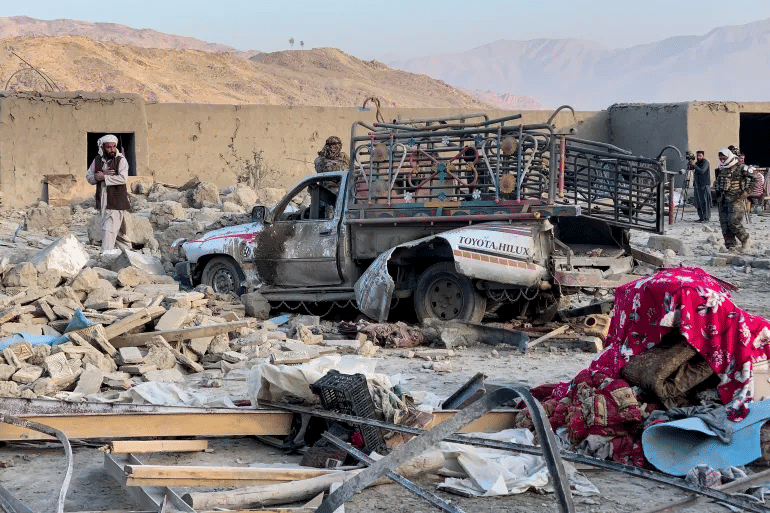
South Asia has entered a new phase of instability after military confrontation erupted between Pakistan and Afghanistan in February 2026. What began as cross-border strikes against militant groups quickly escalated into open hostilities, raising concerns about regional security, humanitarian crises, and the future of diplomatic cooperation in South Asia. Pakistan initiated airstrikes on February 21, 2026, targeting seven militant camps in Afghanistan's Nangarhar, Paktika, and Khost provinces. These strikes responded to terror attacks in Islamabad, Bajaur, and Bannu, which Pakistan attributed to Tehreek-e-Taliban Pakistan (TTP) and Islamic State-Khorasan (ISIS-K) operating from Afghan soil. Afghanistan's Taliban condemned the action as hitting civilian sites, including a religious school, killing 18 civilians, according to their claims. Pakistan reported over 80 militants killed in "intelligence-based” and “selective” operations. Tensions built from a fragile ceasefire last — mediated by Qatar and Turkey — that unraveled amid ongoing skirmishes along the Durand Line, a border drawn by British colonial rulers in 1893, which was rejected by Kabul since its inception. By February 26, Afghanistan launched retaliatory operations, and Pakistan responded with Operation Ghazab Lil Haq, bombing Kabul, Kandahar, and Paktia. Defense Minister Khawaja Asif announced a state of "open war." Casualty figures remain disputed, with Pakistan claiming hundreds of Taliban fighters were killed while Taliban officials report significant Pakistani military losses.
Ground clashes involved artillery, drones, and captures, with Pakistan. There is no clear objective, and the end to the crisis is seen as the conflict is rooted in accusations of harbouring militants, which Kabul denies. International community calls for restraint, came from the UN, China, the EU, the US, which backed Pakistan's self-defense. India supported Afghan sovereignty, highlighting regional divides. As casualties mount, with unverified reports of hundreds of dead, the conflict has resulted in a humanitarian crisis.
Regional Security Risks
The conflict between two neighboring states has shattered fragile crisis management structures along the Pakistan–Afghanistan frontier. Border closures have disrupted trade links, especially major crossings that historically facilitated commerce and movement. Ground reality indicates significant paralysis in transit logistics, leaving freight stranded and undermining regional trade networks. Instability also heightens the prospects of refugee flows into Pakistan, Iran, and potentially a scenario with humanitarian and socio-political ramifications across the region. Historically, Afghan wars have generated waves of refugees; renewed fighting could exacerbate displacement and strain already fragile host state capacities. Across South Asia, markets and supply chains remain vulnerable due to this conflict. A broader economic slowdown — coupled with volatility in global energy markets triggered by conflicts elsewhere, such as the Middle East — could depress growth and amplify inflationary pressures. Conflict zones often become breeding grounds for non-state violent actors. The contested Afghan frontier, historically a haven for insurgent groups, risks amplifying recruitment and radicalisation across borders. Analysis suggests a resurgence of militant attacks by groups like the TTP and ISKP, with potential ideological and operational spillover into neighboring countries.
For South Asia, this raises the spectre of cross-border terrorism, networked insurgency, and transnational security threats that challenge conventional state control and regional cooperation. The conflict amplifies existing diplomatic fractures, complicates SAARC-level integration efforts, and risks furthering divergent strategic alignments. It also places smaller states in South Asia into a delicate balancing act among competing strategic narratives. Bangladesh’s internal and external security environment could be affected by this conflict. While direct conflict spillover is geographically distant, ideological contagion among militant networks poses latent risks and hampers Bangladesh’s plan to revive and functionalise SAARC for regional integration. The expansion of recruitment pipelines by transnational terrorist groups underscores the necessity for vigilance against extremist recruitment within Bangladesh.
Why the Conflict Matters for Bangladesh
Bangladesh's BNP, led by Tarique Rahman, won a landslide in the historic February 2026 elections. This ended Sheikh Hasina's pro-India era, signalling a foreign policy "reset." The BNP manifesto adopts "Shobar Ageh Bangladesh" (Bangladesh Before All) and "Friend Yes, Master No," prioritising sovereignty, economic diplomacy, and multilateralism. It eyes ASEAN membership, SAARC revival, Muslim world ties, and balanced relations with India, China, and Pakistan. Post-election, BNP pledged “forward-looking” Pakistan ties, resuming flights, easing visas, and exploring JF-17 jet sales. Honourable Prime Minister Tarique Rahman emphasised “Bangladesh First,” avoiding country-centric alignments. Foreign Minister Khalilur Rahman called the war "unfortunate," favouring “quiet diplomacy” for stability. He urged restraint without picking sides in the conflict. Bangladesh echoed SAARC principles: sovereignty and non-interference. This neutral stance aligns with BNP's pragmatism, contrasting with the previous India tilt. No direct involvement has been reported, but Dhaka monitors spillover risks like refugee flows or militancy. However, this conflict adds more obstacles for the future of regional stability and cooperation.
The war bolsters Pakistan-Bangladesh rapprochement efforts. Pre-election pacts on trade and defence signal deeper ties. Many see the “reopening” of relations through the lens of transactional diplomacy. For Bangladesh, supporting Pakistan subtly advances "Bangladesh First" by fostering a South Asian balance of power. It navigates through turbulent waters amidst India-Pakistan hostility and China-India rivalry, amid Teesta disputes and Sheikh Hasina's extradition demands. War-related instability could spike energy prices, push the Rohingya crisis out of sight, or pose rising radicalisation and terror threats to Bangladesh. The government eyes defence upgrades via Pakistan and economic gains from diversified exports. Multilateral forums like SAARC could host mediation, elevating Dhaka's role, but therein lies the true challenge for Bangladesh.
Strategic Balancing in a Changing Region
Experts predict incremental policy shifts, but not ruptures. Rohingya repatriation ties into Muslim solidarity, indirectly linking to Afghan instability, which could prove fatal for crisis management in the coming days. A long-term, prolonged war could draw Bangladesh into anti-terror cooperation with Pakistan, boosting bilateral defence. Risks include Indian backlash or US pressure on China ties, but BNP's multilateralism aims to position Bangladesh as a neutral broker and a champion of regional cooperation.
The conflict disrupts trade routes, CPEC, and Afghan reconstruction. For South Asia, it echoes past Iran-Pakistan clashes and the Indo-Pak conflict, threatening regional stability. Bangladesh gains leverage by deepening Pakistan links while urging peace. BNP's policy is now under a litmus test for its "no master" doctrine amid great-power competition. The evolving crisis may encourage Dhaka to reconsider aspects of its regional diplomacy, including relations with Pakistan, embedding it in a sovereignty-focused foreign policy that prioritises stability and pragmatism for Bangladesh's security and prosperity.
The Pakistan–Afghanistan conflict of 2026 highlights the fragile security architecture of South Asia. Beyond the battlefield, its consequences are likely to ripple through regional trade, diplomacy, and counterterrorism cooperation. For Bangladesh, the challenge will be to maintain strategic neutrality while safeguarding its economic interests and domestic security. By emphasising diplomacy, multilateral engagement, and regional dialogue, Dhaka can play a constructive role in promoting stability in an increasingly volatile neighbourhood.
Md Nahiyan Shajid Khan is a research officer at Bangladesh Institute of International and Strategic Studies (BIISS).
Send your articles for Slow Reads to slowreads@thedailystar.net. Check out our submission guidelines for details.

Bangladesh–Türkiye relations: Towards a disciplined strategic partnership

The Iran ceasefire deal and the limits of American power

Why the Strait of Hormuz reopening won't ease price pressures anytime soon

Why fencing the Myanmar frontier alone won’t work

Why the US can no longer contain China

The real crisis behind India-Bangladesh border push-ins

Trump’s Iran deal might end the war, but solve nothing

What's really in the US-Iran deal?

Israel-First: U.S. Congress is quietly merging America's military with Israel's