


America’s belated word on 1971, and Bangladesh’s unfinished task

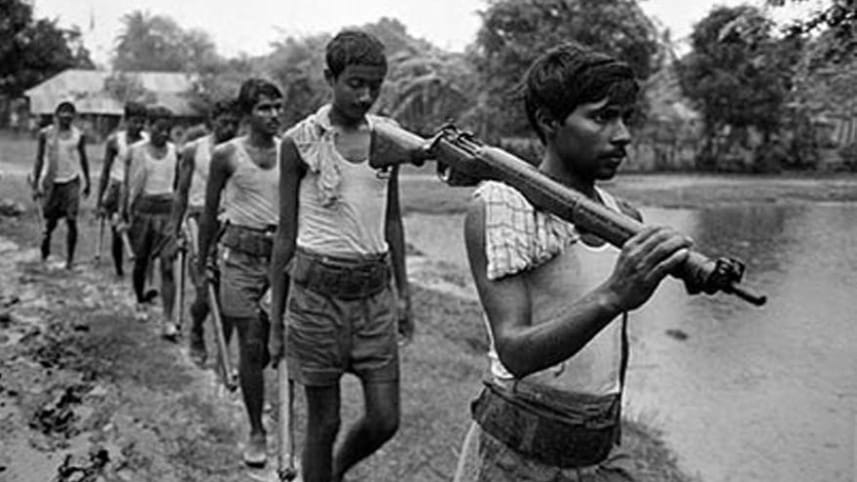
The new resolution introduced in the US House of Representatives by Congressman Greg Landsman on March 20, 2026—calling for formal recognition of the 1971 genocide in Bangladesh—matters because the United States was never an innocent spectator in 1971. Washington knew what was happening in East Pakistan. Archer K Blood, the then US consul general in Dhaka, made this clear in a strongly worded telegram to the State Department. Yet, the Nixon administration adopted a policy—later acknowledged in official histories— that favoured Pakistan for Cold War reasons, including its efforts to open relations with China.
So this is a notable step, but not because America has suddenly discovered the truth, but because an American lawmaker is now asking the same state that once rationalised slaughter as an internal matter to correct its own record.

Bangladesh should not celebrate too quickly, however. This is not the first such move in Congress. In 2022, House Resolution 1430, introduced by Steve Chabot and Ro Khanna, already recognised atrocities against ethnic Bengalis and Hindus as genocide and explicitly called on Pakistan to acknowledge its role and offer a formal apology. But that measure never moved beyond committee. The present resolution revives the issue, which matters, but it also narrows the operative demand. It recognises that Bangalees of all faiths were mass murdered, yet asks the US president to recognise atrocities against Bangalee Hindus. It also drops the earlier direct call on Pakistan to apologise. That is not a technical drafting change but a political choice.
How did all this begin? As we all know now, it began with a democratic verdict denied and a people marked for punishment. The Awami League won the 1970 election but power was blocked. Sheikh Mujibur Rahman was imprisoned. On the night of March 25, 1971, Operation Searchlight began. The Pakistan army and its local collaborators launched a campaign of mass killing, rape, persecution, and forced displacement. US diplomats reported “selective genocide.” Senator Edward Kennedy described the campaign’s “genocidal consequences.” The International Commission of Jurists and later the International Association of Genocide Scholars (IAGS) reached the same terrain. The argument, in truth, has not been about evidence for decades. It has been about power and convenience.
So, why now? Part of the answer is timing. The resolution arrived just before March 25, Bangladesh’s National Genocide Remembrance Day. Part of this shift reflects a buildup of historical recognition, as acknowledgments by bodies like the Lemkin Institute, Genocide Watch, and the IAGS have made continued avoidance increasingly difficult. Part of it is organised diaspora lobbying. Steve Chabot said in 2022 that Hindu constituents in Ohio’s first congressional district helped push the original resolution, and Greg Landsman now represents that same district. But part of the answer is also more uncomfortable. The title of the new resolution links 1971 to the “protection of religious minorities in Bangladesh,” with the memory of genocide being folded into current politics. That does not invalidate the initiative. It does mean Bangladesh should welcome the momentum without surrendering control of the narrative.
Its theoretical significance is real. Genocide denial survives through euphemism, delay, and selective memory. Recognition breaks that grammar of evasion. In the American case, it also exposes the gap between what US officials on the ground knew in 1971 and what the US state was willing to admit. That makes this resolution, if it advances, not merely a gesture towards Bangladesh, but also a late admission of American complicity in silence.
The practical significance is smaller, however. An “H Res” is a simple House Resolution. It is not law and is not presented to the president for signature. Even if adopted, it would not by itself force the White House to act, let alone compel Pakistan to apologise. Pakistan has spent decades substituting regret for accountability. The 1974 tripartite agreement recorded that Islamabad “condemned and deeply regretted” any crimes that may have been committed. Pervez Musharraf in 2002 again expressed regret, not apology. Pakistani officials later argued the matter had been settled. Bangladesh, including in talks last year, insisted it was not. So, a House Resolution can raise reputational costs but it cannot by itself produce repentance in Islamabad.
Will it exert pressure on Pakistan? Yes, but mostly moral and narrative pressure. At the moment, the current draft exerts less pressure than the 2022 draft did, because it no longer directly asks Pakistan to apologise. Bangladesh should say so plainly. If Dhaka merely applauds any foreign mention of 1971, it risks rewarding a diluted formulation. It should instead work, quietly but firmly, to widen support around the resolution, restore the demand for formal apology, and preserve the full architecture of the genocide, directed against the Bangalees, Hindus, intellectuals, and democracy itself. If the crime is reduced to a narrower communal story, Pakistan loses one line of escape but gains another.
What should Bangladesh do further? It should stop treating international recognition as a ceremonial wish and start treating it as a professional diplomatic campaign. Dhaka should mobilise its embassy, scholars, the Liberation War Museum, survivor networks, and diaspora groups around a bipartisan brief for Washington. It should press for more co-sponsors, a committee hearing, and a final text that names the genocide in full rather than in fragments. It should take the campaign beyond Washington, to European parliaments, universities, museums, and the United Nations. Most of all, Bangladesh should not subcontract its memory either to foreign governments seeking redemption or to diaspora groups with narrower ideological agendas.
The real lesson of this moment is simple: the facts are not unfolding because new facts have appeared; they are unfolding because old facts are finally colliding with old hypocrisies. That is why the resolution matters. And that is why Bangladesh must approach it with gratitude, vigilance, and a refusal to let others edit 1971 into something smaller than it was.
Barrister Khan Khalid Adnan is advocate of the Supreme Court of Bangladesh, fellow at the Chartered Institute of Arbitrators, and head of the chamber at Khan Saifur Rahman and Associates in Dhaka.
Views expressed in this article are the author's own.
Follow The Daily Star Opinion on Facebook for the latest opinions, commentaries, and analyses by experts and professionals. To contribute your article or letter to The Daily Star Opinion, see our guidelines for submission.
 For all latest news, follow The Daily Star's Google News channel.


Comments