


Fix the system that fails abuse survivors
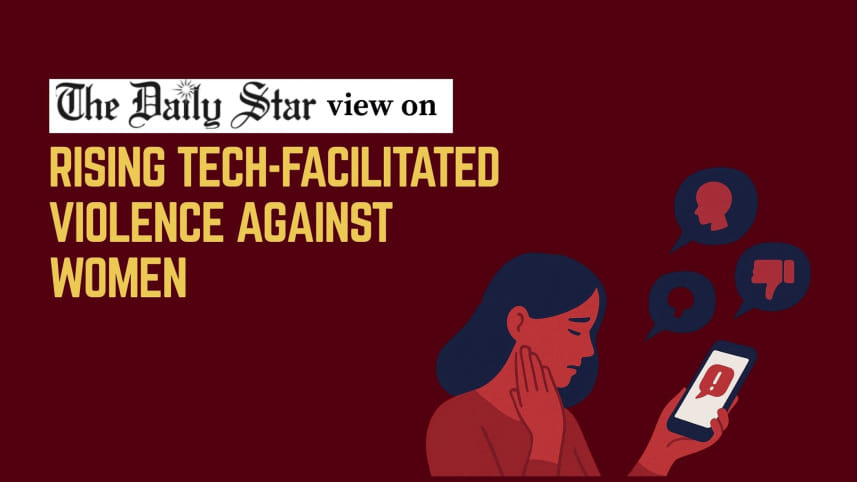
We are deeply worried to see the upward trend in technology-facilitated gender-based violence (TFGBV) in the country. As smartphones and digital platforms become increasingly embedded in our everyday life, the misuse of these technologies to harass, blackmail and exploit women has emerged as a serious threat. A recent report by this daily reveals how women who experience digital abuse often find themselves trapped not only by the perpetrators, but also by a system that is ill-equipped to deliver justice and support.
According to the 2024 National Violence Against Women Survey, 8.3 percent of women in Bangladesh have experienced TFGBV. Such abuse ranges from covert filming and non-consensual sharing of images to blackmail and harassment on digital platforms. For many victims, the consequences extend far beyond the digital sphere, leading to severe emotional distress, social stigma and even family breakdowns. The experience of a small entrepreneur from Bagerhat, as reported in this daily, reveals how devastating such crimes can be. Secretly filmed by a neighbour and later blackmailed, she was living under constant fear. When she finally refused to meet the perpetrator’s demands, manipulated clips were sent to her husband, who responded with violence and divorce.
 For all latest news, follow The Daily Star's Google News channel.
 Unfortunately, when survivors seek justice, they often encounter a fragmented and inadequate response system. Reportedly, the overall response to tech-facilitated abuse remains heavily police-centred, with limited coordination across health, legal and judicial services. A small number of cyber tribunals, inadequate technical capacity and insufficient expertise in handling digital evidence further weaken the system. Survivors also face insensitive questioning during investigations as officers lack proper training on the gendered nature of digital abuse.
While some steps have been taken to counter this, such as training officers on gender-based violence and digital abuse and setting up help desks in some districts, these initiatives remain limited and constrained by resource gaps. In some places, help desks lack even a computer, forcing survivors to share personal details with outside operators just to file a complaint. Many investigators, lawyers and judges lack specialised training in handling digital evidence, and forensic analysis—crucial in cybercrime cases—remains optional. Crisis centres are often understaffed, and coordination between institutions is weak. When cases are forwarded to national cyber units due to limited local capacity, the absence of an effective tracking system can leave complaints in a stagnant state for months.
Addressing TFGBV requires a far more comprehensive response. Law enforcement agencies, prosecutors and judges must receive specialised training to deal with cyber-related crimes and digital evidence. Forensic examination should be made mandatory, and cyber tribunals must be strengthened with adequate resources and expertise. Coordination between police, health services, crisis centres and legal aid institutions is also essential. At the same time, women and girls must be taught digital literacy, made aware of technology-facilitated crimes, and given clear guidance on where to seek help. Ensuring women’s safety online must remain a national priority, with a system that protects survivors and holds perpetrators accountable.
Comments