
Iran ‘won’t back down’ in face of ‘saboteurs’
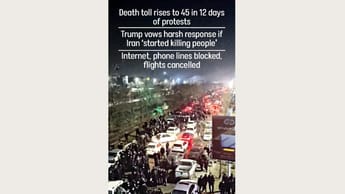
Iran was largely cut off from the outside world yesterday after authorities blacked out the internet to curb growing unrest, as video showed buildings and vehicles ablaze in anti-government protests raging through the streets of several cities.
In a televised address, Supreme Leader Ayatollah Ali Khamenei vowed not to back down, accusing demonstrators of acting on behalf of émigré opposition groups and the United States, as rights groups reported police firing on protesters in the south.
 For all latest news, follow The Daily Star's Google News channel.
 The unrest has not mobilised as many layers of society as other bouts of political, economic or human rights protest in the past decade and a half, but dozens are reported dead and the authorities look more vulnerable because of a dire economic situation and the aftermath of last year’s war with Israel and the United States.
Khamenei yesterday insisted that the Islamic republic would “not back down” in the face of protesters who he called “vandals” and “saboteurs”, in a speech broadcast on state TV.
Speaking to supporters in his first comments on the escalating protests since January 3, Khamenei said, US President Donald Trump’s hands “are stained with the blood of more than a thousand Iranians” and predicted the “arrogant” US leader would be “overthrown” like the imperial dynasty that ruled Iran up to the 1979 revolution.
Iranian protesters on Thursday night stepped up their challenge to the clerical leadership with the biggest protests yet of nearly two weeks of rallies, as authorities cut internet access and the death toll from the crackdown mounted to 45.
The internet blackout has sharply reduced the amount of information getting out. Phone calls into Iran were not getting through. At least 17 flights between Dubai and Iran were cancelled, Dubai Airport’s website showed.
Trump meanwhile threatened on Thursday to take severe action against Iran if its authorities “start killing people”, warning Washington would “hit them very hard”.
Reza Pahlavi, exiled son of the late shah, told Iranians in a social media post: “The eyes of the world are upon you. Take to the streets.”
However, the extent of support inside Iran for the monarchy or for the MKO, the most vocal of émigré opposition groups, is disputed.
Trump said yesterday he would not meet Pahlavi and was “not sure that it would be appropriate” to support him.
On Thursday, the Norway-based NGO Iran Human Rights said Wednesday was the bloodiest day of demonstrations, with 13 protesters confirmed to have been killed.
Iranian media and official statements have reported at least 21 people, including security forces, killed since the unrest began, according to an AFP tally.
A former senior official from the establishment’s reformist wing said the Islamic Republic’s core ideological pillars — from enforced dress codes to foreign policy choices - did not resonate with those under 30 - nearly half the population, reports Reuters. “The younger generation no longer believes in revolutionary slogans — it wants to live freely,” he said.
In the ongoing protests, many protesters are venting anger over Tehran’s support for militants in the region, chanting slogans such as “Not Gaza, not Lebanon, my life for Iran,” signalling frustration at the establishment’s priorities.
Inside Iran, opinions are divided on whether foreign military intervention is imminent or possible and even firm government critics question whether it is desirable.
“Enough is enough. For 50 years this regime has been ruling my country. Look at the result. We are poor, isolated and frustrated,” said a 31-year-old man in the central city of Isfahan on condition of anonymity.
Comments