


The paradox of Bangladesh’s climate progress
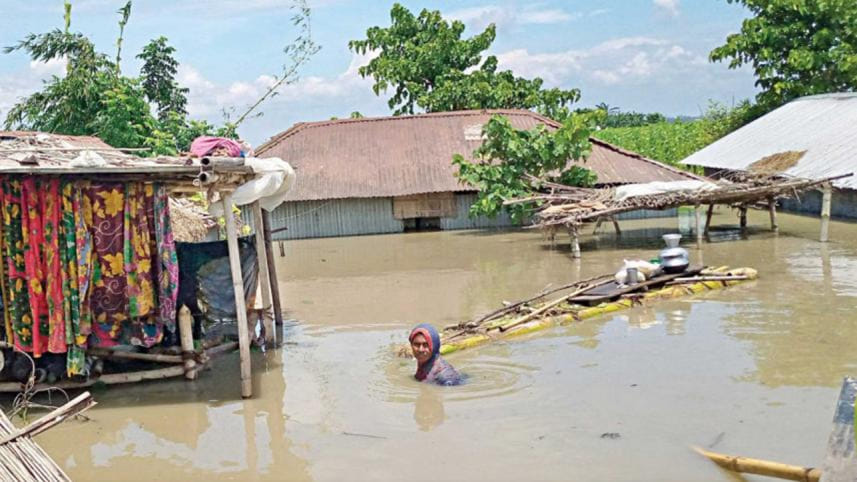
Bangladesh is once again featured prominently in the latest Climate Risk Index (CRI), a report widely cited by global media, policymakers, and international funders to assess countries’ exposure to climate impacts. Over the years, Bangladesh’s position in this index has shifted, improving in relation to other highly exposed countries. For many, this is read as a sign of progress: better preparedness, fewer deaths, stronger resilience.
But the more important question is not where Bangladesh ranks, but how that ranking is interpreted at a time when climate impacts are only deepening, not receding. The CRI, produced annually, measures climate-related losses based largely on extreme weather events, including fatalities and economic damage. By these indicators, Bangladesh has indeed made notable strides. Early warning systems, cyclone shelters, and disaster preparedness have significantly reduced mortality from sudden-onset events like cyclones and floods. This is a success story worth acknowledging. However, climate risk today is no longer defined only by sudden disasters.
 For all latest news, follow The Daily Star's Google News channel.
 The CRI captures what can be counted easily: deaths, damages, and disasters that occur within a defined timeframe. What it does not capture fully are the slow-onset, compounding, and deeply structural impacts that define climate vulnerability.
Salinity intrusion is rendering farmlands unproductive in coastal districts. River erosion is displacing thousands every year, often permanently. Heat stress is undermining labour productivity and public health. Climate-induced migration is reshaping cities and social systems. Cultural loss, psychosocial stress, and the erosion of livelihoods rarely appear in global indices, but they are very real for affected communities.
Global indices like the CRI are increasingly used as proxies for need, readiness, or resilience. Countries that show “improvement” may be perceived as less urgent priorities for climate finance, even as adaptive limits are being reached and loss and damage accelerate. In other words, progress in disaster response can paradoxically mask growing vulnerability.
The situation is critical because climate finance is becoming increasingly scarce. Adaptation funding remains inadequate, and most available support is offered as loans rather than grants, worsening the debt burden on vulnerable nations. While the landmark Loss and Damage Fund has finally opened for applications, its current resources are a mere fraction of the actual global need and its implementation remains a subject of intense political debate.
In this context, global assessments influence how decisions are made. Policymakers and funders look for signals: Which countries are “most at risk”? Which has “capacity”? Which are seen as “success stories”?
Bangladesh risks falling into a dangerous grey zone: no longer framed as an emergency, but not yet supported for the long-term structural losses it is facing.
This is particularly concerning because many of the impacts Bangladesh faces today are not easily reversible through adaptation alone.
Global indices do not exist in a vacuum. They rely heavily on national data systems, reporting mechanisms, and official statistics. What countries track, report, and prioritise inevitably shapes what becomes visible internationally.
In Bangladesh, while disaster losses are relatively well documented, slow-onset impacts, non-economic losses, and displacement-related costs remain undercounted. Informal economies, unpaid care work, and cultural losses rarely appear in national accounts—let alone global indices. This creates a feedback loop: what is not counted is not prioritised; what is not prioritised is not funded. As a result, global assessments may reflect not only climate realities, but also institutional blind spots.
If indices like the CRI continue to dominate narratives of vulnerability without adequately capturing loss and damage, there is a real risk that funding gaps will widen precisely when needs are intensifying. Bangladesh may appear more “resilient” on paper, while communities face irreversible losses on the ground.
This is not an argument against the CRI. It is an argument for using it more carefully and complementing it with deeper, context-sensitive analysis. The Government of Bangladesh can play a critical role through strengthening national systems to track slow-onset loss, displacement, and non-economic impacts; integrating these into climate reporting; and ensuring that international narratives reflect lived realities. Civil society organisations, researchers, and local institutions are equally vital. They document what statistics overlook, amplify community voices, and challenge simplified narratives of success or failure.
At a global level, funders and policymakers must resist the temptation to treat rankings as shortcuts. Climate vulnerabil-ity is not a league table. It is dynamic, uneven, and deeply human. Bangladesh’s shifting position in global indices should prompt deeper questions, not complacency. The real measure of progress will not be where the country ranks, but whether climate-vulnerable communities receive the support, justice, and resources they need as climate impacts con-tinue to unfold.
Ashish Barua is climate activist and fundraising professional.
Views expressed in this article are the author's own.
Follow The Daily Star Opinion on Facebook for the latest opinions, commentaries, and analyses by experts and professionals. To contribute your article or letter to The Daily Star Opinion, see our guidelines for submission.
Comments