


Bangladeshi short ‘Scarlet Echoes’ in Tampere main competition
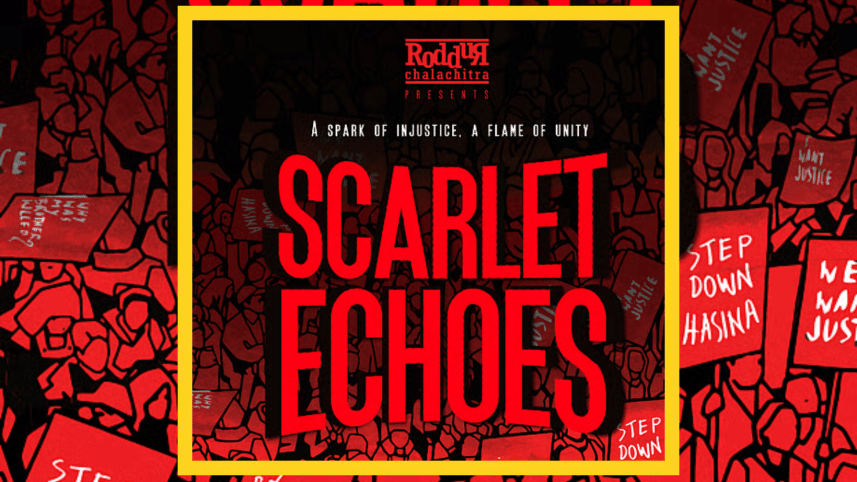
Bangladesh has landed on one of world cinema’s most selective stages. Bangladeshi short film “Scarlet Echoes” (“Roktim”) has been selected for the main international competition at the 56th Tampere Film Festival 2026—one of the world’s most prestigious platforms for short films.
Out of 7,125 submissions, only 60 films made the cut. Representing 44 countries, the list includes just one Bangladeshi entry, “Scarlet Echoes”, written and directed by young filmmaker Hemantaa Sadeeq. The film is set against the backdrop of Bangladesh’s historic July 2024 mass uprising.
 For all latest news, follow The Daily Star's Google News channel.
 Founded in 1970, the Tampere Film Festival is FIAPF-accredited and holds the rare distinction of being Oscar-, BAFTA- and European Film Awards-qualifying. Alongside France’s Clermont-Ferrand, Tampere is one of only two short film festivals in the world to carry all three credentials—making selection into its main competition an entry into cinema’s inner circle.
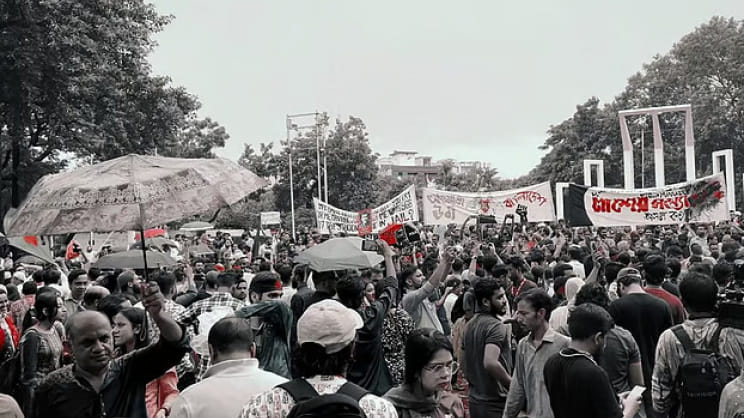
“Scarlet Echoes” is a docu-fiction that fuses real footage from the July protests with a staged narrative. At its centre is Adnan, a photographer and single father, navigating the turbulence of a city in revolt. Through his camera, the film captures Dhaka at its most fragile and defiant—streets thick with fear, courage, uncertainty and collective resolve.
The visual language is stark. Shot largely in black and white, the film deploys red sparingly and deliberately—an emblem of sacrifice, resistance and the Bangladeshi flag itself. Sadeeq avoids slogans or verdicts. The film does not argue; it observes.
The project is dedicated to the memory of photojournalist Tahir Zaman Priyo, who was shot dead during the protests near the Science Lab in Dhaka. Priyo had previously worked as a second unit cinematographer on Sadeeq’s earlier film “A Letter to God”. His death, the director says, was the emotional catalyst behind the project.
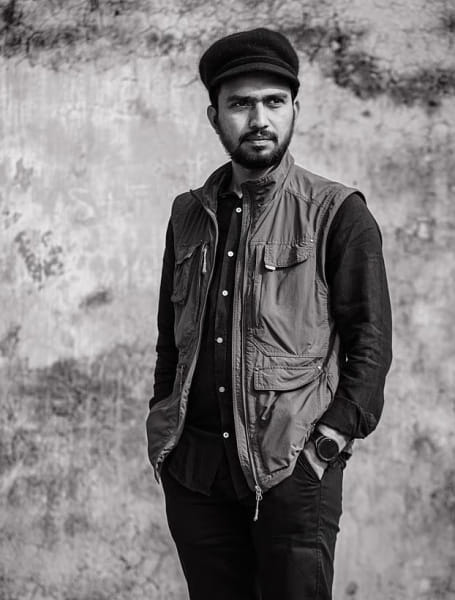
“Priyo’s killing shook me deeply,” Sadeeq said. “Something enormous was unfolding around us, and almost all of it was being captured only through television news lenses. As a filmmaker, I felt it was my responsibility to archive this moment in the language of cinema.”
Much of that archiving came at personal risk. Armed with little more than a smartphone, Sadeeq and his collaborators filmed amid crowds and chaos. Nearly 80 percent of the footage was shot inside protest zones, often under dangerous conditions.
Producer Dilruba Hossain Doyel said the film was made without institutional backing. Every crew member worked without pay. “It was a collective act,” she said, “driven by urgency rather than resources.”
“Scarlet Echoes” will have its world premiere at Tampere, Finland, during the festival’s 56th edition, scheduled from March 4 to 8, 2026. The festival authorities have formally invited the film’s key creators to attend the screening.
Comments