


6 Books to contextualise the present conflict in the Gulf

As of March 1, 2026, the United States of America has launched coordinated attacks—allegedly primarily aimed at key military and defense targets—across the Islamic Republic of Iran, killing Iran’s supreme leader Ali Hosseini Khamenei, the Iranian Minister of Defense, and over 100 civilians across the country. In response, the Iranian military has struck US military bases in Israel as well as several Gulf nations including the UAE, Qatar, Bahrain, and Kuwait. As the pieces continue to shift in the opening moves of what may shape up to be the most consequential war of the 21st century, it is more important now than ever before to understand the geopolitical history of present-day Iran, the Middle East and Persian Gulf regions, and the United States and Israel’s role in the present conflict.
To this end, here are six books that put into historical context the current crisis unfolding between Iran, the US, Israel, and the Gulf nations.
 For all latest news, follow The Daily Star's Google News channel.
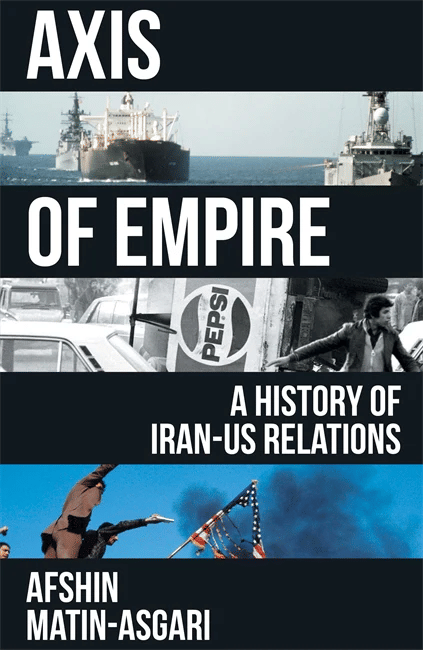
Axis of Empire: A History of Iran-US Relations
Afshin Matin-Asgari
Verso Books, 2026
Afshin Matin-Asgari is a professor of History at California State University, Los Angeles specialising in the 20th-century Middle East, modern Iran, and modern Islamic political and intellectual movements with a focus on leftist thought and movements, making him a singular force in modern geopolitical academic and intellectual discourse on Iran. His 2026 work Axis of Empire presents an accessible history of US-Iran relations, covering key topics such as America’s rise as an interventionist imperialist force in the Middle East, its relationship with the deposed Shah, the Islamic Revolution, Israel’s role in the present-day friction between the US and Iran, and more.
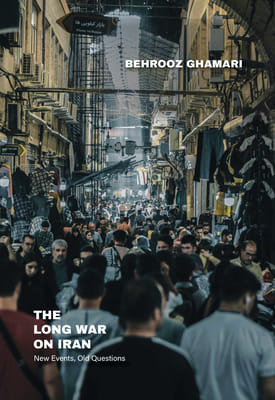
The Long War on Iran: New Events, Old Questions
Behrooz Ghamari
OR Books, 2026
In The Long War on Iran, Behrooz Ghamari examines the decades-long hostility between the United States and Iran with clarity and urgency. A former political prisoner and sociologist, Ghamari challenges simplistic portrayals of Iran as a static theocracy, instead presenting it as a dynamic society shaped by internal contestation and external pressure. Through essays on sanctions, the US intervention, protest movements, and media framing, he argues that misrepresentation and political calculation have sustained a “long war” beyond the battlefield. Blending personal experience with sharp analysis, the book invites readers to rethink entrenched narratives and view Iran through a more nuanced political lens.
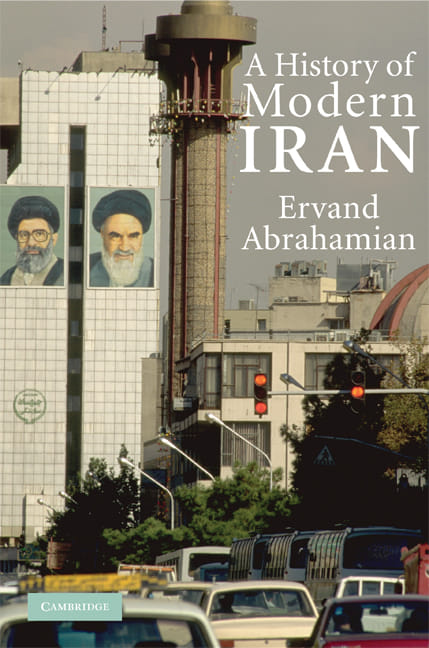
A History of Modern Iran
Ervand Abrahamian
Cambridge University Press, 2008
A socialist, historian, and once an active member of the anti-Shah movement in Iran and with an academic career spanning the likes of Princeton, NYU, Columbia, and Oxford, Ervand Abrahamian is among the most informed and authoritative voices on Iranian history and politics, particularly in foreign relations and the country’s history with the United States. His books such as Iran Between Two Revolutions (1982) and Khomeinism: Essays on the Islamic Republic (1993) are considered among the most important works of their kind, particularly in understanding the conditions that brought about the present-day Iran. A History of Modern Iran narrates Iran’s journey into becoming a key power in the Middle East and Persian Gulf following along its history of social, economic, and political upheavals through the discovery of its rich oil reserves, imperial interventions, the Pahlavis’ rule and its consequences, and the birth of the present Islamic Republic.
Iran Between Two Revolutions
Ervand Abrahamian
Princeton University Press, 1982
In Iran Between Two Revolutions, Ervand Abrahamian traces Iran’s political and social transformation from the Constitutional Revolution of 1905–1909 to the Islamic Revolution of 1977–1979. Focusing on the interaction between political organisations and social forces, he examines how modern socio-economic classes emerged within a society shaped by ethnic, religious, and regional divisions. The book explores the roots of key movements, including the constitutionalists, the communist Tudeh party, the nationalist struggle of the 1950s, and the Islamic resurgence of the 1970s. Drawing on archival research, parliamentary records, memoirs, and interviews, Abrahamian connects structural change to political upheaval under Reza Shah and Mohammad Reza Shah, offering essential context for understanding modern Iran.
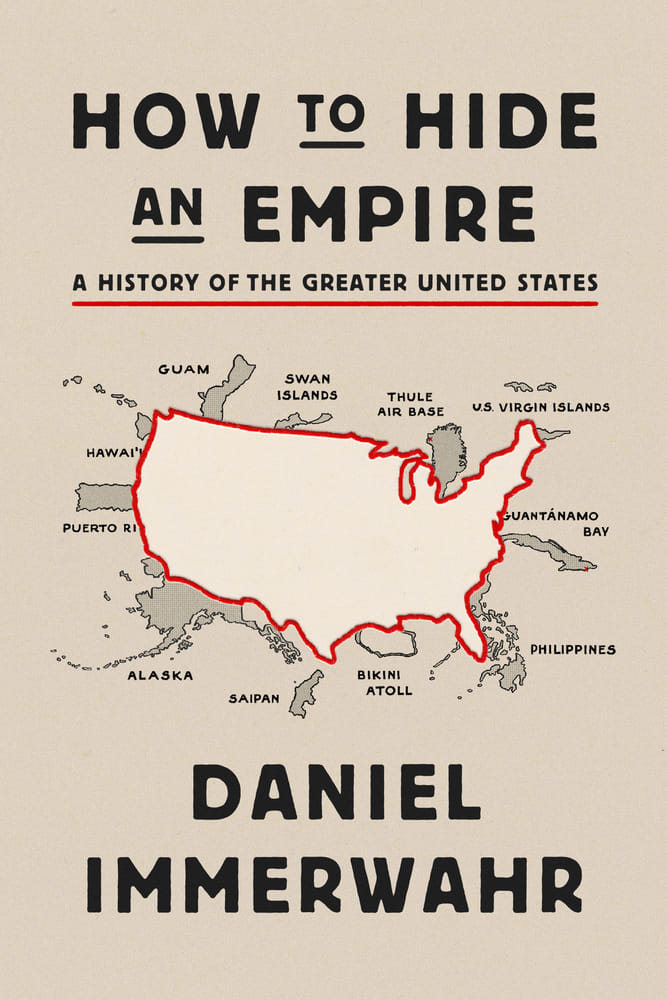
How to Hide an Empire: A History of the Greater United States
Daniel Immerwahr
Farrar, Straus and Giroux, 2019
A critical component of the United States’ interventionist, imperialist identity that exists largely outside of general public consciousness is its long history as an empire in a very tangible, material sense. It is this history, encompassing everything from territories like Puerto Rico and Guam to the vast network of US military bases across the world from Asia to Africa and how all of it came to be, that Daniel Immerwahr brings to light in How to Hide an Empire. Through a combination of archival research and skillful storytelling, the book offers an approachable narration of an aspect of the US that puts much of the present geopolitical state of the world into context as the inevitable outcome of the neocolonial meddling of a modern-day empire.
The Arabs: A History
Eugene Rogan
Basic Books, 2017
In this book, Eugene Rogan traces the modern history of the Arab world from the final centuries of the Ottoman rule to the upheavals of the Arab Spring. Centring Arab perspectives, he explores how imperialism, nationalism, Cold War politics, oil, and foreign intervention reshaped the region’s borders and political identities. Originally published in 2009, the revised edition extends the narrative into the 21st century, examining the Iraq War and popular uprisings that challenged entrenched regimes. Clear and deeply researched, Rogan’s work situates contemporary Middle Eastern conflicts within a longer history of struggle, sovereignty, and global power politics.
Arwin Shams Siddiquee is trying to read more. They also intern for Star Books & Literature.
Mahmuda Emdad is a sub-editor at Star Books & Literature.
Comments