Khamenei's killing and Iran’s war on the Arab states, explained

Wearing a “USA” baseball cap, Trump released a pre-taped video announcing his plan to launch another war on Iran, as missiles exploded in Tehran. “Pre-taped” is key to note here. Trump didn’t give any reasoning of imminent nuclear threats to start a war with the nation of 93 million people, a nation that has a history of deep-rooted rivalry with the US, and its ally, Israel.
Usually with wars, timings and context underscore agendas of each party, particularly the attacking ones. Netanyahu has lobbied for wars with Iran in every successive US government so his objective, at any point of time with Iran is quite clear. But Trump’s real agenda has been opaque. Is it an opportunity? Is it strategic? Or is it reckless? The media and political analysts have been torn.
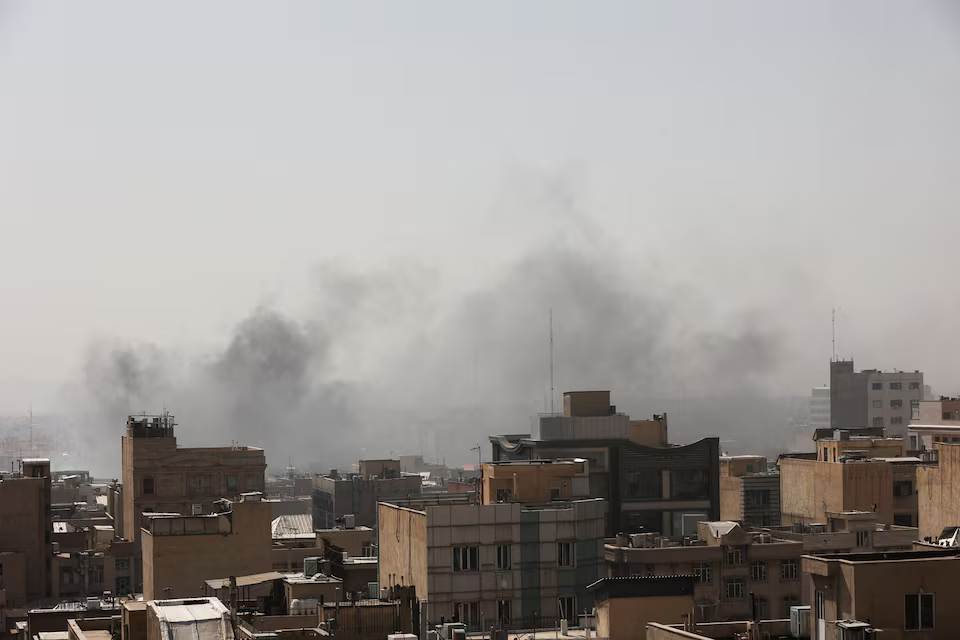
On the surface, the US attacks don’t seem so far off from their imperialist foreign policy in the Middle East, that saw the fall of Gaddafi in Libya and Bashar Al-Assad, in Syria. When George W Bush attacked Iraq the second time, there was an opportunity to topple Saddam Hussein’s government, and so, an unprovable threat of weapons of mass destruction was conjured. But while Trump did not announce any immediacy of a threat, he did mention that Iranian people want freedom and regime change. The notion that he cares about the Iranian people is fanciful. He used “help on the way,” as a cover for his own agenda.
Meanwhile, the C.I.A. had been tracking Iran’s Supreme Leader, Ayatollah Khamenei for months. On Saturday morning, the agency had learned that a meeting of top Iranian officials would take place in the leader’s compound where Khamenei would be present. Since the 12-day war, Israel and the US have deepened their intelligence sharing on Iranian leadership. The information from the agency was swiftly shared with Israel, and the operation was done with few aircrafts, armed with long-range, highly accurate munitions.
Though Trump and Netanyahu might be coordinated on an aim, they might also have different end goals. Trump wants the best deal, which could be the surrender of the current regime, a puppet government of his choice, rather than an occupation and head-on manufactured regime change which hasn’t ever happened with only aircrafts. Netanyahu, on the other hand, needs US defensive missiles to annihilate and overtake its arch-enemy in the continent. Netanyahu needs a bigger war, “a Greater Israel,” to find a strategic win and dodge his own faith and face corruption charges in Israel.
Unlike previous wars between Iran, US, and Israel, the current one hit the doorstep of seven gulf nations, throwing the entire region into a panic never seen before and it was Iran that dragged the other nations into it. Iran has, in its recent flare-ups with Israel and the US, acted with restraint and precision strikes that barked louder than it tried to bite. While striking US air bases and assets, the apparent collateral damage was done on the soil of Gulf nations. The catch here is that the long-term damage done is likely to Iran itself, by shaking its often-turbulent relationships with its powerful neighbours. Iranian leadership was not eliminated by bombs, but by calculated strikes from intelligence sharing and the strength of the allieship between Israel and the US. Iran may have proxies, but the death of Khamenei showed that the regime is vulnerable, and needs allies to survive what is to come.
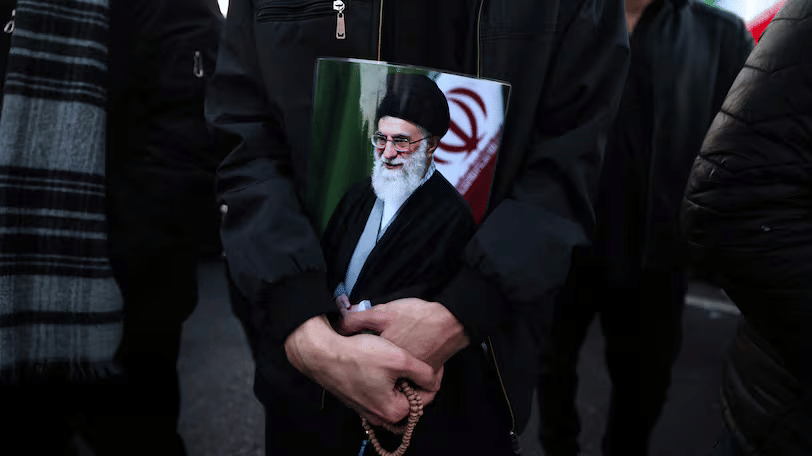
Unlike the US-Israeli attack on the leader’s compound, Iran’s first attacks on the Gulf states seemed uncalculated. It is now known that Khamenei was likely dead by the time the Iranian missiles started hitting the Gulf nations. It can be argued that the sustained attacks on the nations — which aren’t used to the debris and fire of war — would prompt the monarchies, particularly Saudi Arabia, to pressure the US to take a step back from its offensive. But as the response to the attacks showed, the risk of creating more enemies from attacking other nations might be bigger. While state media mourned Khamenei’s death, the Iranian public in many cities also celebrated his demise after his 37 year rule. The people remain polarised. And the way the world works: as opposed to the US and Israel — which has an arrest warrant against its leader — international laws of warfare may actually apply when it comes to Iran.
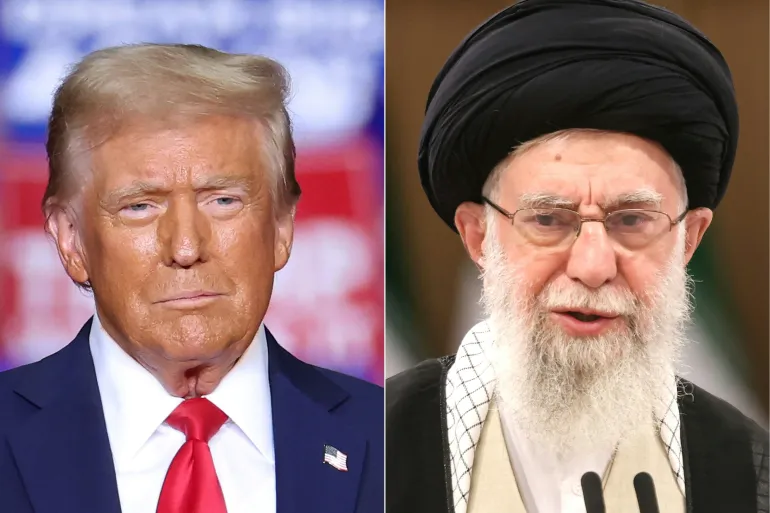
The retaliatory strikes on US airbases killed a civilian in UAE. Iran struck the Fairmont Hotel in Dubai, in the heart of Palm Jumeirah. Flights and oil prices have been affected. Iran will not only have to face what comes after Khamenei's death, but it will also have to bear the ramifications of antagonising the Gulf states, which will now throw more of their support towards the US-Israeli strikes. UAE has already quietly maintained a relationship with Israel through the genocide in Gaza. Jordan intercepted Iranian drone strikes from reaching Israel in the recent past. The ongoing attacks on their soil give them more reason to align with the US, and as a result Israel, even if quietly, and less reason to condemn Trump’s provocation.
Saudi Arabia and Iran have historically been intense rivals — with unresolved tension over Yemen — and with Iran attacking Saudi oil facilities in 2019. When normalisation between Arab states, particularly Saudi Arabia and Israel seemed imminent, Iran’s strategy was to pursue bilateral relations to deter the formation of an anti-Iran coalition in the region. Both nations put geopolitical interests over historic divisions, since the China-brokered detente in 2023. In the past two years, as the US, Saudi Arabia’s ally, and Israel locked heads with Iran, their relationship withstood shockwaves. Though it is implausible that Saudi Arabia will now normalise its relationship with Israel, after the genocide in Gaza, the Gulf states, which depend on their thriving economies, will be on the watch to guard their national security and stability above anything else.
Saudi Arabia condemned the attacks by Iran in the Gulf region and warned of “the grave consequences of the continued violation of the sovereignty of states and the principles of international law.” Qatar, which has been a mediator, balancing power between Iran and the West, condemned the Iranian strikes on its territory, as “direct assault on national security.” It’s a risky game to play, and further retaliatory strikes favours Netanyahu and Trump who have the upper hand since the killing of Khamenei.
On Sunday, Iran attacked Oman as well, and if it decides to go for the Strait of Hormuz, it will significantly affect global trade. Closing the Strait would have an economic impact on China, which expressed concerns over the instability in the Middle East. Though hits to global trade could lead Trump to walk away with the current victory, Israel would want a protracted war, Iran could face sanctions and most importantly, its allies might pull back if consequences prove too high.
There are many likely scenarios for Iran, but a US occupation like Iraq doesn’t seem to be on the cards as there’s been no deployment of troops (given that Israeli occupation dreams of Netanyahu’s are not shared by Trump). Iran has vowed for revenge but its roadblocks start from home, to its neighbours to the foreign military prowess of the US. As experts have noted, civil war in Iran could be a likely outcome or Israel and the US would lobby for a previous ally, such as Shah Reza Pahlav, to be put on the throne. A democracy is far for the Islamic Republic of Iran, but how far the regime will fall will be determined in how it acts in the coming days.
Ramisa Rob is Geopolitical Insights editor at The Daily Star.
Send your articles for Slow Reads to slowreads@thedailystar.net. Check out our submission guidelines for details.

The making of India’s Bengali Muslim problem

After garments: The search for Bangladesh's next export success

Bangladesh-India border tension / What can stop India's push-ins?

Can Bangladesh defend itself in the great-power cyber war?

Will the Padma Barrage repeat Farakka's mistake?

Could India's Gen-Z rebellion begin with cockroaches?

The OpenAI–Musk dispute: Who controls the future of AI?

The cotton clause: How the US–Bangladesh trade pact could reshape regional textile trade

Why both Trump and Putin felt compelled to visit Beijing