


Govt to import 200,000 tonnes of urea amid Middle East war

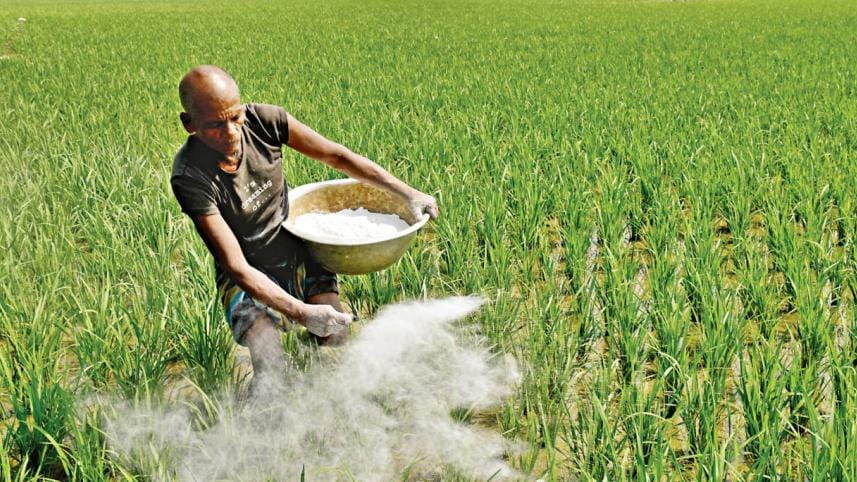
The government plans to import 200,000 tonnes of granular urea through private suppliers in a bid to secure supplies and build stock amid uncertainty over deliveries from the Gulf region, according to government notifications today.
The development comes after the temporary closure of five of the country’s six urea fertiliser factories two weeks ago, amid fears of gas supply disruptions linked to the ongoing US-Israel war on Iran.
 For all latest news, follow The Daily Star's Google News channel.
 In response, Tehran has blocked the Strait of Hormuz, a crucial shipping route for one-fifth of the world’s oil and a third of global fertiliser exports.
Bangladesh consumes more than 26 lakh tonnes of urea each year and depends on Saudi Arabia, the United Arab Emirates and Qatar for more than two-thirds of its requirement. These Gulf nations ship fertiliser, gas and oil through the Strait of Hormuz.
At the time of the factory shutdowns, the government had a stock of over 468,000 tonnes of urea.
Currently, the country has urea stock until June this year, while non-urea fertiliser stock will last until October, said Ahmed Faisal Imam, additional secretary for fertiliser management and monitoring branch at agriculture ministry.
He said there is no fertiliser crisis in the country now.
But the next Aman season, which accounts for 40 percent of the total annual rice output, will begin after this June.
Last week, the state agency Bangladesh Chemical Industries Corporation (BCIC) finalised plans to import 500,000 tonnes of urea to ensure adequate supply ahead of the next rainfed Aman rice season.
“We want to complete the procedures of imports before the start of the Aman season. So, we have floated the tenders,” said a senior BCIC official. The agency operates state fertiliser factories and manages urea imports on behalf of the government, distributing it to farmers at subsidised rates.
According to BCIC notifications, quotations are being sought for urea deliveries through Chattogram and Mongla ports by April 8.
The official said the procurement process needs to begin three to four months in advance to ensure timely import and delivery.
Fertiliser demand in Bangladesh peaks from November to March, due mainly to Boro rice cultivation, when the country uses 60 percent of its crop input.
Apart from urea, the government plans to sign a contract with Egypt to import Diammonium Phosphate (DAP) and Triple Super Phosphate (TSP) fertilisers.


Comments