
Support grows for Libya's UN-backed unity govt
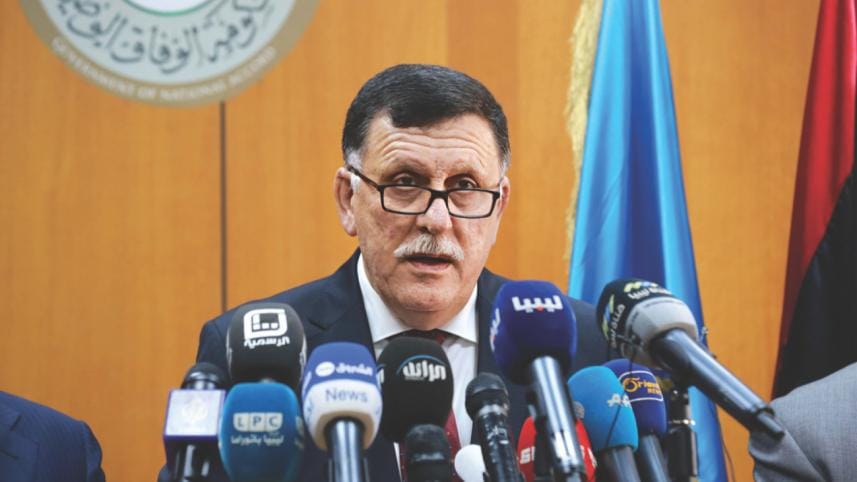
Libya's UN-backed unity government has won increasing pledges of loyalty as it gradually exerts its authority in the face of strong opposition from rival political forces in the conflict-wracked country.
Libya's warring sides are under intense international pressure to cede power to prime minister-designate Fayez al-Sarraj, whose arrival in the capital on Wednesday angered a rival Tripoli-based government.
 For all latest news, follow The Daily Star's Google News channel.
 Ten western cities called on all Libyans Thursday to back the Government of National Accord (GNA) in a major blow to the unrecognised Tripoli authority which is refusing to give up power.
On Thursday Sarraj met with the head of Libya's Tripoli-based central bank and discussed measures to safeguard banks and tackle the country's "cash flow problem,” according to his office.
Perhaps crucially, the unity government also now has the support of the main armed group in the city, Nawasi, signalling a split within the security forces once loyal to the Tripoli authorities.
The head of the Tripoli-based National Salvation government, Khalifa Ghwell, has vehemently opposed any transfer of power. But a statement posted late on Thursday on the government's website struck a milder tone, saying opposition would be "by peaceful and legal means without use of force or incitement to violence".
The Tripoli government demanded that Sarraj leave or surrender following his arrival by sea this week with a naval escort, after the airspace was closed to prevent him flying into the capital.
French Foreign Minister Jean-Marc Ayrault urged the international community to prepare to help the unity government if asked, providing military support if necessary.
"The chaos which reigns there today aids the rapid development of terrorism. It is a direct threat to the region and to Europe," he said in comments to a French newspaper.
Comments