


Five stars: Brazil’s World Cup triumphs

No country has been more successful on the world stage than Brazil. From 1958 to 2002, the Selecao authored an epic of five world titles, with each chapter standing as a unique testament to footballing greatness. A closer look at the stories behind those five crowns reveals a treasure trove of fascinating details.
1958: First world title on Swedish soil
 For all latest news, follow The Daily Star's Google News channel.
 1962: Retaining the crown in Chile
1970: Reclaiming supremacy in Mexico
1994: Ending a long wait in the US
2002: Winning the “Penta” in Korea and Japan
The world meets Pele
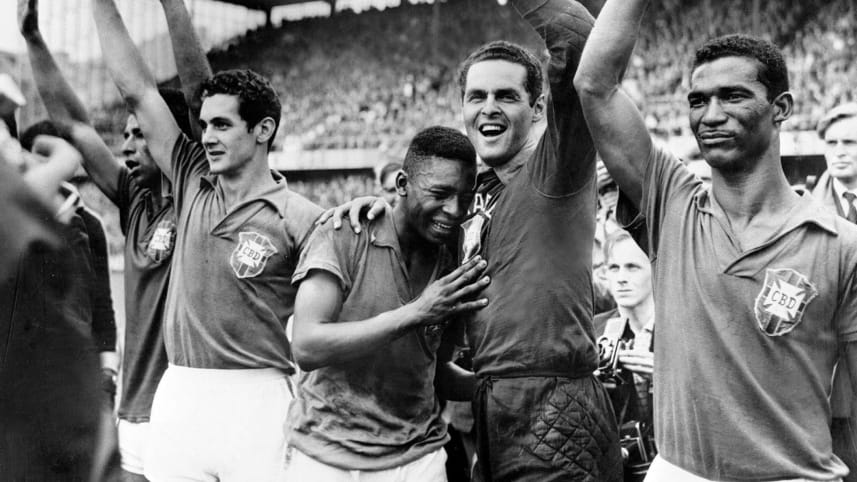
The 1958 World Cup witnessed Brazil’s first title triumph. In the final, Brazil crushed hosts Sweden 5-2, inspired by Pele’s brace, and celebrated their maiden world crown. Although France’s Just Fontaine set an astonishing record by scoring 13 goals in a single tournament, it was a 17-year-old Brazilian teenager -- Pele -- who stole all the headlines.
That teenager arrived in Sweden carrying an injury, and his World Cup debut did not come until Brazil’s third match. In the quarterfinal against Wales, Brazil won 1-0, with the decisive goal coming from Pelé’s foot. At just 17 years and 239 days old, he became the youngest goalscorer in World Cup history, a record that still stands today.
Pele’s hunger did not end there. In the semifinal against France, he scored a hat-trick and still holds the record as the youngest hat-trick scorer in World Cup history at 17 years and 244 days. The dream run did not stop in the final either. He also became the only under-19 footballer ever to score in a World Cup final, doing so at 17 years and 249 days.
The final chapter of back-to-back glory
When the 1962 World Cup in Chile began, the teenage Pele of four years earlier had already become the world’s best player. But fate was cruel. This time, instead of dazzling on the pitch, he had to watch from the sidelines as his teammates lifted the trophy.
Pele had made a brilliant start, scoring and assisting in Brazil’s opening match against Mexico. But in the very next game against Czechoslovakia, he suffered a serious injury and was ruled out of the tournament. Stepping up in his absence were the “bow-legged wizard” Garrincha and his worthy partner Vava. Both scored four goals each and drove Brazil toward the title.
In the final, Brazil fell behind early against the same Czechoslovakia side. But goals from Amarildo, Zito and Vave secured a 3-1 victory. With that, the Selecao became, after Italy, only the second team in football history -- and still the last -- to win back-to-back World Cups.
The greatest football team in history?
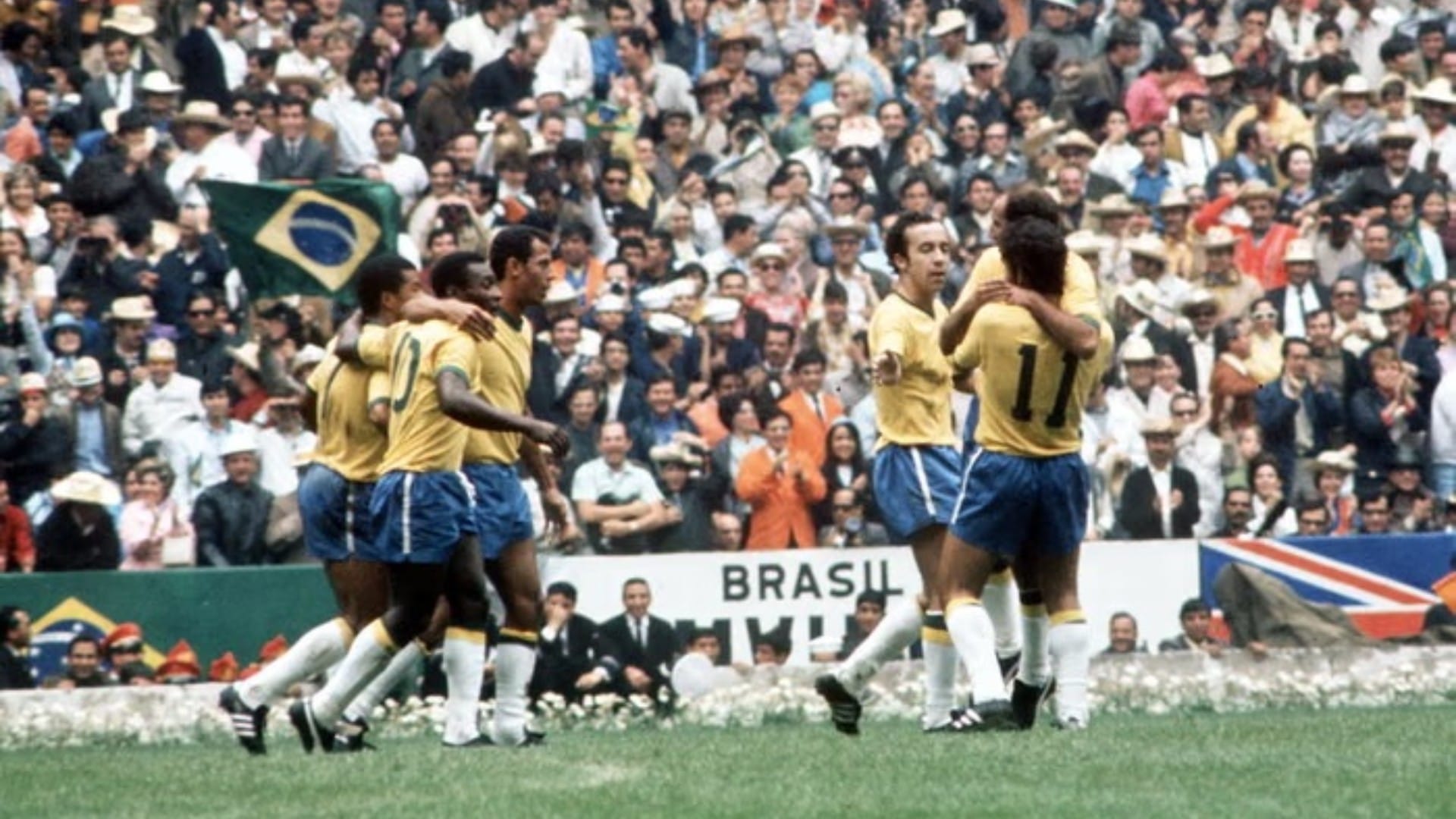
The Brazil side of 1970 seemed quite literally to belong to another planet. They arrived at the Mexico World Cup after winning all six of their qualifying matches. The same dominance continued in the finals, as they won every match on the way to lifting the trophy. No team had shown such complete supremacy on the world stage since the 1930s.
Coach Mario Zagallo also made history. He became a World Cup winner for Brazil both as a player (1958 and 1962) and as a coach. By winning a third title, Brazil earned the right to keep the Jules Rimet Trophy permanently.
One of the standout figures in that team was Jairzinho, who scored in every single match of the tournament. To this day, no other player from a World Cup-winning team has matched that feat. While he grabbed attention with his finishing, Pele was the architect behind that artistic orchestra, creating 28 chances throughout the competition.
In the 4-1 final win over Italy, Pele also played a key role in the iconic Carlos Alberto goal. The move, built through nine precise passes, remains a timeless symbol of Brazil’s aesthetic football. At that World Cup, Brazil averaged 5.2 open-play sequences of 10 or more passes per match.
Penalty shootout nerve battle
After the end of their golden era, Brazil had to endure a painful 24-year drought. That wait finally ended on American soil in 1994. Driven by the brilliance of Romario, who scored five goals, and Bebeto, who added three, Brazil reached the final. But against Italy’s steel-hard defence, the Brazilian attack was held scoreless for 120 minutes.
As a result, for the first time in World Cup history, the final was decided by a penalty shootout. When Roberto Baggio’s effort flew over the crossbar and into the sky, Brazil secured a 3-2 win and their fourth world title.
It was not one of Brazil’s most flamboyantly attacking squads, nor was their defence completely untouchable. But they were remarkably efficient. They lifted the trophy despite scoring only 11 goals in seven matches. At the other end, their defence was highly resilient, conceding just three goals throughout the tournament.
Ronaldo’s revival and the “Penta”
Brazil were the hot favourites at the 1998 World Cup, with all eyes on the young Ronaldo. But the mystery surrounding his omission from the starting XI just before the final against France — and his dramatic reinstatement -- remains unresolved to this day. Brazil paid the price for that chaotic build-up, suffering a crushing 3-0 defeat to the hosts and losing the trophy.
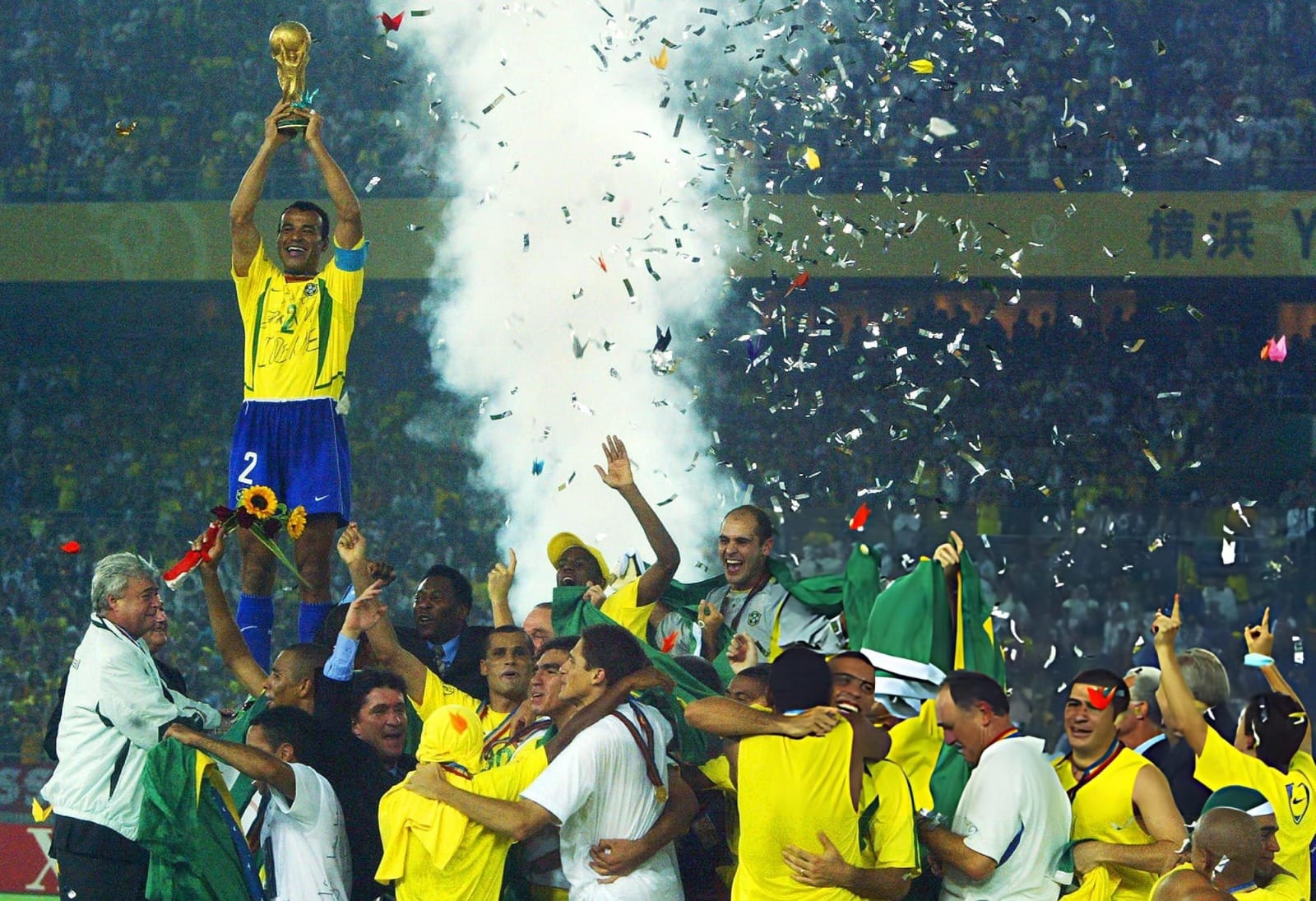
When Ronaldo arrived in Asia four years later, after that trauma and nearly two years sidelined by injury, many had already written him off. But he had the perfect chance to erase those bitter memories. And R9 did exactly that, returning to his familiar brilliance in majestic fashion.
Ronaldo won the Golden Boot with eight goals in the tournament. His brace in the final against Germany sealed a 2-0 victory and secured Brazil’s fifth title. Alongside Rivaldo and Ronaldinho, he formed a devastating attacking trio that made Brazil look almost unstoppable. Remarkably, Ronaldo had not played a single match in qualifying because of his terrible injury problems.


Comments