Tuning the melody of Baul songs into peace education
Growing up in the 90s, “Lalon geeti” in Farida Parveen’s celestial voice was my key connection to Baul songs during my urban childhood. Even though I hardly captured the songs' inner meaning, the words gave me a sense of serenity. The verse, tempo, and sound together created an ambience where one was bound to feel tranquil. Fast forward 20 years, while working in the education sector in Bangladesh, I was finally able to comprehend the message: humanity above all.
Baul song is where mysticism, universalism, and peace – this trio – meet. A similar tune rings out from the idea of peace education, where the concept of an ethical, empathetic, and respectful human being sits at the core. In today’s restless world, fusing Baul songs and peace education can create a pathway to establish peace as a foundational pillar for an inclusive, equal, and harmonious society.
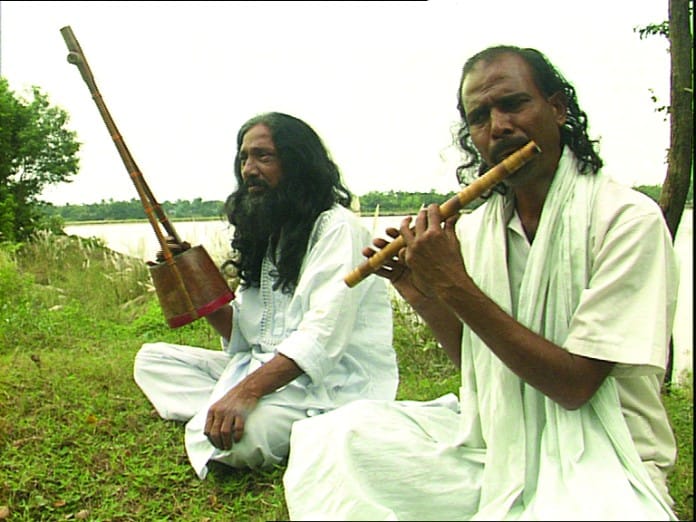
While Baul song is widely known as a music genre in Bangladesh, it also embodies the nation’s founding narrative. Apart from poetry, philosophy, and music, Baul song is woven into the very fabric of our tradition and culture. This special form of music is not only enriched with soulful lyrics, rich tunes, harmonious melodies, and a devoted lifestyle, but also breaks down barriers of discrimination, the caste system, and social inequality while promoting one core message – humanity above all – echoing the same fundamental message of peace education.
Baul song has its own unique secularism, grounded in Hindu bhakti movements and Sufi Islam, creating a one-of-a-kind platform where both secularism and religious belief stand side by side without one dominating the other. It is anchored in “Moner Manush” or the “man of the heart”, a mystical theme that represents our inner selves and the discovery of the creator through unwrapping those inner selves.
As pessimistic as it sounds, it cannot be denied that greed, conflict, and violence have become the zeitgeist of this century. Every day when we open our newspapers, with grave concern we notice that violence is taking many forms – direct, indirect, cultural, epistemic, ethnicity-based, and gender-based – and the list goes on. Cultivating knowledge, skills, attitudes, and values that seek to transform people’s mindsets, attitudes, and behaviours through peace education can be an effective response to this issue. Peace education seeks to instil a deep respect for diversity, along with empathy, open-mindedness, justice, and a sense of fairness in all learners. Even though these values are fundamental to our culture, such practices are hardly seen in today’s society. If peace education shakes hands with Baul song, it is possible to rejuvenate our thousand-year-old practice of living in harmony, transcending all dividing lines.
Baul song has its own unique secularism, grounded in Hindu bhakti movements and Sufi Islam, creating a one-of-a-kind platform where both secularism and religious belief stand side by side without one dominating the other. It is anchored in “Moner Manush” or the “man of the heart”, a mystical theme that represents our inner selves and the discovery of the creator through unwrapping those inner selves. The preamble to UNESCO’s Constitution reflects a similar note: “Since wars begin in the minds of men, it is in the minds of men that the defences of peace must be constructed.” Social equality, syncretic unity, and unconventional humanist values are among the most significant and recurring concepts in both Baul songs and peace education.
Prominent Baul figures in Bangladesh preached peace and equality through their lifestyle, advice, and songs, without ever being introduced to the formal concept of peace education. This shows that the core principles of peace education have been intertwined with our culture for centuries. In Baul Rashid Uddin’s “Manush dhoro Manush bhojo” song, the lyricist urged people to put humans first, as God can be found in humanity and through serving others. Lalon Shah, the most influential icon in the Baul movement, also highlighted the significance of putting humanity first through his “manush bhojle shonar manush hobi”, where he emphasised that serving humans is the sole way to attain one's full human essence. Many of our Baul songs are likewise enriched with the values of human service, restraint from greed, and equality across all castes. Conveying these timeless messages to future generations through peace education is now our collective duty.

There is no denying that with the emergence of globalisation and pop culture, traditional Baul song has become endangered, along with its masters. Institutional support and the formal transmission of this UNESCO-recognised intangible cultural heritage through peace education can help save this imperilled part of our culture. With the emergence of music education in our education system, both Baul song and peace education can re-enter our classrooms together.
With the ongoing unrest and conflict around the world, peace education is no longer an abstract concern. The pursuit of peace needs to be a holistic and comprehensive endeavour. Baul songs have, for centuries, nurtured essential human values, identity, empathy, inclusion, respect, dialogue, and peaceful coexistence in ways that formal curricula often struggle to achieve. Embedding peace education through Baul songs is not an idea limited to the generational transmission of our culture – it also encompasses the preservation of our heritage while cultivating global citizens whose understanding of humanity extends beyond borders.
Gazi Fabiha Noshin Meem is an education and development professional with a focus on education in emergencies and inclusive learning. She currently serves as an Education Consultant at UNESCO Dhaka Office. She can be reached at: noshinfabiha1@gmail.com
Send your articles for Slow Reads to slowreads@thedailystar.net. Check out our submission guidelines for details.
The tale of some rare portraits from Nazrul’s final days

Shreemati Rassundari and the making of the first autobiography by a Bengali woman

Nabayug: Nazrul’s radical pen and Fazlul Huq’s leadership
Reading Nazrul in an age of inequality

East Bengal’s victory and the memory of lost homes

The stolen haq of Qurbani hides

Tagore’s Dan Pratidan and the colonial remaking of Bengal’s moral world

Memories of Indigo Rebellion and the question of national identity
Part 1 / The forgotten art of Bengali advertising