Nabayug: Nazrul’s radical pen and Fazlul Huq’s leadership
In the political and cultural history of Bengal, there are certain duos that are not merely witnesses to their time, but instruments of history-making. In the first half of the twentieth century, the progressive trend initiated by the joint efforts of the poet Kazi Nazrul Islam and the political leader Sher-e-Bangla A. K. Fazlul Huq through the newspaper ‘Nabayug’ went far beyond the confines of a mere newspaper. It became a powerful medium for shaping society, culture, politics, and public opinion. ‘Nabayug’ was simultaneously a protest against communalism, a resistance against colonialism and a pure voice for establishing the rights of marginalized people.
The political backdrop and the inception of ‘Nabayug’
The newspaper ‘Nabayug’ was born in a turbulent political atmosphere— post-World War I India, where the Non-Cooperation Movement and the Khilafat Movement were creating a wave of consciousness across the country. The visibility of Muslims in the print media world was limited, which stood as a major obstacle to exerting political influence. It was this vacuum that ‘Nabayug’ came to fill.
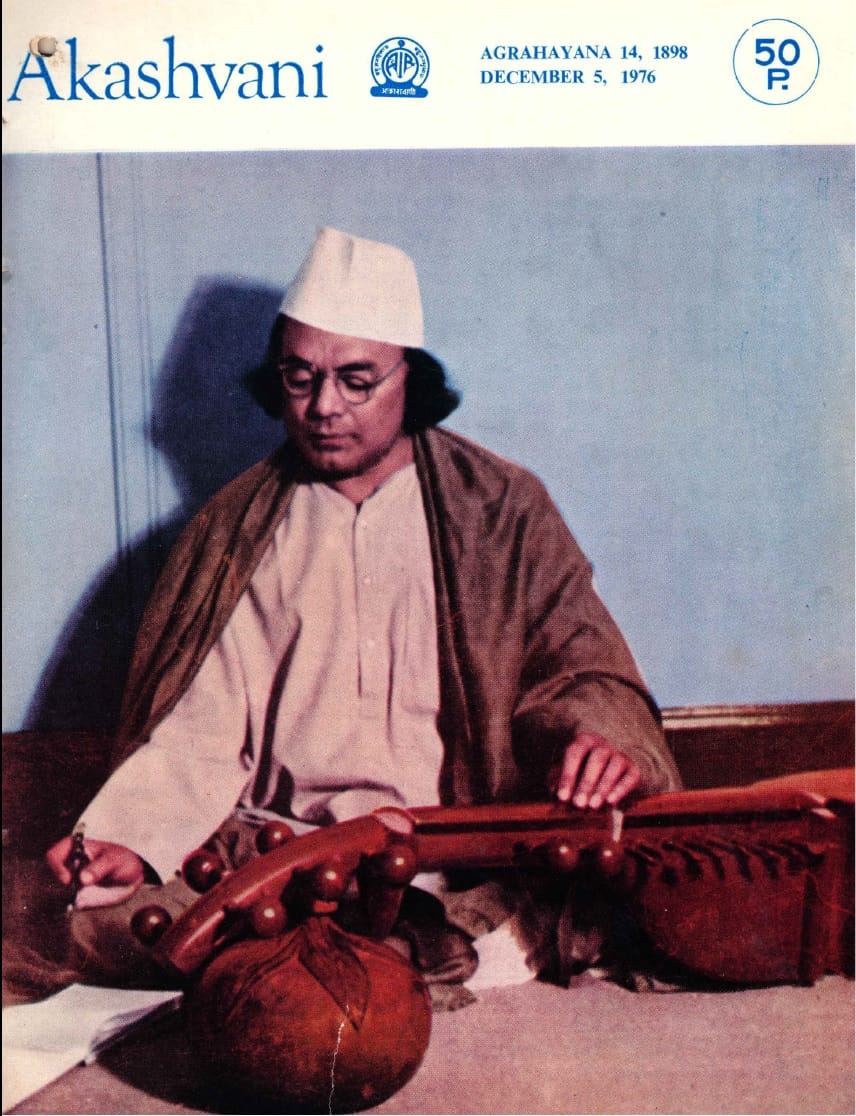
During this period, Fazlul Huq used his political acumen to realize that a newspaper could be an effective tool to awaken the Muslim community. Under his patronage, the Bengali evening daily ‘Nabayug’ began its journey on July 12, 1920, in Kolkata. Poet Kazi Nazrul Islam and Muzaffar Ahmad joined as its joint editors. It was a single-page paper, priced at one paisa. From the very beginning, Fazlul Huq Selbarshi and Moinuddin Hossain were associated with the paper. The printing press of the newspaper was located at 22 Turner Street, Kolkata, and the office occupied two ground-floor rooms at 6 Turner Street—the very building where Fazlul Huq lived.
Nazrul’s journalism: Beyond the boundaries of literature
The daily publication established through the initiative of Fazlul Huq was the mouthpiece of the political, social, and cultural awakening of that era. ‘Nabayug’ marked the beginning of Nazrul’s journalistic career, but this was no ordinary professional journey; rather, it was the expression of a revolutionary consciousness. Moving beyond the realm of literature, his entry into journalism was essentially a new medium for the anti-colonial struggle, class consciousness and human liberation.
The influence of the Russian Revolution during his soldier life had inspired him with revolutionary ideals, which later became vividly apparent in his journalism and literary pursuits. His columns reflected a fierce disdain for colonialism, deep empathy for peasants and labourers and a clear message for establishing a humane society. His essays published in ‘Nabayug’— such as ‘Dharmaghat’ , ‘Bangalir Babsadari’ ,or ‘Bangla Sahitye Musalman’ — radically transformed the language and perspective of journalism through their logical, courageous, and artistic expression. With a blend of rational analysis, sharp language and a socially conscious viewpoint, his writings became historical documents of the time. His pen played a vital role in reconstructing national identity and establishing social equality.
During his time at ‘Nabayug’, a rare and marvelous synthesis of the poet and the activist, the artist and the revolutionary, took place within Nazrul. In this regard, Muzaffar Ahmad wrote:
"It must be admitted that ‘Nabayug’ became popular precisely because of the power of Nazrul’s powerful writing. Simply calling it powerful does not say it all; the headlines he wrote were incomparable. Within the limited space of Royal-sized paper, Nazrul would successfully and concisely present major news stories. It is astonishing to think how Nazrul— who had never even stepped into a daily newspaper office before—mastered this skill so extraordinarily!"
The popularity of ‘Nabayug’ was unimaginable. The newspaper gained widespread acceptance among both the Hindu and Muslim communities. The demand for the paper grew so rapidly that the weak printing press machine owned by Fazlul Huq simply could not cope with it. The brilliance of Nazrul’s language and statements caught the attention of the educated, elite, and progressive sections of society. Slowly, his pen became sharper, more radical. His experience at ‘Nabayug’ prepared him for a much sharper journalistic voice, ‘Dhumketu’. It was there that he went on to declare— "We want complete independence," "We want armed revolution"— sentiments that no one else in Bengal had uttered at the time. This courageous pronouncement of his was a unique testament to the linguistic and ideological evolution of the anti-colonial movement.
The synthesis of literature, protest, and journalism
In Nazrul’s hands, ‘Nabayug’ became the combined voice of journalism, literature, and politics. Here, he did not merely report the news; rather, a revolutionary voice roared in every single piece of his writing against colonialism, communalism, and class inequality. Nazrul’s poem ‘Dhakar Danga’ is a prime example of this. It was not mere literature; each line was like a document of social resistance. His compositions contained fierce protest, outrage, and boundless empathy for the oppressed. Because of such a high pitch and sharp rhetoric, ‘Nabayug’ repeatedly drew the ire of the British Government. The newspaper received warning notices multiple times, one of the most notable being for an essay written by Nazrul titled ‘Muhajirin Hotyar Jonno Dayi Ke?’. The aggressive tone and outspokenness of the piece were utterly intolerable to the colonial administration of the time.
Another memorable essay by Nazrul in ‘Nabayug’ was ‘Dharmaghat’. Written against the backdrop of the year 1920, when labour strikes were breaking out in various places across India, this piece bears testament to Nazrul’s deep sympathy for the working class. The essay reflects his socialist consciousness and political commitment to the working-class people. During this very period, the British Government confiscated all copies of an entire issue of ‘Nabayug’ for printing a notice from the Khilafat Committee, and imposed a security forfeiture fine of one thousand rupees. As a result, the newspaper had to obtain permission to republish on 20 September 1920 by providing a new security deposit for the second time. Yet, overcoming all obstacles, Nazrul’s writing was creating a powerful stir among readers at the time. His powerful language, clear ideology, and uncompromising attitude elevated him to a new height in the world of journalism. The awakening created through ‘Nabayug’ during this phase established Nazrul at the forefront of the history of Bengali journalism. Although the publication of the first phase of ‘Nabayug’ ceased in January 1921, within this short span of time, Nazrul had turned his pen into one of the primary weapons of social revolution.
Fazlul Huq’s patronage: An expression of political foresight
The birth of ‘Nabayug’ was not merely a literary endeavour, but also a reflection of the political wisdom of Sher-e-Bangla A. K. Fazlul Huq. He was a strategic politician who believed in the education and political awakening of Bengali Muslims. He deeply understood that journalism could be a powerful medium for political activity. Fazlul Huq realised that if the Muslim community was to be educated and made aware, there was a need for a mass-oriented media outlet. It was with his assistance that the publication, infrastructure setup, and editing of ‘Nabayug’ became possible. Prior to this, he had gained experience editing journals like ‘Balak’ and ‘Bharat Suhrid’, which testified to his capability in managing periodicals.
Abul Mansur Ahmad and the rebirth of ‘Nabayug’
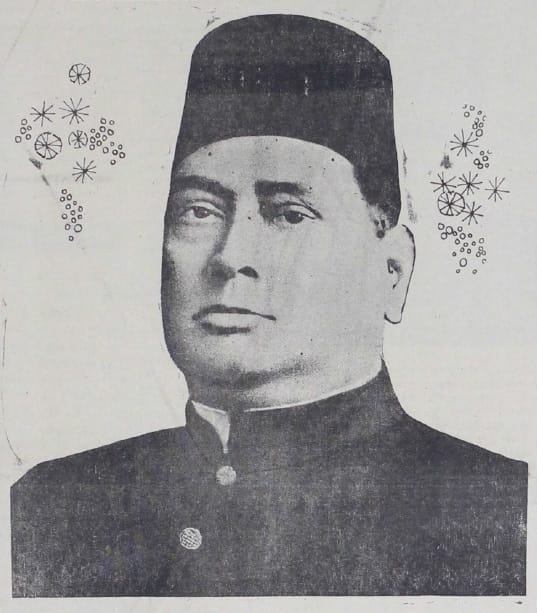
The journey of the newspaper ‘Nabayug’ is divided into three distinct phases. The first phase spanned from 1920 to 1921, when, under the editorship of Kazi Nazrul Islam and Muzaffar Ahmad, it emerged as a voice of rebellion. The second phase was short-lived, taking place in the middle of 1921. With the financial backing of Abul Kashem of Burdwan, the paper was published once again. Nazrul remained active in writing during this phase as well, keeping his protestor's voice alive. However, due to organisational weaknesses and financial crises, this attempt did not last long. The third and final phase began in 1941. Through the initiative of A. K. Fazlul Huq, ‘Nabayug’ was revived yet again. By then, in the political landscape of Bengal, it had become a symbol of a modern, non-communal, and rationalist trend. While ‘Azad’ served as the traditional daily for the Muslim community, ‘Nabayug’ positioned itself as a newspaper dedicated to forging Hindu-Muslim unity and building an ideology against communalism. Its editorial board was joined by Abul Mansur Ahmad, Mahmud Nurul Huda, and the poet Benajir Ahmed.
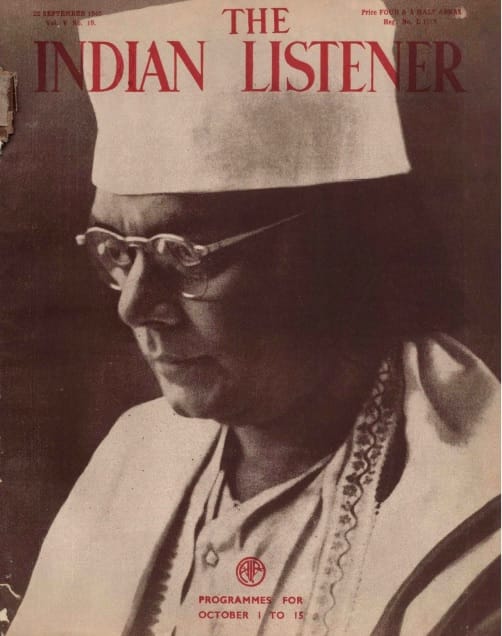
During this period, ‘Nabayug’ was not just a daily newspaper; it became the focal point of a political-journalistic equation—helmed behind the scenes by three crucial personalities: Sher-e-Bangla A. K. Fazlul Huq, Abul Mansur Ahmad, and the Rebel Poet Kazi Nazrul Islam. Abul Mansur Ahmad provided a detailed and objective account of this chapter in his autobiography. He candidly admitted that when Huq Saheb revived ‘Nabayug’ in October 1941, he himself took charge of the editing. However, he was unwilling to have his name published as the editor. He wrote:
"I took over the responsibility of editing it. But I did not agree to give my name as the editor."
There were two reasons behind this decision. Firstly, although he was interested in pursuing journalism as a profession and would encourage his colleagues to work for newspapers of any political ideology, he never did so himself. This was because he wished to maintain his own distinct political stance. Secondly, he harboured doubts regarding the ideological stability of Fazlul Huq. He wrote:
"Although I had full sympathy with the purpose for which Huq Saheb brought out ‘Nabayug’, I lacked confidence in the consistency of Huq Saheb’s views."
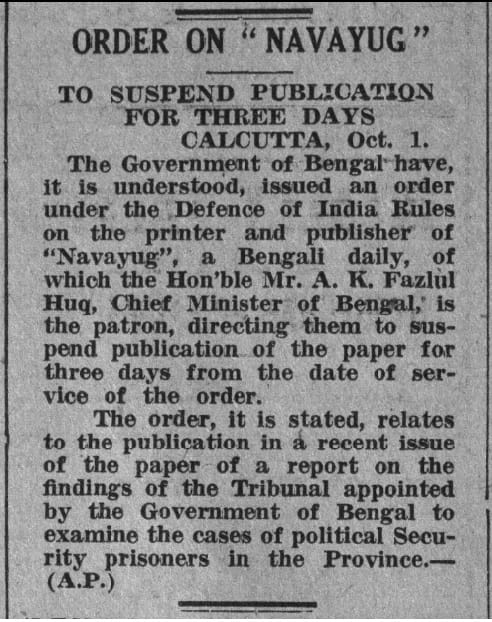
He compared this lack of confidence with the newspaper initiatives of other leaders of the Indian subcontinent. For instance, leaders like Chittaranjan Das, J. M. Sengupta, and Jawaharlal Nehru had also published newspapers to propagate their own ideologies, but most of them did not prove long-lasting. In the end, Abul Mansur’s apprehensions turned out to be true. The deterioration of Nazrul Islam’s health, the repressive policies of the British Government under the ‘Defence of India Act’ in 1942, political pressures, and financial crises—all combined to draw the curtain on the third and final phase of ‘Nabayug’ in 1944.
The structure and social consciousness of the newspaper
A unique feature in the structural design of ‘Nabayug’ was the provision of class-based sections. By creating separate segments such as ‘Aguner Phulki’ (Sparks of Fire) for adolescents, ‘Mahila Asar’ (The Women's Gathering) for women, and ‘Langal o Haturi’ for peasants and labourers, the newspaper made itself equally acceptable to various strata of society. Alongside these, through special issues like the ‘Mohsin Issue’, which made a significant contribution to spreading education within the Muslim community, ‘Nabayug’ transformed into an influential, socially reform-minded platform, rather than a purely political one.
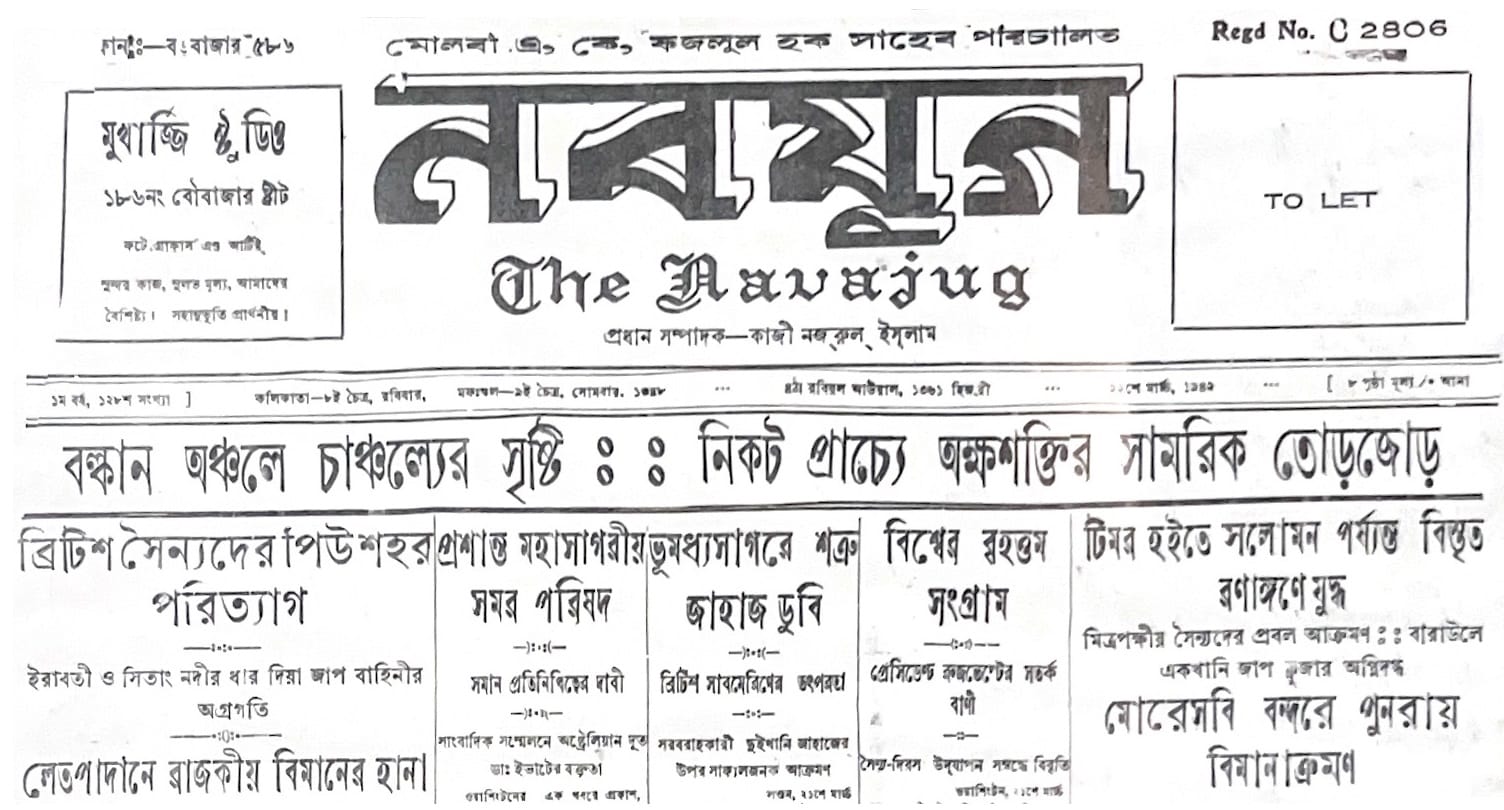
‘Nabayug’ was not merely a newspaper; it was part of a conscious movement that, by combining the brilliant pen of Kazi Nazrul Islam and the political foresight of Sher-e-Bangla A. K. Fazlul Huq, radically transformed the trajectory of Bengali journalism. It became the initial manifestation of a dream to build a progressive, non-communal, and publicly accountable Bengal. Their historic initiative will remain a unique, glorious, and permanent chapter in the history of journalism.
Hossain Muhammed Zaki is a Researcher. He can be contacted at zakiimed@gmail.com The article has been translated by Musrat Hossain Mithila.
Send your articles for Slow Reads to slowreads@thedailystar.net. Check out our submission guidelines for details.
Reading Nazrul in an age of inequality

East Bengal’s victory and the memory of lost homes
The stolen haq of Qurbani hides
Tagore’s Dan Pratidan and the colonial remaking of Bengal’s moral world
Memories of Indigo Rebellion and the question of national identity
Part 1 / The forgotten art of Bengali advertising
Re-reading Nizamuddin Auliya in history and memory

Remembering Mrinal Sen: Through rain, memory, and cinema

Rethinking the origins of Bongabdo through Bengal’s ecological civilisation