The tale of some rare portraits from Nazrul’s final days
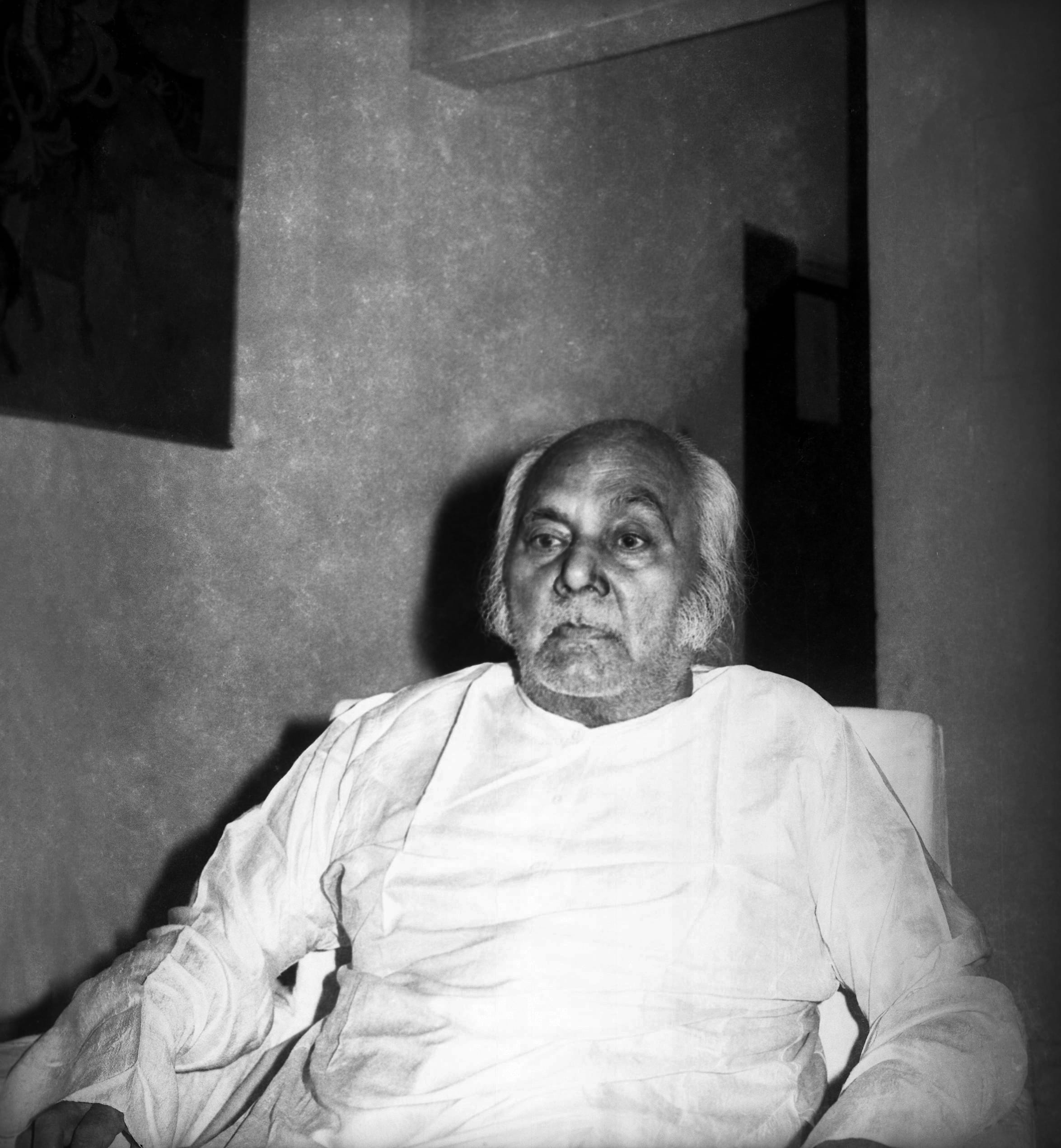
There is no excess of furniture in cabin number 117 of the PG Hospital. Two colourful paintings by artists Quamrul Hassan and Safiuddin Ahmed are hanging on the plain walls. A few fresh flowers are kept in the vase on the table in front. An electric fan spins overhead. The gentle fragrance of flowers drifts through the air. Morning light slips through the gaps of the southern veranda door. On such a magical morning, the poet Kazi Nazrul Islam sits silently in a chair. He is wearing a white silk Punjabi and a checked lungi. He has a stubble beard and a weary look on his face. On May 22, 1976, Mozammil Hossain, the chief photographer of The Bangladesh Observer, captured several photos of the poet in this rare posture. He took these photos on the occasion of the poet's 78th birth anniversary. Out of all the photos Mozammil took that day, two were published in The Bangladesh Observer on May 25 of that year [11 Jaistha, 1383, Wednesday].
These photos of the poet's fading days, captured by Mozammil, remained trapped in a yellow envelope for nearly fifty years. Denied light and air for such a long time, fungus had nested on the negatives. They had faded, resembling the pale colour of a worn-out saree. I discovered these rare negatives somewhat coincidentally and unexpectedly. Around noon on October 9, 2025, Zahid Hossain, the eldest son of the late Mozammil Hossain, came to my office with a bag full of negatives. It would take at least a year to review all the negatives inside that bag. The negatives of each event from many years ago were kept in separate envelopes. The titles and dates of the photographs were clearly written in neat handwriting on each envelope. After spending more than two hours looking through several medium-format negatives, I told Zahid Hossain, "I don't have any more patience today. I'll look at the rest another day."
For some reason, I reached into the bag and pulled out another yellow envelope. Written on it was: "Portrait of Nazrul, 22 May 1976." Inside the envelope were nine negatives, stuck close together! Among them, seven were individual portraits of Nazrul, and the remaining two were group photos.
Restoring history
The next afternoon, I went to the 'Photohut' colour lab in Dhanmondi to scan the negatives. There was so much fungus on them that even after scanning, a sharp image could not be obtained; everything looked blurry. After many attempts, a sharp image finally emerged. Seeing the photos of Nazrul taken so many years ago on a large computer monitor sent a shiver of excitement through me. I grew curious to see with my own eyes what photos The Bangladesh Observer had printed on Nazrul's birthday that year. On October 12, I went to the digital lab of the National Archives to look up that day's newspaper. On the front page of that issue, alongside the news headlined "Nazrul Jayanti Today," a two-column square portrait of the poet was published. The newspaper also published a supplement on page 11 titled "Bidrohi Nazrul" (The Rebel Nazrul) to mark the poet's 77th birth anniversary. The supplement featured a poem by Kazi Nazrul Islam titled "The Reawakening" and an essay by editor Obaidul Huq titled "The Impossible Legacy." The poet's poem was translated by Professor Kabir Chowdhury. A five-column vertical portrait of Nazrul was printed alongside that essay.
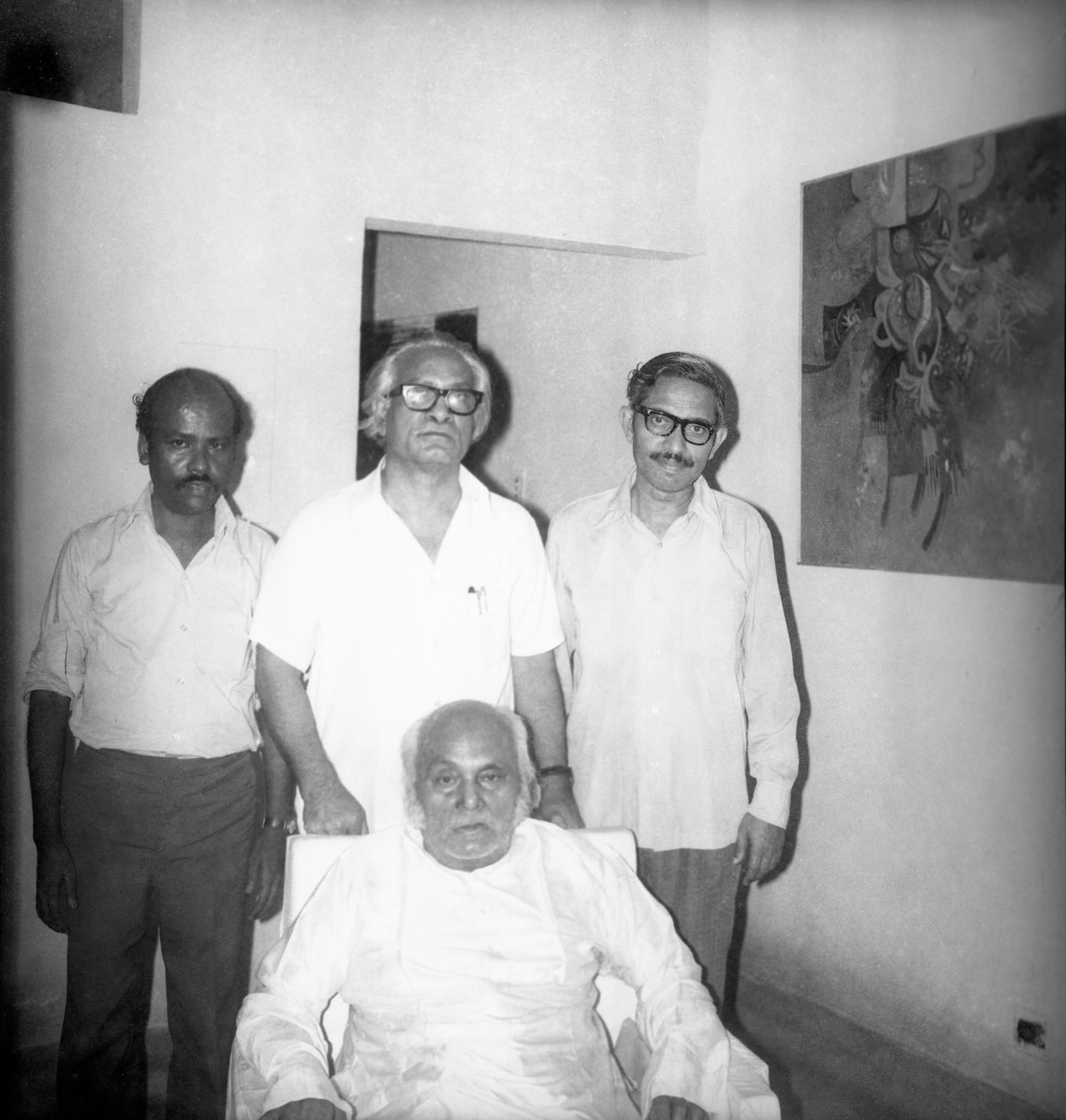
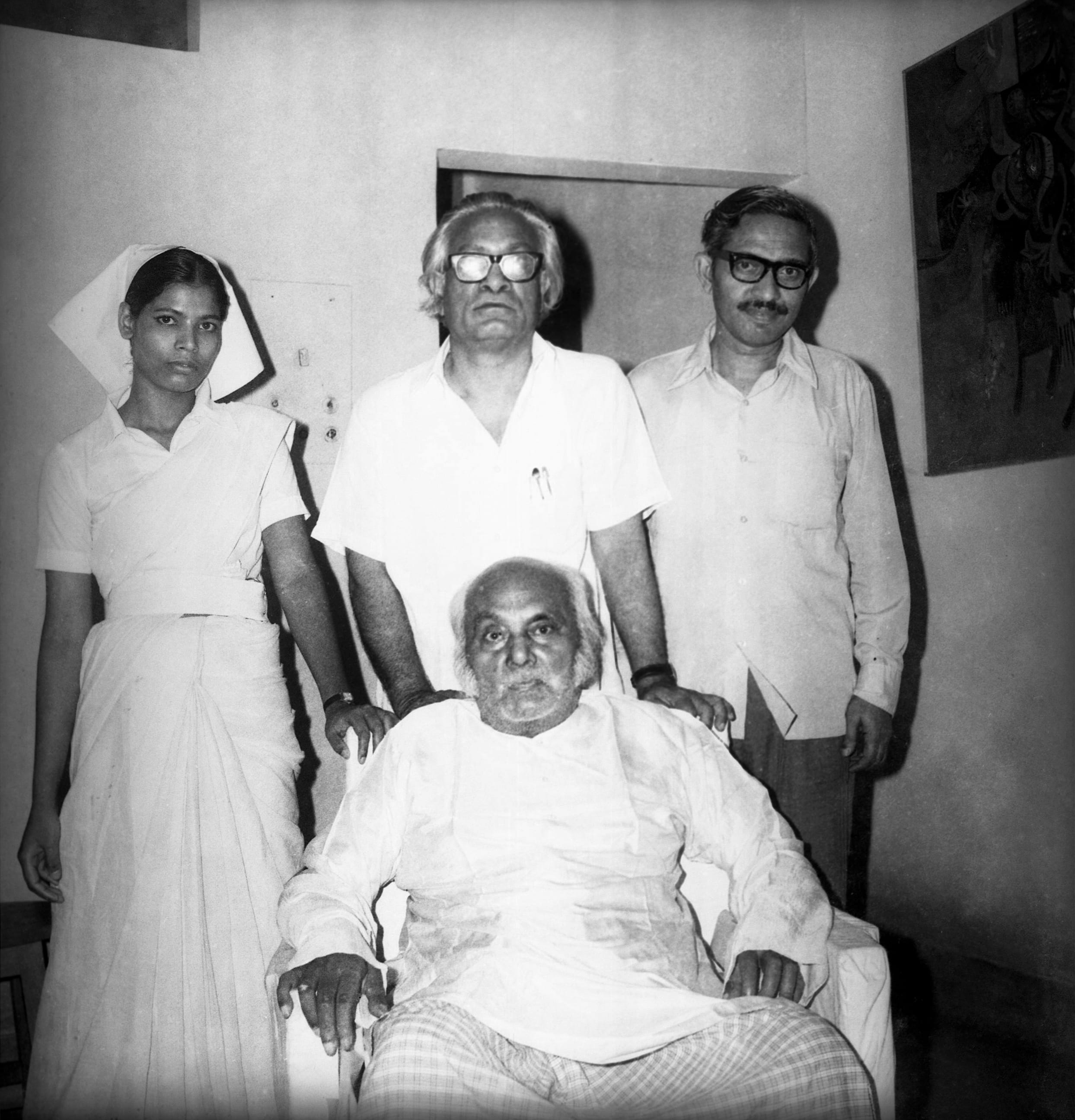
Apart from these portraits, one of the two group photos found in that yellow envelope showed three individuals standing behind a silent Nazrul. In the middle stood artist Quamrul Hassan. The other two were unfamiliar. Judging by the attire, the woman standing on the left was Nazrul’s nurse. However, I could not quite recognise the man standing on the right. To confirm his identity, I sought the help of veteran journalist Ahmed Nure Alam, photojournalist A.B.M. Rafiqur Rahman, and photographer Nasir Ali Mamun. Nasir Ali Mamun confirmed that this unfamiliar person was the renowned journalist Anwar Zahid, who later became the Information Minister in the Ershad government. To find out the name of Nazrul's nurse, I went to cabin number 117 of the PG Hospital on October 16. A staff member in the cabin mentioned that her name was Shamsun Nahar. In the other group photo, photographer Mozammil Hossain stood in the nurse's place. Therefore, it is not unreasonable to assume that the second group photo was taken by Shamsun Nahar.
The memory lane
Right next to cabin number 117 is the Media Cell of Bangladesh Medical University. I went to the Media Cell room in search of Shamsun Nahar. The staff there informed me that cabin number 117 is now the "National Poet Kazi Nazrul Islam Memorial Room." This memorial room was inaugurated on August 27, 2021. At that time, an initiative was taken to recover the poet's personal belongings and various memories associated with his time at the hospital. Nurse Shamsun Nahar was also searched for back then, but she could not be found. An official from the Media Cell took me on a tour of that memory-laden room. Nazrul's bed, chair, dressing table, and other personal items are arranged just as they were before. Several framed photographs and paintings hang on the walls. Countless books on Nazrul and a few photo albums are stacked neatly on the shelves. A small sculpture of Nazrul's face is also kept there. However, the two artworks by artists Quamrul Hassan and Shafiuddin Ahmed were missing. In their place hung two other paintings.
These photos of the poet were taken three months before his death. To learn about his physical condition at that time, I looked through the pages of a daily newspaper published on May 26, 1976. On that day, a news report titled "How is the Poet?" was printed on the front page of Dainik Bangla. The report stated:
"He is doing well. Although he is in the hospital, it can be said he is quite well now. Minor treatments are ongoing. He is on the hospital diet. Life follows a routine. However, visitors are banned for now. Devoted admirers get the chance to visit only on Sundays. The poet no longer lives in that house on Road 28 in Dhanmondi. He has been undergoing treatment at the PG Hospital for about a year. Waking up at seven in the morning, timely breakfast, tiffin, lunch, afternoon nap, snacks, dinner, and back to sleep at eight in the evening. There is no deviation from this routine. Poet Nazrul's daily life passes like this. Doctors arrive when it is time. Nurses come and take care of him... After coming to the hospital, many of the poet's habits have also changed. Nowadays, he no longer tears newspapers into tiny pieces. He does not grow restless erratically. Of course, he still continuously makes a particular sound with his mouth. The poet's treatment is being supervised by Dr. Nasimuddoula Chowdhury. Despite being in the hospital, the poet's health is not altogether bad. It can be said he is doing quite well."
Several questions have crossed my mind since discovering these photos of Nazrul. Artist Quamrul Hassan, Anwar Zahid, and Mozammil Hossain passed away many years ago. As a result, the answers to my questions may never be known. Perhaps a little could be uncovered if Shamsun Nahar could be found. I do not know if she is still alive.
Shahadat Parvez is a photographer and researcher. The article has been translated by Miftahul Jannat
Send your articles for Slow Reads to slowreads@thedailystar.net. Check out our submission guidelines for details.
Tuning the melody of Baul songs into peace education
Shreemati Rassundari and the making of the first autobiography by a Bengali woman
Nabayug: Nazrul’s radical pen and Fazlul Huq’s leadership
Reading Nazrul in an age of inequality

East Bengal’s victory and the memory of lost homes
The stolen haq of Qurbani hides
Tagore’s Dan Pratidan and the colonial remaking of Bengal’s moral world
Memories of Indigo Rebellion and the question of national identity
Part 1 / The forgotten art of Bengali advertising