


Strait of Hormuz crisis shows why a renewable transition is urgent
A war thousands of kilometres away suddenly shows up in the prices of groceries, the cost of running a factory, government subsidies or import bills, and the anxious arithmetic of a family budget as the people navigate the long lines outside refuelling stations. This is how the impact of the US-Israel war on Iran is being felt in many parts of the world through disruptions to the energy system. And the longer the war continues, the greater the disruptions will be, especially for import-dependent economies like ours.
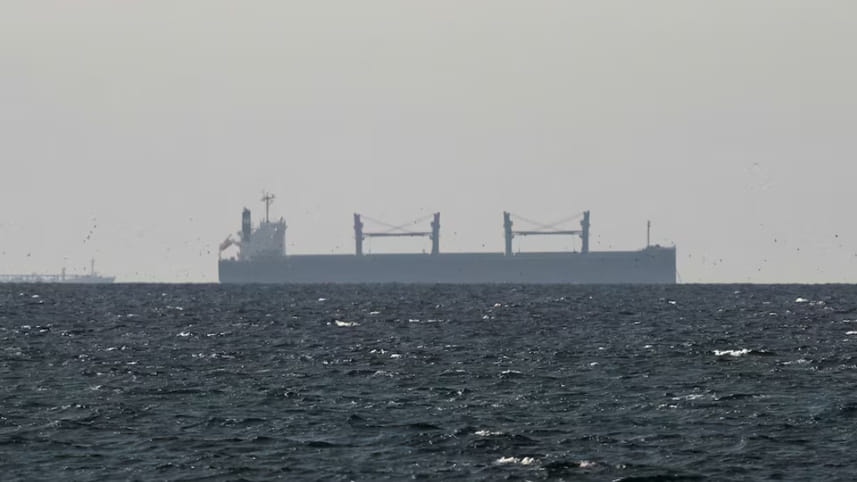
At the centre of this global stress test is the Strait of Hormuz, one of the world’s most strategic chokepoints, about 33 km wide at its narrowest point—narrow enough that Iran’s threats of closure, along with missiles and mines, can quickly shut down shipping and reorder global prices, supply chains, shipping patterns, and national budgets. In 2025, oil flows through the Strait averaged about 20 million barrels per day, roughly one-fifth of liquid petroleum consumed worldwide, according to the US Energy Information Administration (EIA). That number alone, and the disruptions we’re currently witnessing, underscore how the fossil fuel-based energy system is fragile by design.
 For all latest news, follow The Daily Star's Google News channel.
 In early March, Reuters reported oil surging to around $85 for Brent, and as the conflict has entrenched, with markets reacting to shipping restrictions and disruption risks connected to Hormuz, prices have crossed the $100 mark early this week. If the Strait remains closed or restricted, exports from Iraq and Kuwait could drop by 3.3 million barrels per day. In the meantime, the US has lifted sanctions on Russian oil and petroleum exports to ease the crisis. The International Energy Agency is coordinating the largest-ever release of emergency stockpiles from strategic reserves. Yet such measures may offer only temporary respite. As the conflict continues, there are serious concerns about crude prices skyrocketing towards a devastating $150 or even $200.
The market shock is not only about crude. LNG interruptions are also creating a wider disruption in West Asia. Asia is particularly exposed because it is the main destination for Gulf energy flows. Bangladesh sits inside that vulnerability zone. We import energy, and along with it, energy volatility. According to reports, Bangladesh paid about $3.88 billion for 109 LNG-filled cargoes in 2025, up from $3.02 billion for 86 cargoes in 2024, highlighting our increasing dependence as well as vulnerability. Even without a war, the LNG market can be highly volatile.
Painful memories of the volatility caused by the Russia-Ukraine war should remain fresh in the minds of policymakers and citizens alike. When Bangladesh had to halt spot market purchases for almost a year, it caused severe strain on the electricity and industrial sectors, ultimately leading to a cost-of-living crisis for ordinary citizens. That fuelled resentment and a wider economic crisis, with rapidly depleting foreign reserves that the government at the time could never recover from.
During the ongoing war, we have already seen panic fomenting. Fuel shortages have been reported across the country. The government has taken measures to conserve electricity, including shutting down educational institutions. Three of Bangladesh’s long-term LNG suppliers (QatarEnergy, Excelerate Energy, and OQ Trading Limited) have already declared force majeure, a legal tool that allows them to suspend or delay contractual obligations in events beyond their control, pushing the government back towards the volatility of the spot market and climbing prices.
All this chaos over fuel supplies is something that our policies cannot influence but only prepare for, and even then, we have little control over the outcome. This is how energy insecurity becomes macroeconomic insecurity. It is also where our energy conversation needs to shift. The countries best cushioned from the unfolding shock are those that have prioritised resilience and diversification—not just in fuel suppliers, but in the sources of their energy. According to a recent analysis, Pakistan, for example, is finding itself largely cushioned from the supply shock associated with the Strait of Hormuz closure due to its “solar boom” in rooftop installations. As of February 2026, the country’s solar surge reportedly helped to avoid about $12 billion in oil and gas imports, showing that renewables can deliver not only fiscal relief but structural reductions in geopolitical risk.
Similarly, Spain finds itself well positioned in the European market due to its massive renewables build-out, accounting for over 50 percent of its energy mix and reducing the influence of gas on its energy pricing by 75 percent. China, the global leader in renewables, has prepared for the current crisis for decades, utilising a long-term strategy to electrify its economy and transport sectors while its demand for fossil fuels has steadily declined. The Strait of Hormuz disruptions will only accelerate that transition.
These examples highlight how the debate on energy security is fundamentally shifting. Renewable energy is no longer just a niche climate commitment. It is pivotal for ensuring insulation from global supply shocks and fiscal instability. It is part of the essential architecture of 21st-century energy security and must be treated as such. Bangladesh, however, has been slow in this journey, hindered by corruption, profiteering, and cronyism in the energy sector. A Transparency International Bangladesh analysis estimated Bangladesh’s installed electricity capacity at 28,616.5 megawatts, of which only 1,314 megawatts come from renewable sources. TIB also found that 96.7 percent of nearly $30 billion in foreign investment in the power sector between 2010 and 2023 went to fossil-fuel projects. By comparison, as of March 1, 2026, Bangladesh’s renewable installed capacity stood at a meagre 1,694.94 megawatts, according to the Sustainable And Renewable Energy Development Authority (SREDA).
If disruptions along one chokepoint can shake the world so much, it just goes to underscore the fragility of the systems we rely on. Bangladesh is doubly exposed: first to price hikes and freight and insurance shocks, and second to the knock-on impacts those shocks create in power costs, inflation, and pressure on public finances. The country should therefore stop treating renewable energy as a peripheral programme and start treating it as essential infrastructure—something that shows up visibly on rooftops, public buildings, industrial facilities, and in community-scale solutions.
Energy efficiency should be pursued with seriousness because the cheapest and most secure unit of energy is one that we do not have to import. Every long-term fossil lock-in should be evaluated with one clear test: will this decision make Bangladesh safer when the next geopolitical shock comes?
We must keep reminding ourselves that our fossil fuel dependence is not only driving climate catastrophe, but also concentrating risk and exposure. Energy security today requires a deeper understanding of energy sovereignty and strategic autonomy that can be strengthened through long-term investment in and build-out of renewables and battery storage. A renewable-powered future is often framed as an environmental preference, but in moments like this, it is better understood as a source of stability. For Bangladesh, let this be the moment to lay the foundations for a new, resilient power system.
Bareesh Chowdhury is campaigns and policy coordinator at Bangladesh Environmental Lawyers Association (BELA).
Amanullah Porag is executive director at Youth for NDCs.
Views expressed in this article are the author's own.
Follow The Daily Star Opinion on Facebook for the latest opinions, commentaries, and analyses by experts and professionals. To contribute your article or letter to The Daily Star Opinion, see our guidelines for submission.


Comments