


Khaleda Zia: Unyielding against autocracy, compromising for democracy


The unprecedented outpouring of grief and love for Khaleda Zia after her death powerfully affirms that the nation has lost someone deeply cherished. Witnessing the historic farewell to such a towering figure invites reflection on our political landscape. What made her so dignified and so revered in death—after enduring perhaps the harshest state persecution faced by any politician in independent Bangladesh?
She suffered the humiliation of forced eviction from the house granted by the state in recognition of her husband, Liberation War hero and former president Ziaur Rahman's contribution to the country. Later, while leading a democratic movement as leader of the opposition, she was forcibly isolated from her party, family, and followers when her party office was besieged—its gates blocked by sand-laden trucks. During this period of siege, she lost her youngest son, who died in exile in Malaysia.
 For all latest news, follow The Daily Star's Google News channel.
 Then came her conviction on a trumped-up charge of embezzling foreign donations intended for an orphanage that, in fact, remained intact in a separate official account. The cruelty deepened when the High Court doubled her sentence and placed her in solitary confinement until her health deteriorated so severely that authorities were compelled to move her to a hospital. She never fully recovered. Her condition was further worsened by the Hasina government's refusal to allow her access to advanced medical treatment abroad. Only after the fall of that regime did she receive the best medical care available to any Bangladeshi, involving multidisciplinary specialists from the United States, the United Kingdom, China, Australia, and Bangladesh. Had such care been made available earlier, the outcome might have been very different.
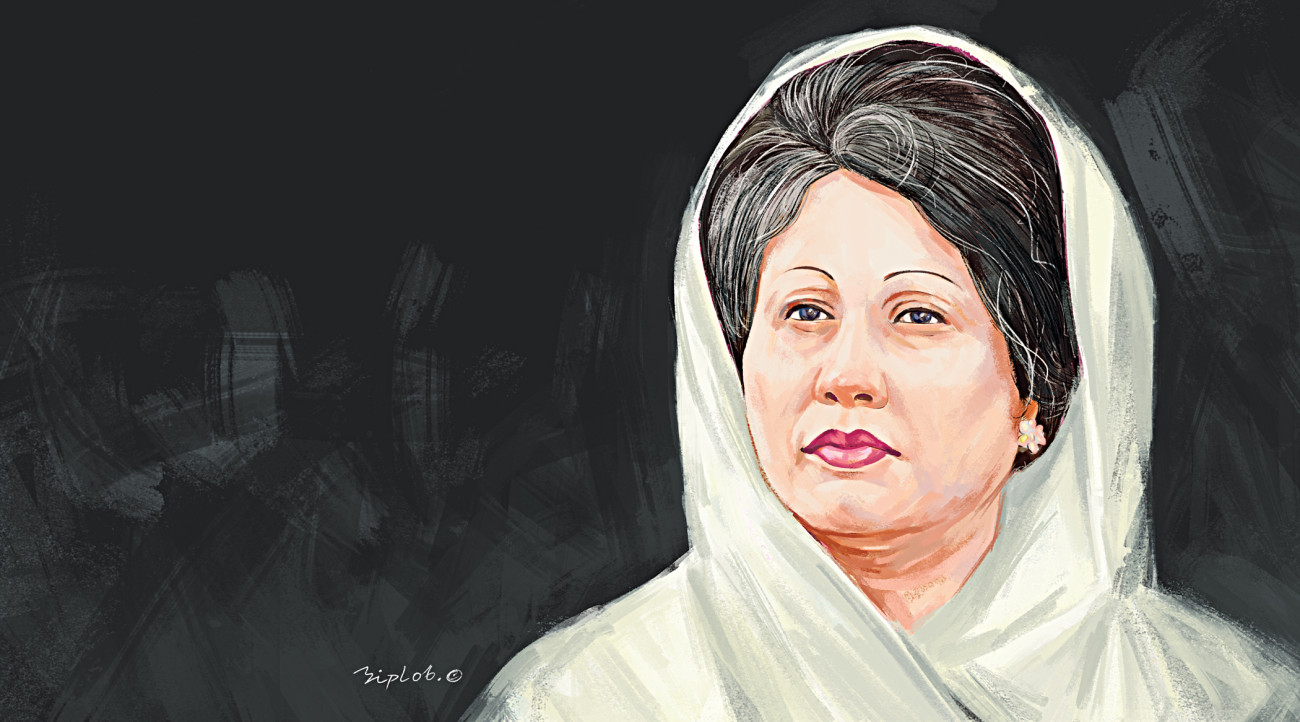
It is a shame that we failed to prevent such cruelty. Perhaps this shared guilt brought the country together in an unprecedented display of unity—one that sets a new benchmark of purpose: to follow her path and commit to building a democratic future. Asked what defines Khaleda Zia, many say she was uncompromising. That is only half the truth. She was uncompromising against autocracy, yet more compromising than her peers when it came to build and strengthen democracy. The full truth is that she made historic compromises for democracy, constitutional rule, and institution-building—and she defended those achievements resolutely.
She assumed leadership of the Bangladesh Nationalist Party (BNP) in 1984, when the party faced an existential crisis marked by factionalism and palace intrigues. She reorganised and revitalised it, launching an indomitable movement to restore democracy by freeing the country from General HM Ershad's military rule. Notably, she refused to legitimise any election under military rule, even when the Awami League and Jamaat-e-Islami abruptly abandoned street agitation and joined the 1986 parliamentary election. This steadfastness earned her the label "uncompromising," a commitment she upheld throughout her life.
Her faith in democracy was again evident when she accepted opposition demands—including those of the Awami League—to restore the parliamentary system, abandoning her party's preference and historical legacy of a presidential system. She embraced consensus and delivered a constitutional amendment—the first of its kind in Bangladesh's history, long marred by bitter discord. If any politician deserves to be given a funeral prayer (namaz-e-janaza) in front of the Jatiya Sangsad, it is Khaleda Zia because she established parliamentary democracy in the country.
She also deserves credit for introducing the 13th Amendment, establishing the caretaker government (CG) system to oversee elections, albeit under intense opposition pressure. Although, she initially rejected the idea of caretaker government, she later took several initiatives to bring the opposition to the table to discuss a CG formula. However, the continuing boycott and the eventual en masse resignation of the opposition from the parliament in December 1994, led Khaledia Zia to hold the one-sided February 1996 election and the BNP, holding the majority seat, could finally amend the constitution for installing the CG. After the 13th amendment was enacted, Khaleda Zia resigned and called a fresh election under caretaker administration and accepted the humiliation of defeat.
These were not minor concessions; they were epoch-making. While concentration of power breeds autocracy, parliamentary democracy alone proved insufficient without a democratic political culture and accountability. The caretaker system demonstrated its centrality to credible elections, especially as the nation later witnessed mass disenfranchisement in three consecutive elections under Sheikh Hasina's rule after her arbitrary abolition of the 13th Amendment.
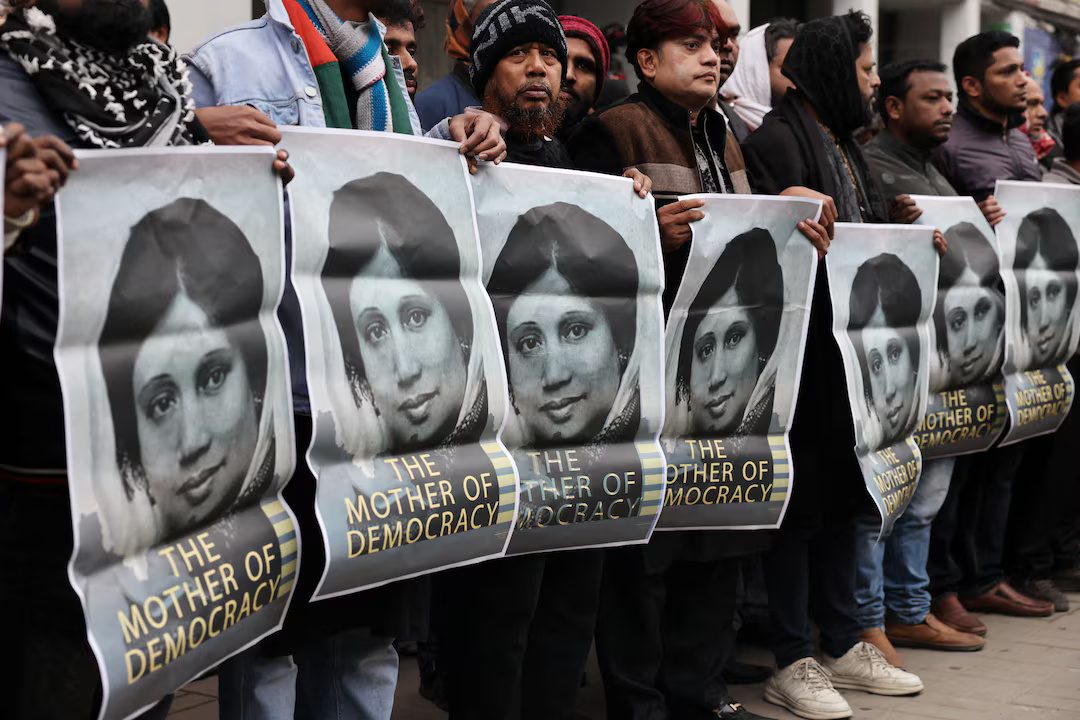
Among her many contributions, perhaps the most significant was shaping the politics and direction of the BNP. Founded on the 19-point programme of Ziaur Rahman, the party was led by Khaleda Zia for 41 years, matched only by Sheikh Hasina's 45 years at the helm of the Awami League. While Hasina tarnished the legacy of a party that led our Liberation War by sliding into autocracy, Khaleda Zia anchored her party firmly in democratic belief.
She inspired a unity so resilient that repeated attempts by the Awami League government to fracture the BNP—through inducements or intimidation—failed. The BNP's claim that 40 lakh of its activists were implicated in cases during the AL regime, testify to the unprecedented scale of repression, yet the party remained united. Khaleda Zia emerged as the enduring symbol of unity and democratic resolve.
Her electoral success is equally remarkable. She remains the only person in Bangladesh to have won elections 23 times (in terms of parliamentary seats), representing at least 12 constituencies across the country (excluding constituencies of her reelections) from Rajshahi to Feni, a testament to her immense popularity among voters nationwide.
Kamal Ahmed is consulting editor at The Daily Star. He led the Media Reform Commission under the interim government. His X handle is @ahmedka1.
Views expressed in this article are the author's own.
Follow The Daily Star Opinion on Facebook for the latest opinions, commentaries, and analyses by experts and professionals. To contribute your article or letter to The Daily Star Opinion, see our guidelines for submission.
Comments