


Democracy cannot survive when its defenders are set on fire

"I can't breathe anymore. There's too much smoke. I'm inside. You are killing me."
This was the social media post made by The Daily Star's Zyma Islam in the early hours of December 19. When I first saw the post, it sent a chill down my spine. I could not believe my eyes. Was this really happening?
 For all latest news, follow The Daily Star's Google News channel.
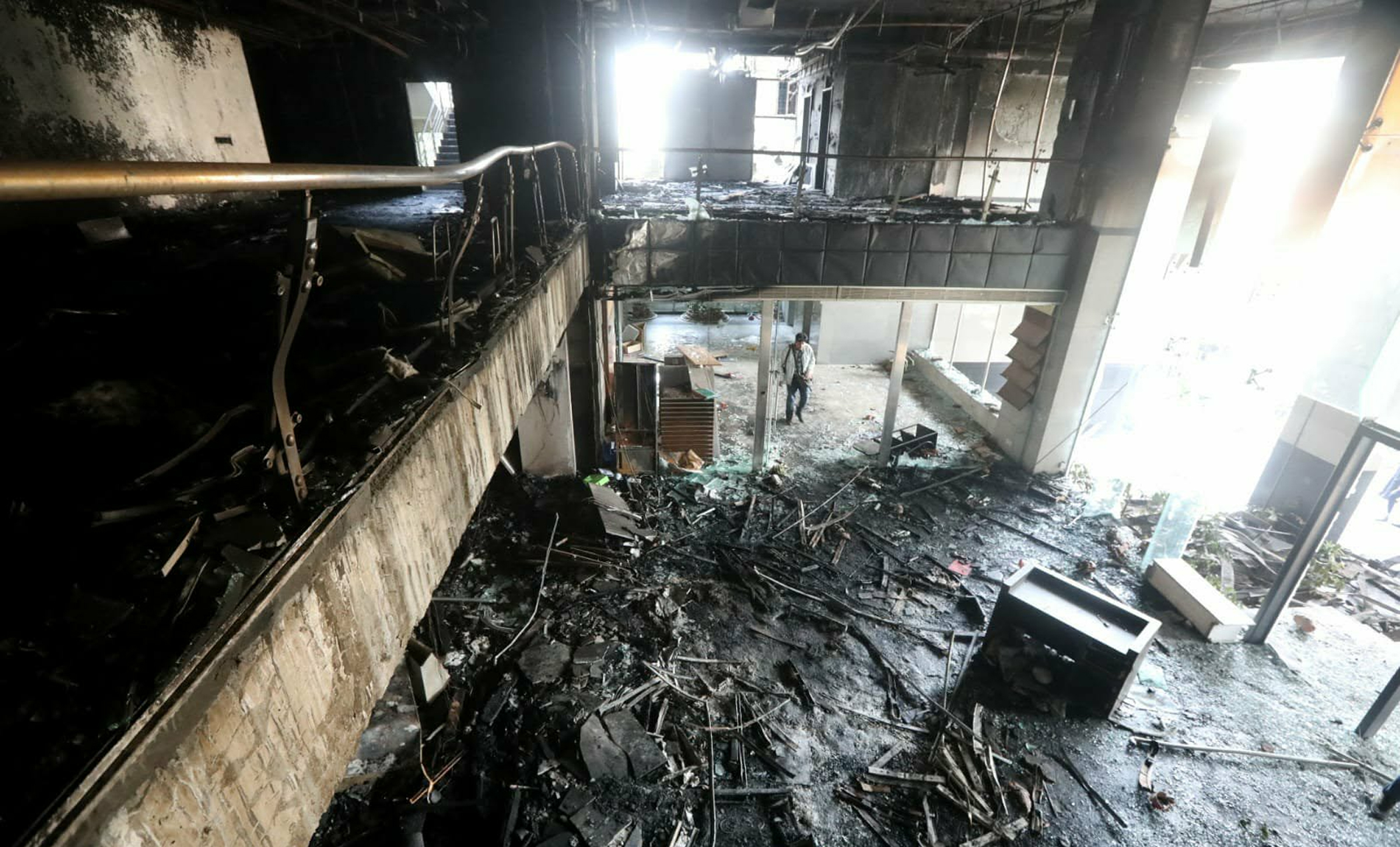
 Two media buildings, located within a few hundred yards of each other, were set ablaze that night. They housed Bangladesh's two most influential daily newspapers: Prothom Alo and The Daily Star. These were not some secretive arson attacks. They happened right in front of thousands, both on the streets and those watching live on social media. The journalist I quoted was trapped inside along with some of her colleagues.
Although they were eventually rescued by the firefighters and security forces, the event left a deep scar on the nation's collective psyche. The reason for this lunacy is so absurd, so detached from logic, that no sane observer can plausibly connect cause and consequence.
In every measurable sense, these papers' circulation, reach, credibility, and agenda-setting powers are unrivalled pillars of Bangladesh's news industry. For decades, they have shaped public discourse, built narratives around national events, and set the professional standards by which journalism in Bangladesh is judged. Even those who resent their editorial stance routinely rely on their coverage for verification of facts, simply because hardly any comparable alternative exists that combines professionalism, consistency, and institutional memory. That is precisely why they were under attack.
Both Prothom Alo and The Daily Star are unapologetically liberal and secular in orientation. From their inception, this has earned them the hostility of ultra-conservative factions that see secularism not as a constitutional principle but as an existential threat. At the same time, it would be disingenuous to pretend that these papers have always practised immaculate impartiality. There were moments where their coverage in certain respects didn't meet the lofty standard set for journalism.
But complete neutrality in journalism is an illusion, not a realistic benchmark. In every society, media institutions reflect values, worldviews, and editorial judgments. The relevant question is not whether absolute impartiality exists, but whether professional standards, fact-checking, source verification, and editorial accountability are upheld. On that score, these two dailies do not merely meet the threshold; they exceed it. That is why they became indispensable institutions rather than partisan actors.
Their credibility did not shield them from power. In fact, it made them frequent targets. Every government in Bangladesh has resented these newspapers for one reason or another, but the hostility reached its zenith during Sheikh Hasina's rule (2009–2024). Her regime, marked by systemic corruption, enforced disappearances, extrajudicial killings, and the decimation of democratic institutions, found its most persistent critics in these two outlets.
Hasina made her contempt explicit. She publicly stated that she avoided reading Prothom Alo and The Daily Star. Their reporters were routinely barred from attending press briefings. Their editors, Matiur Rahman and Mahfuz Anam, faced lawsuits, intimidation, and financial strangulation. Advertising pressure was applied through state influence over major companies. There were even credible fears that the regime wanted to engineer a hostile takeover of these papers, echoing how India's major business groups aligned with the Modi government absorbed influential media outlets.
Their "crime" was simple: they reported corruption and human rights abuses when silence was the safer option. Here lies the central paradox. Sheikh Hasina was arguably New Delhi's most reliable partner in South Asia. Her government systematically addressed India's security and strategic concerns, often at the expense of Bangladesh's own democratic accountability. In return, India provided unwavering diplomatic cover, shielding Hasina's brutal dictatorial regime from international scrutiny, particularly from Western powerful countries.
Even after Hasina's fall in August 2024, India continued to provide her material and political support. Hasina fled to India and has since been allowed to issue vitriolic statements against Bangladesh's interim government frequently. Numerous Awami League leaders and former ministers are also reportedly residing in India, often appearing on Indian talk shows and digital platforms to denounce the current political transition. There is also a pervasive though unsubstantiated belief in Bangladesh that India's intelligence agency, RAW, which allegedly penetrated multiple sectors of Bangladesh during Hasina's rule, is now collaborating with fallen Awami League operatives to destabilise the country.
Moreover, under the laws of Bangladesh, Sheikh Hasina has been convicted in absentia and is therefore legally liable to face justice in the country. Yet India has shown no indication of cooperating with any extradition process or facilitating her return. These dynamics have also emboldened local radical actors. Younger political figures, student wings such as Bangladesh Islami Chhatrashibir, and even emerging groups like the National Citizen Party (NCP) have adopted openly confrontational rhetoric towards India.
But getting back to the point, if the two newspapers were Hasina's most consistent critics, and she sought to hurt or attack them repeatedly, how could they also be "pro-fascist" or "pro-India"? This claim collapses under basic scrutiny.
Yes, there were moments when these papers softened their criticism of Hasina, but those were dictated by a survival instinct, not any ideological alignment.A regime that weaponised laws, courts, regulators, advertisers, and police left little room for open defiance. Even then, these newspapers continued to expose major corruption scandals and rights violations, often at great institutional risk.
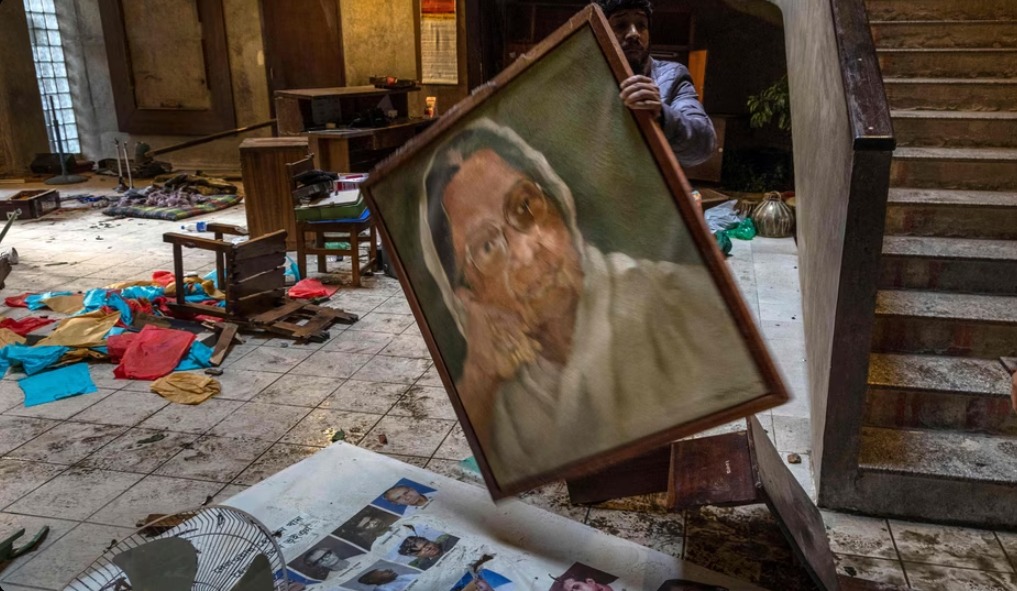
So, what their current branding as "acolytes" of Hasina or India actually reflects is something more dangerous: manufactured hatred.
Following Hasina's fall, some Islamist parties, long suppressed under the guise of a "war on terror," re-entered public life with renewed confidence. Social media influencers sympathetic to extremist views pushed a toxic narrative: that Prothom Alo and The Daily Star were ideological extensions of Indian hegemony, allegedly poisoning Muslim minds through secular liberalism. These narratives blended fragments of truth with deliberate falsehoods. In a society plagued by illiteracy, algorithmic amplification, and rising religious radicalism, such claims spread rapidly. Over time, a segment of the population was led to view these newspapers in adversarial terms, creating an opening that vested interest groups were quick to exploit.
The assassination of Sharif Osman Hadi became the spark. Though there is no evidence linking the newspapers to the killing, they became symbolic targets. Burning down major narrative-building institutions accomplishes multiple goals, including weakening ideological enemies, undermining the democratic process, and creating fear and chaos in the country.
Perhaps most disturbing was the role or absence of the state. Security forces were deployed late, despite prior intelligence indicating imminent violence after Hadi's assassination. The inaction suggested either gross incompetence or tacit consent. Some observers are quite confident that certain elements within the interim government were themselves involved in this planned inaction. The major reason, one may imagine, is their alleged alignment with political actors who stand to lose ground or power in a proper democratic transition.
Meanwhile, threats and mob violence continue. These are not isolated events. They are symptoms of a state losing its monopoly over violence while the country is being destabilised in the process. In this struggle for power, ideology, and control, there is only one consistent loser: Bangladesh. Businesses stall. Investment retreats. Social trust erodes. Institutions crumble.
Right now, what we need is not more manufactured enemies, but a free, fair, and timely election leading to the return of democratic governance rooted in accountability and pluralism. Silencing narratives will not save Bangladesh or restore faith. Only democracy and the rule of law can. And democracy cannot survive when its most ardent defenders—newspapers like The Daily Star and Prothom Alo—are set on fire.
Rushad Faridi, PhD, is assistant professor at the Department of Economics at the University of Dhaka. He can be reached at rushad.16@gmail.com.
Views expressed in this article are the author's own.
Follow The Daily Star Opinion on Facebook for the latest opinions, commentaries, and analyses by experts and professionals. To contribute your article or letter to The Daily Star Opinion, see our guidelines for submission.
Comments