


Dhaka University’s clean-up paradox

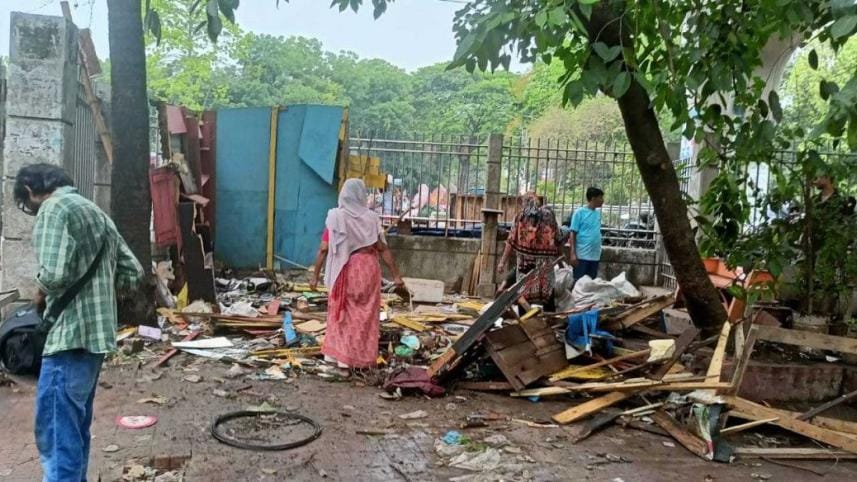
At the heart of the capital stands the University of Dhaka, a place that often evokes the nation's consciousness and shapes its identity. From the 1952 Language Movement to the 1971 Liberation War, from the anti-autocratic movement in the 1990s to the July uprising in 2024, DU has been at the thick of things, ushering in changes that at times seemed unattainable. The revival of its student body, Dhaka University Central Students' Union (DUCSU), after six years promised changes to the overall health of the university, which was diagnosed with many ills. But as soon as the DUCSU members picked up broomsticks to "set things right" at the "rotten" campus (to borrow Shakespearean lingo), the paradoxes of the city that never sleeps began to unfold.
The "clean campus" aimed at reclaiming public space, restoring order, and instilling discipline exposed an ironic and tragic fact: these young leaders are simply repeating the mistakes of the state, adding to the problem instead of solving it. While I fully support their cause and enthusiasm, I feel that their execution has blurred the fragile line between activism and authority. In a city where the municipal reflex is to "beautify" through occasional bulldozing of illegal structures and the eviction of homeless through periodic nightly actions, students have mimicked the same logic of erasure. Both student leaders and university spokespersons have publicly announced that marginalised people are a problem of the state. They have little or no sympathy for the people they deem "parasites" in our ecosystem. As stakeholders of a public university funded by taxpayers, with public roads running through its campus and vital public institutions (e.g., hospitals, metro stations, transport hubs, museums, academies, parks and fairgrounds) within its campus, the university simply cannot isolate itself from the people who form the invisible nervous system of campus life.
 For all latest news, follow The Daily Star's Google News channel.
Instead of leading the "imagination," it is unfortunate that our student leaders with megaphones and sticks in their hands have joined the bulldozer brigade. And the targets of their cleansing campaign are the invisible people who keep both the city and university operational. No matter how empowered we feel to treat the tea sellers, snack vendors, cobblers, rag-pickers, and street dwellers as pollutants to be washed away, we need them. Conversely, they need us. If there is one value that we want to add to our education, it is empathy for both humans and non-humans. It is easy to profile the homeless people as needle pushers or drug peddlers. However, their existence within the system serves as a symptom of broader issues that require careful treatment. Surprisingly, there is not enough reaction to the drastic "clean-up campaign" led by our students.
However, I must give them credit for identifying one important pattern that plagues the public system. Many staff and student leaders patronise the informal sector as a side hustle. They run a syndicate and extort money from the informal sector. With proper planning, this can be channelled into campus revenues and on-campus student jobs. The cleaning drive with a little bit of planning, time and care could have easily garnered public support. Instead, it has been treated merely as a photo op, accompanied by follow-up social media campaigns, making it seem as if DU has transformed into a place like Singapore.
We can easily dismiss the theatrics as youthful exuberance, but the episode has unbottled our repressed unconscious. The schizophrenia of Dhaka is in full display. We are a city that depends heavily on our informal sector and yet, pretends to be allergic to it. What employers of various sectors, who get different incentives for creating jobs, will never tell us is that an estimated 80 percent of workers operate outside any formal contract. We take care of those who take care of us without the need for any incentives. We are a terrarium in a self-supporting ecosystem where our formal economy, comprising offices, malls, and even universities, rests on an informal foundation of service and survival. For instance, members of the upper and middle classes hire drivers, helping hands, security guards, private tutors and cleaners. Then these "hired" group use the informal sector of transport workers, food carts, street hawkers and waste pickers, allowing them to survive and grow.
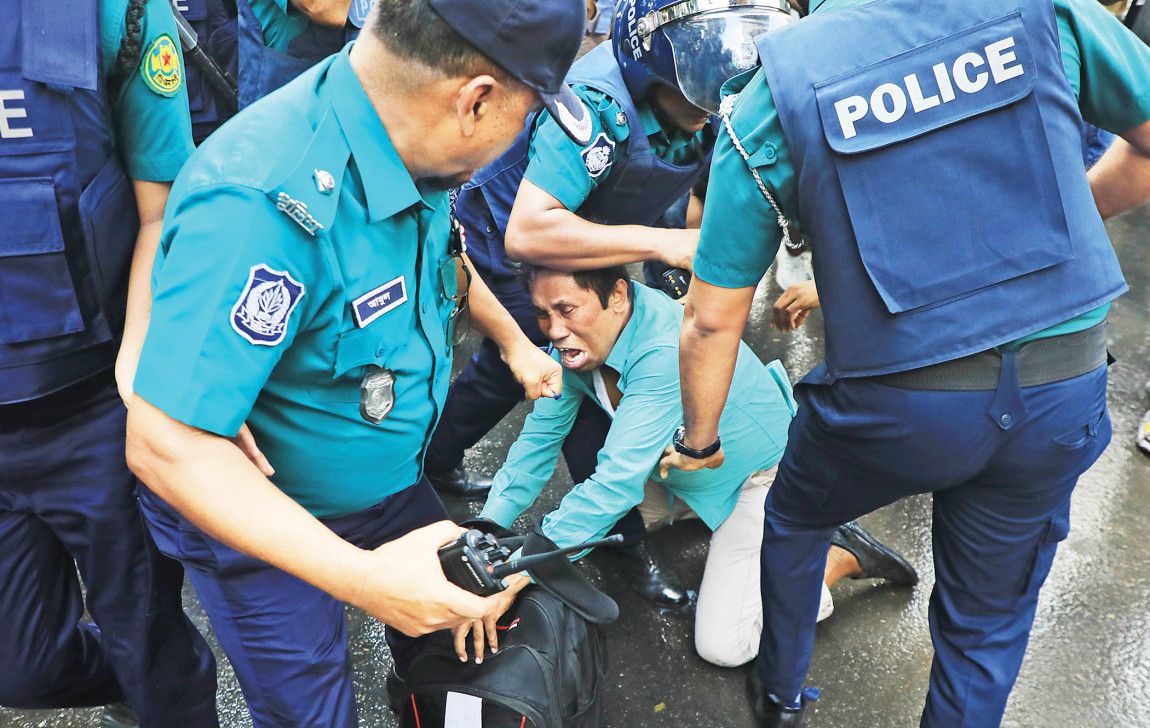
However, the clean-up drive, aimed at bringing order, failed to see this dynamic transaction and interaction as a necessity for our sustainable existence. Besides, any call for "order" often starts with the marginalisation of "the other." City corporations call it "beautification;" varsity students call it "cleanliness." The drive has reinforced an old elitism, the colonial reflex that associates cleanliness with class and order with exclusion. The "educated" once again stand clean by pushing the "uneducated" into the shadows. The logic is simple: any unsightly entity is dispensable. The drama occurring in the gated communities of elite housing societies, or the leafy areas of the tri-state region is repeated in the DU scenic-plex.
However, we expect more from our young leaders. We want them to come up with a creative and sustainable solution to the problem. How about an ideation competition? We can involve the alumni in initiating and funding a competition that aims to find clean and inclusive solutions. The challenge lies in managing vending zones and waste collection points sustainably. DU can pilot a model of co-existence between livelihood and hygiene that city corporations can replicate in the future. These are the academia-industry linkages that ranking agencies promote. We do not achieve any perceptual change when we insist on beauty through brutality. We can enhance our reputation by not reproducing the world as it is but by crafting a prototype of the world as it could be.
DUCSU can think of a "Clean Campus, Kind Campus" project that highlights DU as the country's urban conscience. In its current project, the legacy will not be the litter it removed but the humanity it overlooked. The campaign can still change its lens by making it not about eviction but inclusion. Let our students work in collaboration with the university and city authorities to map vending spaces that don't block walkways. Let business students come up with start-ups and microcredit models for campus vendors and on-campus jobs for students living under the poverty line. Let voluntary clubs monitor waste management, and research clubs with real-time data for the policy interventions. Let DU's next "clean-up" be intellectual, clearing away prejudices, not people.
Dr Shamsad Mortuza is professor of English at Dhaka University.
Views expressed in this article are the author's own.
Follow The Daily Star Opinion on Facebook for the latest opinions, commentaries and analyses by experts and professionals. To contribute your article or letter to The Daily Star Opinion, see our guidelines for submission.
Comments