


A warning, not a surprise
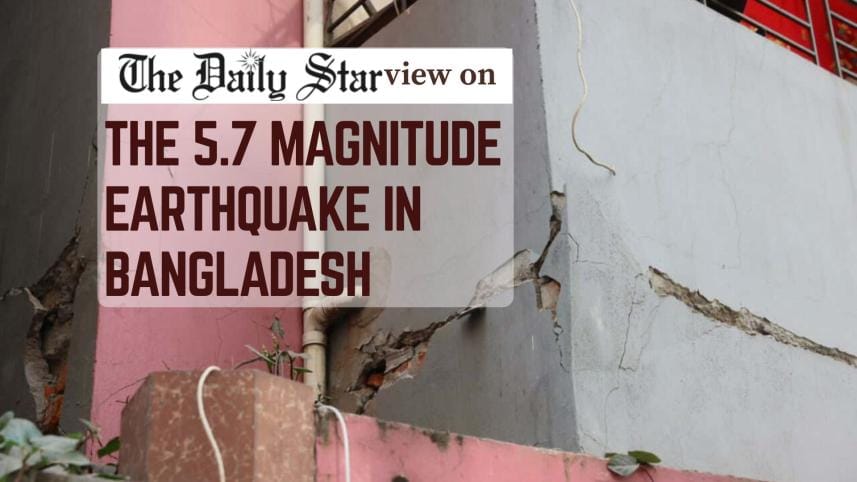
Friday morning's 5.7 magnitude earthquake, which led to at least ten fatalities as of 8:45pm on November 21 across the country, should serve as a wake-up call. The quake's epicentre was located in Madhabdi, Narsingdi and strong tremors were felt throughout the country, especially in Dhaka. Several hundred people were injured in the capital and surrounding districts, largely from falling objects and the panic-driven scramble to get outside. Among the injured in the capital, at least six were Dhaka University students, who jumped off their hall buildings in fear.
Residents across the capital rushed onto the streets as the tremors intensified. However, given the density of structures in the city, it is doubtful how safe they would have been had the earthquake caused more infrastructural damage than what has been reported so far. According to the United States Geological Survey (USGS), the quake's shallow depth likely intensified the shaking, increasing the potential for destruction—particularly in densely populated areas with vulnerable structures, such as those found in Dhaka and other cities of the country. Given these conditions, it is nothing short of a miracle that no large-scale damage has been reported, although some structural harm has occurred.
 For all latest news, follow The Daily Star's Google News channel.
But the question remains: how long can we continue to rely on such miracles? As we have previously warned, small tremors often signal the threat of a larger quake. Scientific data also show that Bangladesh—particularly the Dhaka region—is seismically active due to underlying tectonics, with the Indian plate pushing into the Eurasian plate and the presence of active fault systems. Against this reality, the lack of preparedness we have grown accustomed to is both reckless and incomprehensible. This daily has repeatedly urged the relevant authorities to learn from examples in our own neighbourhood and take necessary measures to prepare the country for potential earthquakes, yet to no avail. Despite experts' warnings that Dhaka could face catastrophic consequences in the event of a major quake, the authorities have maintained a nonchalant attitude, putting millions of lives at risk. Proper monitoring and enforcement of the Bangladesh National Building Code (BNBC) 2020 are almost non-existent, while recent amendments to Dhaka's Detailed Area Plan allow even more high-rise buildings—further increasing population density in an already overcrowded city.

Undoing the harm caused by years of neglect will take time. However, the work must start. Authorities must ensure that the current BNBC is strictly followed, not only in design but also in reinforcement placement. Existing buildings should be retrofitted or demolished if found unsafe. A comprehensive plan, which should include the recruitment and training of rescue-team volunteers as well as a mechanism to routinely inspect and regulate structures and buildings across the country, must be developed immediately. Additionally, extensive public awareness and training programmes are essential. Regular drills in schools, offices, and other public institutions should be implemented as part of preparedness measures, so that injuries and casualties can be minimised during future earthquakes.
Comments