


Why Bangladesh can no longer ignore its earthquake risk

Dhaka and Bangladesh's other densely populated cities stand exposed to alarming seismic hazards—an uncomfortable truth underscored by the magnitude 5.7 earthquake that rattled the nation on November 21, 2025. The quake, which killed at least 10 people and injured several hundred, exposed how fragile urban life is in cities where millions live in tightly packed buildings, many never designed for seismic forces. For me, who was born and raised in Dhaka with a childhood fear that a devastating earthquake could strike at any moment, the news felt deeply personal. That fear guided my career into earthquake engineering, but knowledge alone cannot safeguard our families and our cities. Bangladesh must urgently translate science into action.
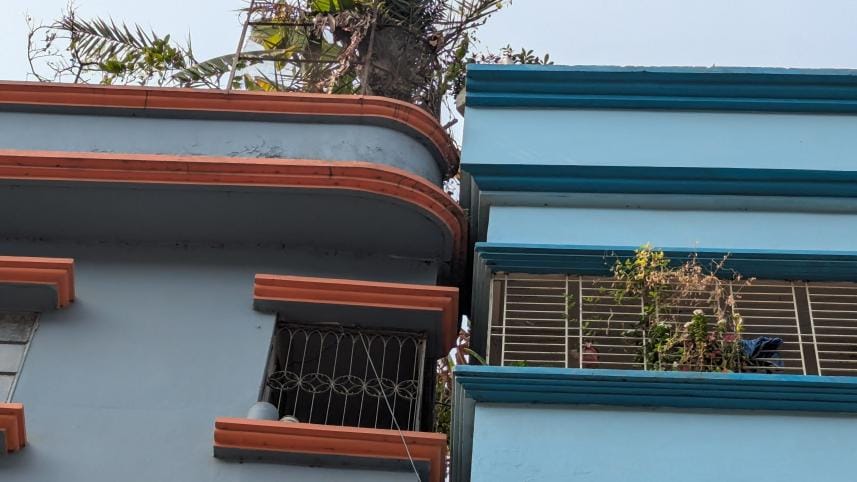
Bangladesh lies atop an active tectonic boundary, where deforming plates and hidden faults create frequent moderate earthquakes that shake major cities several times each decade. Beneath Dhaka lies a thick layer of water-saturated deltaic soil, which amplifies shaking and increases the potential for liquefaction (especially in reclaimed low-lying areas), causing buildings to tilt, sink, or collapse. However, the hazard is intensified not only by geology but also by urban reality. In many parts of Dhaka, buildings stand shoulder-to-shoulder, separated by only a few centimetres or none at all. This density creates a unique and dangerous seismic phenomenon: building pounding.
 For all latest news, follow The Daily Star's Google News channel.
 When two buildings stand extremely close together, they may sway differently during an earthquake. Without adequate separation gaps, they can slam or "pound" into each other. This can lead to catastrophic failures, including collapse of upper floors, shear failures in columns, falling facade elements or walls, and progressive collapse of an entire block of buildings. Dhaka, Chattogram, and Sylhet contain thousands of such high-risk adjacency conditions, especially in older neighbourhoods. The recent quake caused visible pounding cracks and dislodged masonry in several areas, clear warning signs of what a larger earthquake might bring.
Furthermore, many high-rise buildings in Bangladesh feature unreinforced masonry infill walls (walls made of brick or concrete blocks without steel reinforcement) or decorative facade elements. These components, perfectly stable during normal conditions, can behave unpredictably during an earthquake: out-of-plane wall failures can eject large masonry panels onto streets, falling debris from parapets, balconies, and exterior tiles can kill or injure pedestrians, and heavy air-conditioning units and water tanks on building edges can topple during shaking. Most casualties in moderate earthquakes around the world come not from pancaked buildings but from these secondary, avoidable hazards. Dhaka's crowded sidewalks and narrow lanes make falling debris an especially lethal risk.
One straightforward action Bangladesh can take immediately before any major retrofit is to identify the most vulnerable buildings, especially those with unreinforced masonry, glass facades, or insufficient separation gaps. "Danger zones" should be mapped on the ground using paint or physical barriers, indicating where pedestrians should not stand or walk during or after shaking. Additionally, warning signage should be installed in front of identified buildings, and building owners should be required to remove or secure loose external elements. Several earthquake-prone countries, including Japan and Chile, implemented variations of these low-cost interventions to dramatically reduce casualties from falling debris.
The recent Dhaka earthquake revealed how even moderate shaking can create chaos: thousands rushing down congested staircases, injuries from debris dislodged during tremors, traffic jams halting emergency access, and widespread panic among residents. If a moderate quake can cause this level of disturbance, imagine the level of devastation a major event could generate.
What is needed is a whole-of-society approach with the national government, city corporations and local governments, the private sectors, including real estate developers, media, NGOs, academics, experts, and communities. The national government must update and enforce seismic codes, retrofit schools and hospitals, modernise zoning regulations, establish advanced early-warning systems, and create and maintain city-level emergency operations centres. Meanwhile, city authorities must conduct rapid seismic assessments and building tagging, identify pounding-prone building pairs and mandate separation or retrofitting, map sidewalk danger zones in front of vulnerable structures, and organise frequent emergency drills and enforce evacuation protocols. However, the private sector, too, must come forward and do the needful. Real estate developers must retrofit aging buildings and comply with seismic design codes, remove unanchored heavy elements from facades and rooftops, and invest in earthquake insurance schemes.
The role of media, NGOs, and communities in earthquake preparedness and resilience building is equally important. Media and communities must train volunteers for emergency response, raise public awareness about safe evacuation and debris hazards, and ensure preparedness efforts include vulnerable and marginalised populations. In the meantime, academics must advance seismic risk mapping, pounding vulnerability studies, and retrofit solutions. They can advise government and non-government actors about technical foundations for safer reconstruction, and work with authorities to prioritise high-risk districts.
Bangladesh must pursue an actionable resilience strategy, including pounding vulnerability audits and mandated separation or structural retrofits, rapid tagging of buildings using colour codes (red/yellow/green), mandatory soil investigations for all new developments, retrofitting public structures and high-rise clusters, city-wide emergency management centres with trained staff and clear protocols, large-scale public education campaigns on earthquake safety, and cross-sector partnerships to monitor progress and enforce accountability.
Bangladesh is no stranger to natural disasters, but the threat posed by a future large earthquake, one striking at the heart of its megacities, is unlike any other challenge the country has faced. The science is clear. The risks are known. And the consequences of inaction could be catastrophic. If this latest earthquake teaches us anything, it is that the time for warnings has passed. The time for resilience has arrived.
Dr Shahria Alam is full professor of civil engineering and the principal's research chair in Resilient & Green Infrastructure at the University of British Columbia (UBC)'s Okanagan campus in Canada.
Views expressed in this article are the author's own.
Follow The Daily Star Opinion on Facebook for the latest opinions, commentaries, and analyses by experts and professionals. To contribute your article or letter to The Daily Star Opinion, see our guidelines for submission.
Comments