


Martyred intellectuals are our guiding lights
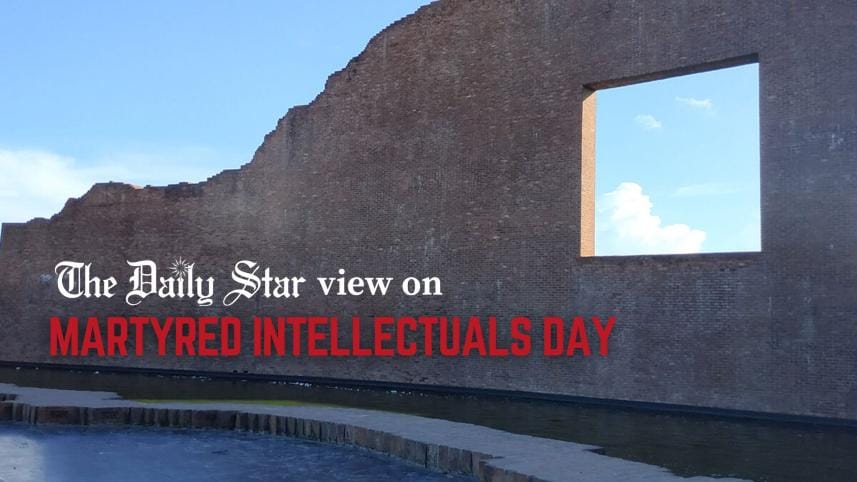
December 14 reminds us of the great sacrifices our intellectuals made for the nation's freedom. On this day in 1971, many of the brightest minds of the country—academics, journalists, doctors, writers, and artists—were systematically targeted and killed by the Pakistani army with the help of local collaborators. These murders were not random acts of violence; they were a calculated attempt to paralyse a nation at its birth. By eliminating the intellectuals who could guide, inspire, and critique, the perpetrators sought to destroy the conscience of an emerging nation.
Intellectuals serve as a society's moral compass. They hold power accountable, challenge injustice, and inspire change. Understanding their importance, Pakistan targeted these intellectuals from the very beginning of our Liberation War. Their loss has indeed left an irreplaceable void in the intellectual sphere of the country. Today, as we reflect on their sacrifice, it is sad to see that freedom of expression in our society still remains fragile and dissent is often suppressed. The struggle for truth and critical thought continues. This reminds us that honouring the martyred intellectuals is not only about remembering the past but also defending their values in the present.
 For all latest news, follow The Daily Star's Google News channel.
During the period of Pakistani oppression, our writers, journalists, artists, and intellectuals stood as the nation's conscience, bravely opposing injustice. With their knowledge and wisdom, they guided the nation. From the night of March 25 up until the final hours of the war, we lost eminent intellectuals, including Professor Govinda Chandra Dev, Munier Choudhury, Jyotirmoy Guhathakurta, Dr Mofazzal Haider Choudhury, Rashidul Hasan, Selina Parvin, Anwar Pasha, Dr Mohammed Fazle Rabbee, Dr Alim Chowdhury and others. The mass killing of so many intellectuals in such a brief period is rare in world history.
The horror of the events of 1971 is evident in accounts from across the country. In Saidpur, for instance, the Pakistani army and local collaborators systematically abducted, tortured, and executed the town's leading intellectuals between March and June 1971, months before the December 14 massacre. Victims included physicians, educators, businessmen, and cultural figures, who were brutally held in cantonments and later executed at Balarkhail. Survivors and eyewitnesses describe the coordinated nature of the killings and the extreme suffering endured by those taken. Such accounts remind us of the calculated cruelty inflicted upon the nation's brightest minds and the depth of their sacrifice.

Yet, even 54 years after independence, we have yet to complete the task of properly commemorating these heroes. Efforts to compile a comprehensive list of martyred intellectuals have remained incomplete. While several gazettes and research works have recorded hundreds of names, a definitive and verified list still does not exist. Ensuring transparency and completeness in documenting their contributions is our moral obligation.
Only by fostering a society founded on justice, equality, human dignity and intellectual freedom and one that holds power accountable, can we realise the cherished dreams of our martyred intellectuals.
Comments