


End this meaningless war without delay
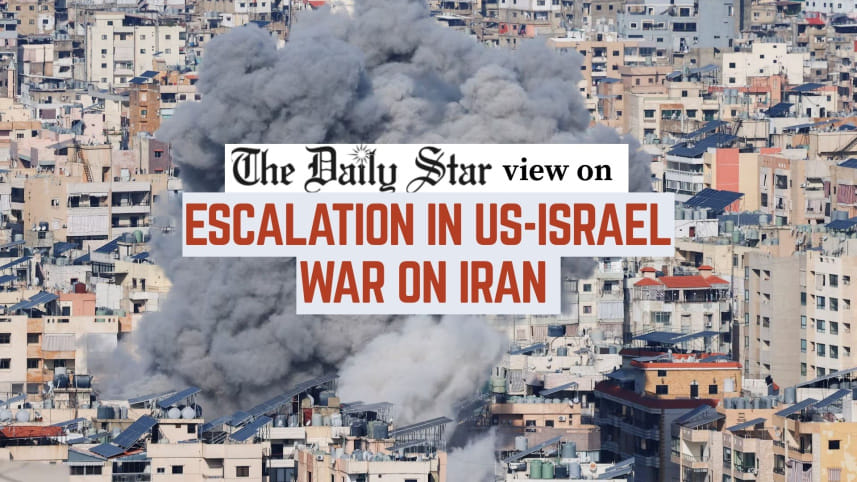
It is extremely distressing to see the escalation in the war of choice being waged by the United States and Israel against Iran as it engulfs the entire Middle East, threatening not only the region but also the global economy. The shifting objectives of the US-Israel war—ranging from the so-called denuclearisation of Iran to regime change and democratisation—have already caused widespread disruption. The consequences are being felt from farming fields and factory floors to transportation networks, affecting people across the globe.
Like the ambiguity surrounding the war’s objectives and the likely timeframe for ending the US-Israeli campaign remains unclear. Comments by Donald Trump about the success of US operations have sent mixed signals. While his remarks to the US network CBS—that he believed the war “is very complete”—briefly calmed markets, within hours he appeared to walk back that statement, saying: “We could go further. And we’re going to go further.” It remains uncertain whether he would accept anything short of what he called Iran’s “unconditional surrender” only days earlier.
 For all latest news, follow The Daily Star's Google News channel.
Conversely, ruling out a quick end to the conflict, Iranian Foreign Minister Abbas Araghchi said his country was prepared to continue missile attacks for as long as necessary and that talks with the US were no longer on the agenda. Iran’s Islamic Revolutionary Guard Corps also warned that it would not allow “one litre of oil” to be shipped from the Middle East if US-Israeli attacks continued.
Beyond the ongoing blockade of shipping through the Strait of Hormuz, which carries more than one-fifth of the world’s energy supply, the war could expand further through continued Iranian attacks on US military assets in Gulf countries. Several producers have already reduced or partially shut down their wells. Experts warn that even if the war ended immediately, restoring oil and gas production to pre-war levels would take weeks, if not months.
This oil shock has the potential to wreak havoc in countries like Bangladesh. Some economists have likened its possible impact more to the aftermath of an earthquake than a storm surge. Farmers are already struggling to secure fuel for irrigation, without which the country’s main staple crop could suffer. Universities have been closed in a bid to conserve power. Exporters are scrambling to find cargo flights to keep supply schedules on track, often at higher costs. Meanwhile, a potential decline in remittance inflows from the Gulf is unnerving policymakers already grappling with weak foreign exchange reserves. The deaths of four Bangladeshis caught in the conflict also highlight the grave danger faced by millions of expatriate workers from other countries living in the Gulf, through no fault of their own.

Once again, we see that while no one truly emerges victorious from war, millions of innocent people bear its harshest pain and endless suffering. It is, therefore, imperative for world leaders to act urgently to halt further fighting. Any escalatory move by any party in the name of securing commercial shipping through the Strait of Hormuz should be addressed through the United Nations rather than through the unilateral will of any superpower. The world can no longer afford to absorb the cost of this meaningless war.




Comments