


Canal-digging drive must resist partisan influences
Rivers and canals are to Bangladesh what arteries are to the human body. The country is uniquely blessed with a vast, intricate capillary network of waterways, including rivers and canals. Yet its natural circulatory system has suffered severe sclerosis for decades, falling victim to myopic development. Siltation, rampant illegal encroachment, and chronic institutional neglect have choked these channels. In their absence, farmers have been forced to relentlessly draw down the country’s precious and finite groundwater reserves to keep agricultural production afloat.
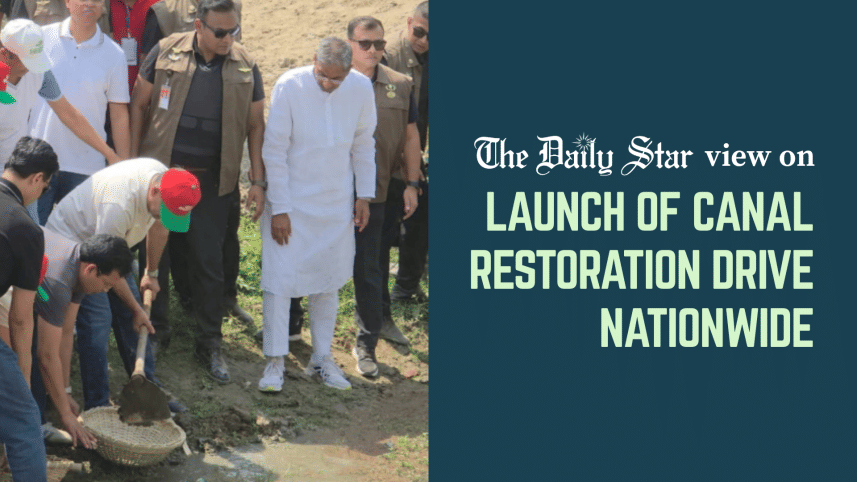
The formal inauguration of a nationwide canal excavation and re-excavation programme by Prime Minister Tarique Rahman is thus a necessary intervention. By breaking ground on a 12-km stretch of the Sahapara canal in Dinajpur, the government has taken aim at a mounting environmental and economic threat. The launch—coordinated with simultaneous excavation efforts led by ministers and lawmakers in 54 districts—marks the first phase of the implementation of a colossal election manifesto pledge made by BNP to restore 20,000 km of rivers and canals across the country.
 For all latest news, follow The Daily Star's Google News channel.
The economic and ecological rationale behind the initiative is compelling. Redirecting the agricultural burden back to surface water will strengthen rural water management. A freely flowing canal network serves a dual purpose: it functions as a drainage system to mitigate severe monsoon waterlogging while also acting as a reservoir to combat drought. Officials at the water resources ministry are right to note that better use of stored surface water could improve irrigation, boost agricultural productivity, and create employment opportunities for rural communities. More importantly, it could halt the dangerous depletion of the water table in northern districts.
Yet embedded within the DNA of this ambitious initiative is a political risk that the government must carefully navigate. Infrastructure and environmental projects in Bangladesh endure only when they achieve broad social consensus. If this colossal excavation effort is treated merely as a partisan agenda, it will inevitably fall short of its potential. The government must ensure that excavated canals do not fall into familiar traps: corruption, lack of maintenance, and swift re-encroachment by the politically connected. For the project to achieve genuine transformation, the effort must be deliberately and visibly depoliticised. It should evolve from a top-down government directive into a truly nationwide civic campaign. The state possesses the heavy machinery, initial capital, and hydrological expertise needed to break ground. But the long-term stewardship of these waterways must ultimately return to the communities that rely on them.

This requires fostering a profound sense of collective ownership. When a farming community feels that a canal belongs to them—rather than to a distant bureaucracy in Dhaka or a local political patron—they will be more inspired to protect its banks from encroachers and ensure its waters remain clear. The government has taken a commendable first step in recognising the crisis and mobilising the state’s apparatus to address it. The next step is to ensure that the effort grows into a shared national mission—one in which citizens, regardless of political creed, help carry the work forward.


Comments