


Why modern fatherhood isn’t what it used to be
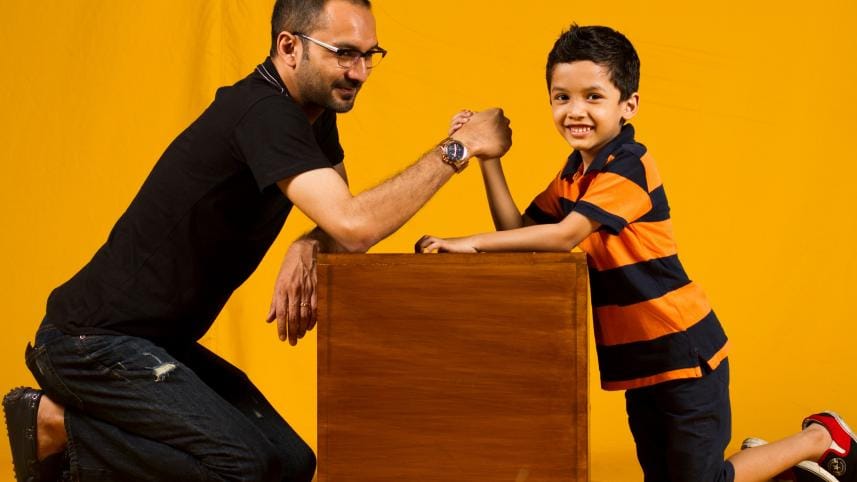
As far as the family is concerned, previous generations have expected men to be conditioned to express love only through actions. What they held in their hearts remained within, unspoken and never revealed. In this article, we look into whether the orthodox expectations of patriarchy still hold true, or whether we have fully broken free from them.
Traditional values define fatherhood within a rigid framework. Although someone who plays a significant role in every family, he is rarely seen as the one with emotional attachments. As the "master" of the household, he is considered the earner and the provider. And anything beyond is an additional bonus, but never enough on its own!
 For all latest news, follow The Daily Star's Google News channel.
 A father is always present in the background. Not often celebrated, his sacrifices pass mostly unnoticed. Yet, it is well understood that without him, the family structure, as we know it, would break down.
He is traditionally seen as the parent who takes care of the finances and ensures the well-being of children. Though emotionally reserved, he caters to the family's every need, often at great personal sacrifice.
He hides his deepest fears and insecurities from the rest; his griefs and sorrows are for him to carry, as it is considered "unmanly" to share the burden with anyone else. His wife is his only aide in this struggle, but also maintaining a considerable distance.
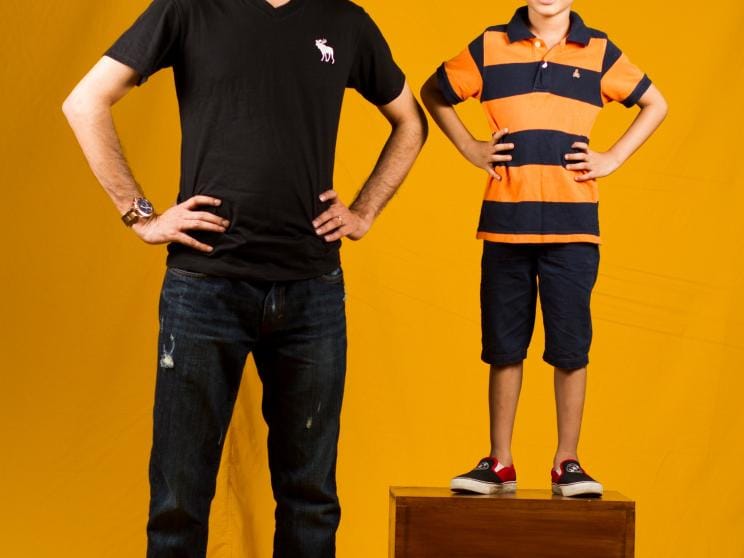
In this effort to make both ends meet, he loses the opportunity to spend precious time with children. As they grow up, they lose the moving connection with their dad and cling to their mother for comfort. The wife, too, has her struggles, but she is perhaps not seen as the one in the armour, devoid of any emotional vulnerabilities.
This has been the all too familiar story of yesteryears!
Unlike previous generations, fathers of this time and era are desperately trying to bridge the gap between this orthodox expectation and modern sensibilities. They are now learning to express love beyond mere words. They are getting habituated to showing love and nurturing in ways that were once thought unnecessary.
As gender roles evolve, the modern father stands at a crossroads. Many have moved on, but collectively, as a society, we have not. Despite the desire to fit into this newfound role, we continue to find the weight of notions of the bygone era. And this makes our struggle more difficult.
We speak of equality and shared responsibility, but still expect every father to be a stoic parent. We expected them to provide financial stability and social stature, while additionally mastering their new role as an emotional caregiver. It is as if any new identity must come ALONG with his pre-defined role.
Yes, we want fathers to be multitaskers. But perhaps, the time has come to view fatherhood not as a mere extension of patriarchal duties. We are slowly embracing a new notion of parenthood, where both men and women can be successful while still being human. Fatherhood, just like any other role in the family dynamics, should not be a mere dispensing of duties. It can simply be a quiet act of love; a steady, evolving journey of empathy, connection, and presence that redefines what it truly means to be a father.
Comments