


Sandokan: The tiger of Malaysia, half a century on

In 1976, European television produced something rare -- a series that felt less like a programme and more like an event.
The Italian epic “Sandokan” stormed onto screens with the swagger of a swashbuckler and the lyricism of a romantic legend.
 For all latest news, follow The Daily Star's Google News channel.
 Adapted from the adventure novels of Emilio Salgari, the show transformed a late-nineteenth-century literary hero into one of television’s most charismatic rebels.
Five decades later, its legend has not faded. If anything, the myth has grown.
For many viewers across Europe, South Asia and the Middle East, Sandokan was their first taste of a serialised adventure that combined lush cinematography, political intrigue and a love story fierce enough to soften even the hardest pirate.
It was escapism, certainly. But it was also something more interesting -- a fantasy about resistance.
Pirate prince of popular imagination
The central figure was the enigmatic Sandokan, a dispossessed prince turned pirate who roamed the seas of nineteenth-century Southeast Asia.
Known as the “Tiger of Malaysia”, Sandokan fights colonial power while commanding loyalty from a band of outlaws whose camaraderie borders on brotherhood.
The television adaptation distilled this mythic persona into flesh and charisma through Kabir Bedi, whose performance remains the series’ defining force.
Bedi’s Sandokan was not merely heroic; he was magnetic.
1
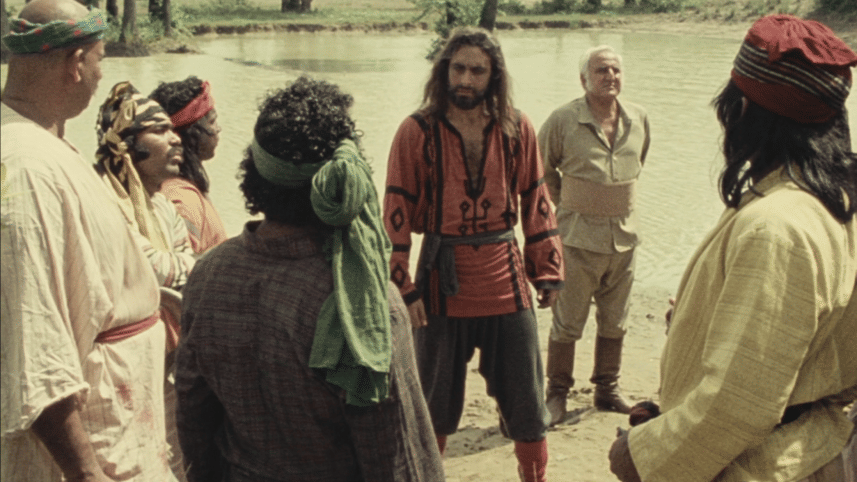
His gaze held a mixture of danger and melancholy, the expression of a man who has lost a kingdom but refuses to lose his dignity.
Opposite him stood Carole André as Marianna, the aristocratic woman whose love story with the pirate prince lent the series its emotional pulse.
Their romance, poised delicately between passion and tragedy, gave the narrative a human centre.
Under the direction of Sergio Sollima, the series avoided camp excess and instead cultivated a tone that oscillated between romantic adventure and political drama.
Television programme with an ambition
The 1970s were not known for lavish television productions. Budgets were modest and expectations modester. Yet Sandokan carried itself with the scale of cinema.
Filmed largely in Southeast Asia, the series captured jungles, seas and colonial ports with an atmospheric grandeur.
Sunlit waters, storm-swept decks and candlelit interiors gave the show a tactile richness rarely seen on television at the time.
The camera lingered on landscapes as though they were characters themselves. The jungle was not merely a backdrop; it was a theatre of intrigue and danger.
And then there was the music. The unforgettable theme composed by Oliver Onions became a cultural phenomenon in its own right. Its melody, buoyant yet wistful, could summon the entire series in a single flourish of sound.
Many who grew up in the late twentieth century still recognise those opening notes instantly.
Romance amid rebellion
At its heart, Sandokan was a love story woven into a rebellion.
The pirate’s war against colonial power gave the narrative its moral spine, yet the romance between Sandokan and Marianna gave it emotional resonance. The tension between these two elements produced the show’s most compelling moments.

Sandokan the revolutionary had to remain fierce and uncompromising. Sandokan the lover revealed tenderness beneath the legend.
This duality made him unusual among television heroes of the era. He was not merely victorious; he was vulnerable. That vulnerability turned the series into something richer than a typical adventure tale.
A hero born of anti-colonial imagination
The origins of the character explain much about his appeal.
Emilio Salgari, writing at the turn of the twentieth century, created Sandokan as a defiant figure resisting European imperial power in Southeast Asia.
For readers in Italy, the character offered a romantic fantasy of rebellion.
For viewers in many post-colonial societies decades later, the symbolism felt more immediate.
The pirate prince stood as a figure who challenged the empire, even if his battles unfolded within the realm of melodramatic adventure.
It was a fantasy of justice delivered with a sword.
Kabir Bedi and the making of a star
The success of the series transformed Kabir Bedi into an international figure almost overnight.
His portrayal fused physical elegance with theatrical intensity, turning the pirate prince into a global icon.
The role was unusual in its cross-cultural resonance.

An Indian actor playing a Southeast Asian hero in an Italian production created a cosmopolitan blend rarely seen on television at the time.
It gave Sandokan a distinctly international flavour.
Even today, Bedi’s silhouette with the flowing hair and resolute gaze remains inseparable from the legend.
Global cult status
Few European television dramas of the 1970s achieved the international reach of Sandokan. The series travelled widely, dubbed into numerous languages and broadcast across continents.
In countries as varied as Italy, Germany, Turkey and parts of South Asia, it developed a devoted following. Viewers waited each week for the next instalment with a sense of ritual anticipation.
For many households, Sandokan was the programme that brought families together in front of the television set.
Such collective viewing experiences have grown rarer in the age of streaming platforms.
Fifty years later, the series lives on in reruns, DVD collections and the memory of audiences who grew up with it. Its influence is visible in later adventure dramas that attempt similar blends of romance, spectacle and political intrigue.
Yet nostalgia alone does not explain its endurance.
Sandokan succeeded because it understood something fundamental about storytelling. Audiences do not merely seek action. They seek myth.
And the series offered myth in abundance -- a wronged prince, a forbidden romance, a band of loyal companions and a cause worth fighting for.
The ingredients were simple. The alchemy was extraordinary.
The tiger still prowls
Half a century after its first broadcast, Sandokan remains a curious and delightful anomaly in television history. It was neither entirely European nor wholly Asian, neither purely historical nor completely fantastical.
Instead, it inhabited a romantic middle ground where pirates could be poets and revolutions could feel like ballads.

In an era of high-budget streaming spectacles, the series still retains a peculiar charm. Its adventure feels earnest rather than cynical, its hero gallant rather than ironic.
The Tiger of Malaysia still prowls the imagination. And after fifty years, his roar has not faded.