


What 2026 holds for music: New albums, tours and resistance to AI
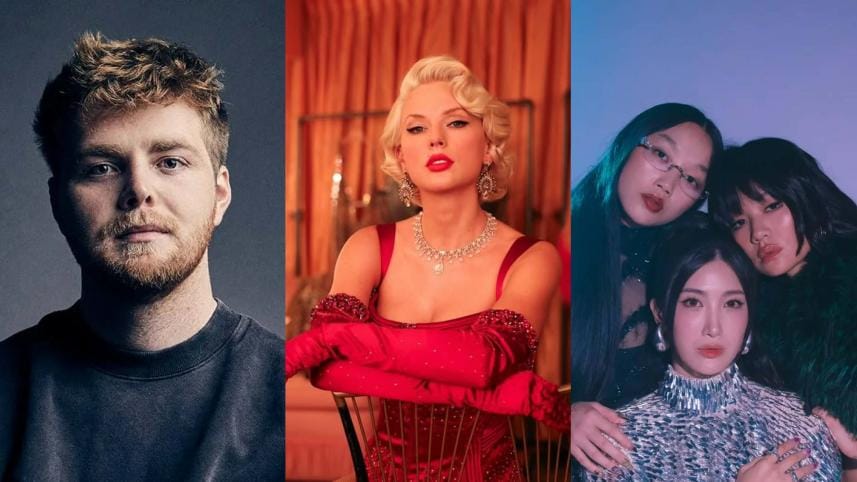
As 2025 draws to a close and year-end round-ups give way to anticipation, attention is turning to what 2026 may hold for the music world—from album releases and festival line-ups to questions about live returns and the growing role of artificial intelligence.
The past year felt transitional in many respects. With relatively few major A-list releases and a conspicuous lull during the summer, the mainstream charts remained unusually static. Just three songs dominated the number one position for much of the year: Taylor Swift's "Fate of Ophelia", Huntr/x's "Golden" and Alex Warren's "Ordinary".
 For all latest news, follow The Daily Star's Google News channel.
 Beyond algorithm-driven playlists, however, audiences showed growing interest in music that pushed boundaries. Geese earned critical praise for "Getting Killed", while Spanish pop star Rosalía released "Lux", an ambitious album blending flamenco, opera, hip-hop and experimental rhythms. Former Little Mix member Jade Thirlwall explored pop stardom with "That's Showbiz, Baby!", and Lily Allen reasserted her lyrical sharpness with "West End Girl".
Looking ahead, 2026 will see Glastonbury Festival take a fallow year, but the festival circuit remains packed. Reading and Leeds Festival has announced headliners including Fontaines D C, Florence + The Machine, Dave, Charli XCX, Raye and Chase & Status. Elsewhere, Mighty Hoopla will feature Lily Allen and Scissor Sisters, while Latitude Festival has booked Lewis Capaldi and David Byrne. End of the Road Festival, meanwhile, will host Pulp and CMAT.
One of the summer's biggest bookings is set for London's BST Festival, where Pitbull will headline on July 10, joined by special guest Kesha.
Speculation also continues around Oasis. After concluding a high-profile comeback tour in Mexico, frontman Liam Gallagher hinted at a possible return. Rumours persist of a Knebworth House show—site of the band's iconic 1996 concerts—though there is also talk of a pause, particularly as guitarist Bonehead undergoes treatment for prostate cancer. In a statement closing their 2025 tour, the band described an upcoming "period of reflection".
Alongside touring and releases, the music industry continues to grapple with artificial intelligence. AI tools are now routinely used in studios for tasks such as isolating vocals or restoring recordings. Controversy flared late in 2025 following allegations that British dance act Haven used AI to replicate Jorja Smith's voice. Streaming platform Deezer has estimated that a third of the music uploaded to its service is now AI-generated.
A backlash is also taking shape. Producer Jack Antonoff has spoken about recording with live, imperfect instruments as a response to overly polished pop. Recent releases by Miley Cyrus, Olivia Dean and Skye Newman similarly lean toward organic sounds reminiscent of 1970s pop and soul.
Surveys suggest listeners increasingly want transparency around AI use in music. As debates continue, some have even proposed labels identifying recordings made entirely by human musicians—an inversion of the familiar parental advisory sticker. Whether such measures gain traction may become one of the defining questions of music in 2026.
Comments