The song that became Chand Raat’s anthem

Some songs linger, and then there are those that become inseparable from life’s most cherished moments.
“Ramzaner oi rozar sheshe elo khushir Eid” belongs firmly in the latter category -- transcending the boundaries of a mere composition to become a living cultural inheritance, without which the celebration of Chand Raat (eve of Eid-ul-Fitr) feels incomplete.
 For all latest news, follow The Daily Star's Google News channel.
 As the crescent moon makes an appearance, this melody returns as a ritual, threading itself through the air, through memory, through the quiet emotional grammar of a nation.
Penned and composed by Bangladesh’s National Poet Kazi Nazrul Islam, the song has long transcended its temporal origins.
Albeit close to a century old, it feels curiously unaged -- its emotional cadence as fresh as the first Eid it ever serenaded.
It does not announce itself with grandeur; rather, it arrives gently, almost like the moon it celebrates, ushering in a soft but unmistakable sense of closure.

Nazrul’s lyrical imagination unfurls with an almost cinematic vividness.
The song does not simply describe Eid; it stages it. It is, in essence, a sensory archive -- an arras woven from the rituals and textures of Bengali Muslim life.
Its verses paint a vivid picture of joyous anticipation. Children giggle with mehedi-stained hands, bangles clatter as women adorn themselves, and the aroma of spices drifts from busy kitchens.
Yet, to confine the song to festivity alone would be to diminish its reach.
Beneath the celebratory surface lies a deeper, more deliberate invocation.
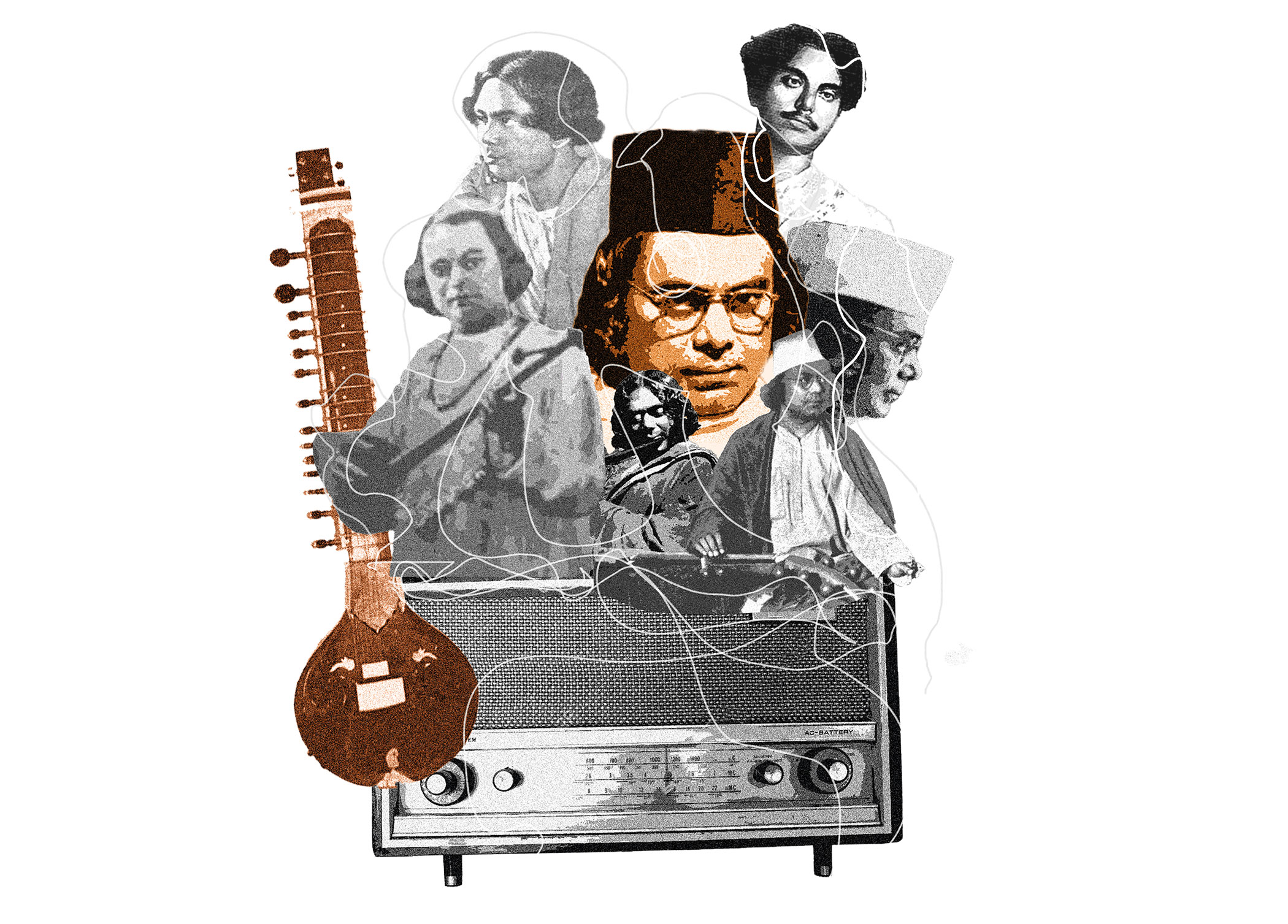
Nazrul, ever the poet of conscience, infuses the composition with a moral imperative -- reconciliation.
Eid, in his telling, is not merely an endpoint to fasting but a beginning -- a moment to repair what has frayed, to extend grace where bitterness may have lingered.
It is also a quiet plea for unity and forgiveness. It urges listeners to mend broken bonds and embrace loved ones, friends, even foes.
The song quietly insists that joy is incomplete without forgiveness.

Its endurance lies precisely in this duality. It is at once intimate and collective, rooted in specific cultural imagery yet expansive enough to evoke universal emotion.
For many, the song is enough to summon an entire world of stories -- childhood mornings, hurried preparations, embraces exchanged in the early light, the comforting disorder of celebration. It is not nostalgia alone; it is continuity.
It is a melody of belonging, of families reuniting under the warm glow of fairy lights strung across balconies. It carries listeners across time and space, back to childhood Eids, to familial warmth.
The song is the euphonious echo of a nation’s collective memory; it binds generations not through repetition, but through recognition.
Each year, as Eid returns, so too does this song -- not as a relic, but as a living presence.
And in its quiet, unwavering way, it continues to remind a nation of the simple, enduring joy of coming together.

The response to ‘Dorodia’ has been overwhelming: Tawsif Mahbub

Raga Rahman’s ‘Unfamiliar Affinity’ explores art, identity and belonging

‘Roid’ selected for review on a major US national broadcast platform

Film Artistes’ Association election set for July 3

Daisy Edgar-Jones to lead new adaptation of ‘Sense and Sensibility’

Mejbaur Rahman Sumon’s ‘Hawa’ and ‘Roid’ screen together at Star Cineplex
‘Bangladesh’s Purest Artist’: Remembering Safiuddin Ahmed

Theatre troupe Palakar launches rooftop studio with play ‘Hajar Churashi’

SRK celebrates 34 years in Bollywood in Mangalore