


Students and the spectre of intimidation at Suhrawardy Udyan

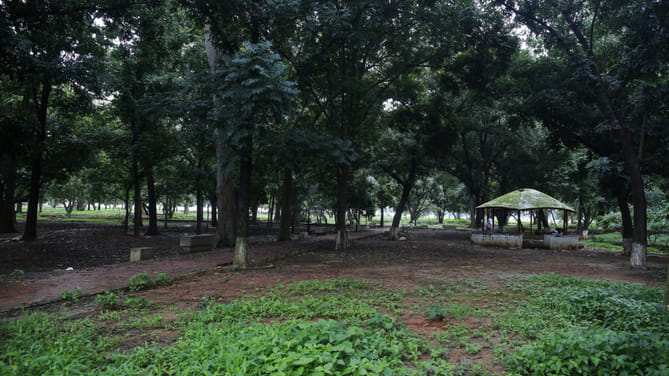
The recent spectacle of members of the police force sweeping through Suhrawardy Udyan under the banner of an anti-narcotics drive is, I daresay, sufficient to send a shiver down the spine of any student who has ever walked these grounds. The very notion that a uniformed official might materialise, unannounced and unsmiling, to confiscate one’s bag, rummage through its private contents with prosecutorial suspicion, and subject one to pointed interrogations about the legitimacy of one’s presence at a particular hour, creates an unease less befitting of a democratic republic.
For many students, such as myself, who believe that the Udyan offers a place of respite during class breaks or even after classes, this is incredibly concerning.
 For all latest news, follow The Daily Star's Google News channel.
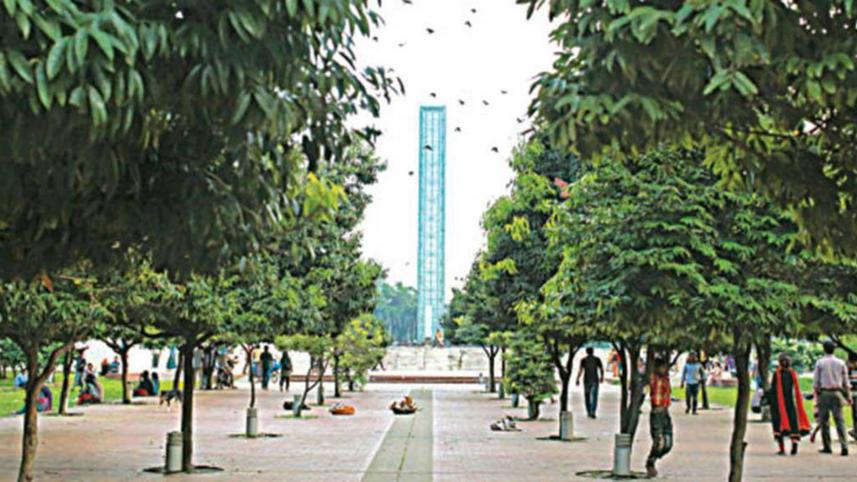
During an anti-narcotics drive at Suhrawardy Udyan, allegations surfaced that police assaulted several Dhaka University (DU) students and two multimedia journalists. Three DU students were detained during the drive and later handed over to the university’s proctorial team. One of them, an Anthropology student and convener of Biplabi Chhatra Jubo Andolon’s Dhaka Metropolitan unit, was seen in a video circulating on social media being grabbed from behind, pushed to the ground, and struck with a stick while speaking with the officer leading the operation.
In another widely circulated video on social media, one of the assaulted students is seen speaking with Deputy Commissioner (DC) Masud Alam during the operation at Suhrawardy Udyan. The DC questions the student as to why he chose to pass through the Udyan when alternative routes were available. The DC then remarks that no well-mannered individual would remain on the grounds after iftar, implying that those who do so at that hour are, by default, drug users. The exchange, stark in its candour, has since sparked debate about the assumptions underlying the drive.
First, a citizen retains the constitutional right to move freely through public spaces without being compelled to justify why one route was chosen over another. A public park is not a privilege to be rationed at the discretion of the authority. Second, the assertion that no “well-mannered” individual would remain at Suhrawardy Udyan after iftar rests on an entirely arbitrary premise. By what statute, one might ask, is such a standard ordained? Civility cannot be measured by the hour of one’s presence in a public space. Finally, to presume that all who linger in the Udyan at a certain time are drug users is to embrace a sweeping generalisation, one that risks normalising undue force wherever suspicion is subjectively declared. In a constitutional order, enforcement must be guided by evidence and law, as the assaulted student said.
Public spaces such as Suhrawardy Udyan are meant to remain accessible to the many, not the few. In a crowded capital, there are only a handful of places where one may seek a measure of quiet and ease, and for me, Suhrawardy Udyan is among them, steeped in nostalgia and the gentle memories of childhood. If, however, the simple act of lingering in such parks invites harassment, interrogation, or even assault, one is compelled to ask: in what meaningful sense do we continue to call them “public” at all?
These raids, however, are not a recent development. Similar operations were carried out barely two months ago, likewise with scant regard for constitutional safeguards. On a video report published by RTV on December 18, 2025, it can be seen that a student present in the area fled in fear when he saw the police running towards him. When no incriminating evidence was found, DC Masud reportedly remarked that the student only needed to have said he was there to spend time. The comment sits uneasily with his earlier assertion that those who remain at Suhrawardy Udyan after a certain hour are drug users. One cannot, after all, hold simultaneously that lingering in the park is presumptively suspect and yet acceptable if described as casual recreation. The contradiction speaks to a troubling ambiguity at the heart of these operations.
This only serves to show the absence of clear rules or uniform standards governing such raids. In their unpredictability lies their unease, because anyone, regardless of intent, appears equally vulnerable to harassment or assault. For DU students, the anxiety is heightened still further, for the areas surrounding the campus are, at almost any hour, alive with young people moving between classes, discussions, and repose.
Of course, the presence of drug users and petty criminals in public spaces is, indeed, a real concern, and efforts by law enforcement to keep these spaces safe are both understandable and necessary. However, it is unacceptable to treat everyone as a suspect by default or to justify harassment and excessive force in the name of protection. When scrutiny becomes indiscriminate, ordinary student life itself begins to feel precarious.
The issue extends beyond students alone; unchecked practices today may imperil others tomorrow. What is required, therefore, is not merely temporary action, but a transparent and enduring solution that restores public trust.
References:
1. The Daily Star (February 24, 2026). Allegations of police assault on journos, students during anti-narcotics drive at Suhrawardy Udyan.
2. RTV (December 18, 2025). Drug raid at Suhrawardy Udyan.
Views expressed in this article are the author's own.
Comments