


Post-earthquake reflections of public university students

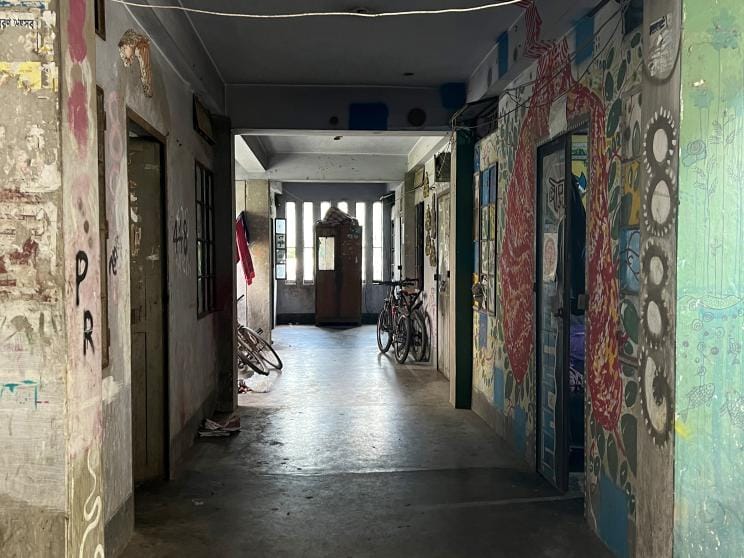
As a student at Dhaka University (DU), I often hear stories about the institution's long history. Some are inspiring, others hard to reckon with. The trouble with hearing these accounts is that many of the problems they describe persist. The patterns feel unchanged, and the voices of students sound tired from repeating the same concerns. One story in particular returns every year — the October tragedy of DU. On October 15, 1985, the roof of Jagannath Hall, one of the university's residential halls, collapsed. 40 people died, among them 26 students and 14 guests. Since that day, the university has marked October 15 as a day of mourning.
 For all latest news, follow The Daily Star's Google News channel.
 Students may get a day off, but have any real changes followed?
On November 21, I woke up in the safety of my home. The earthquake had been frightening, but I was with my family and I counted my blessings. Like many others, I went online to see what had happened. There, I read that one of my seniors had jumped from the roof of his residential hall and suffered serious injuries. I found myself asking why he would do that, but the answer was already clear to me. The condition of the halls in public universities is poor, and their structural integrity is often in question.
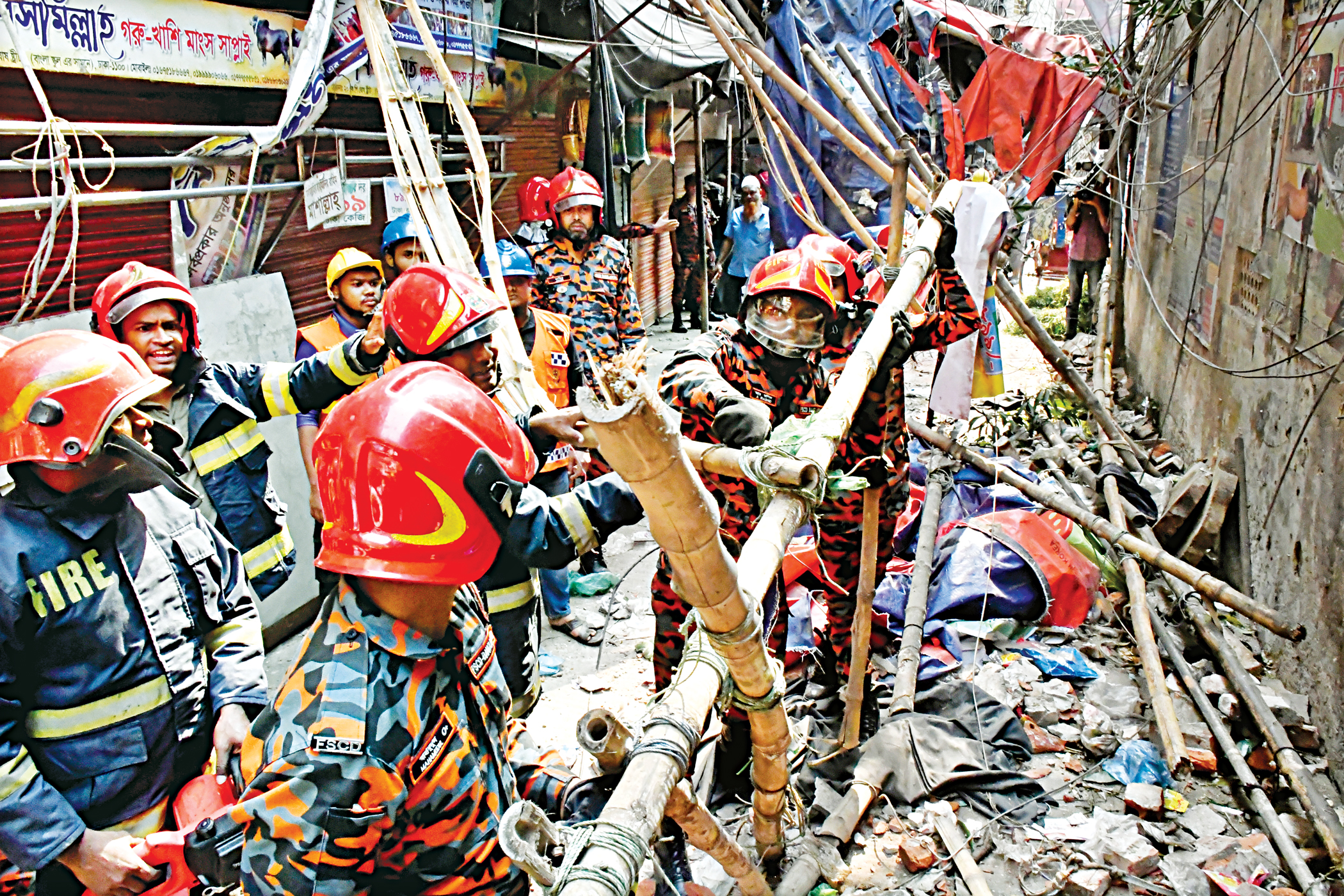
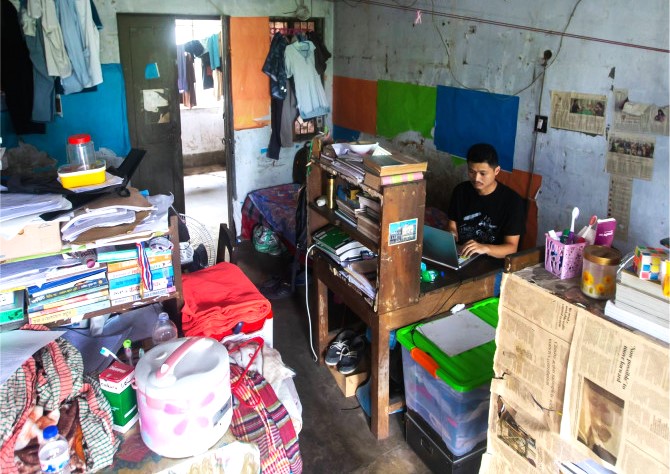
Junayet Rasel, a resident of Surja Sen Hall, DU, described what it felt like from inside. He said that he lives on the fourth floor and that everyone had been in a panic. He believes that the student who jumped from the hall rooftop had not done so without reason. He states, "The upper floors shook the most. Students ran out as fast as they could, but climbing down from that height was not easy, and the stairwell was in chaos. If the building had collapsed, DU might have turned into a mass grave that day."
He also recalled an earlier incident when students of Haji Muhammad Mohsin Hall had taken over the staff quarters. It reflected the deep sense of helplessness students experience when faced with the poor state of public university residential halls. Yet it offered no real, long-term solution. "Haji Muhammad Mohsin Hall was established in 1967, so one can imagine the state of the building. My hall is even older than Mohsin Hall," he adds.
Shamsunnahar Hall is one of the oldest female dormitories at DU. Following independence, it was inaugurated on August 2, 1972. Given its age, it is unsurprising that the condition of the building has already deteriorated significantly. The filler of the expansion joint has detached in the central building of Shamsunnahar Hall at DU, leaving a clearly visible gap. Fariha Naoshin, a resident of the hall, says, "The provost of our hall and an engineering team arrived and took care of it afterwards. However, there are several other cracks in different parts of the buildings," she says. Students are afraid of what might happen if another earthquake of the same strength strikes again.
The Business Standard reported visible cracks in several buildings at Jahangirnagar University (JU), including Shaheed Tajuddin Ahmad Hall, Kazi Nazrul Islam Hall, and Fazilatunneasa Hall. A resident of 21 Number Student Hall, Khalid Hasan Siam, described the conditions of the dormitories. He said that the bathroom ceiling leaks during heavy rain, even when there is no earthquake. The hall was built only two years ago. He added that Shaheed Tajuddin Ahmad Hall, constructed in 2024, has also developed cracks after the recent quake. For him, it is deeply unfortunate that newly built halls are already showing signs of deterioration. "I thought that the newly built halls had structural integrity and could withstand natural calamities such as an earthquake," he states.
The problem is not limited to universities in Dhaka. Rokeya Akhter, a postgraduate student currently living in Deshnetri Begum Khaleda Zia Hall at Chittagong University (CU), says, "This is my first time experiencing an earthquake in my dorm. Honestly speaking, I woke up in the morning from the jolt of the earthquake. I am concerned about the structural conditions of my hall, as there are a few visible cracks on the wall in the students' rooms. Even some students were complaining about the cracks that widened after the earthquake."
She went on to say that the problem is gravely concerning because the hall's weakened structure could allegedly cause serious fatalities at any time, even without an earthquake. The cracks and other signs of wear are always there to remind students of the danger they face every day, and the problem can't be ignored. She urged the university administration to take quick and clear steps to inspect the buildings, to fix any issues, and make sure that students won't be at risk.
Even in newer halls at DU, such as Bijoy Ekattor Hall, a sense of insecurity lingers among students. Shaikh Rafid, a student living in the same hall, explained that, unlike the older, dilapidated halls, there are no risky roofs or visible cracks here. But during the recent earthquake, the building shook so violently that, like many students, he felt unsure whether it could withstand a stronger quake. Small cracks and a few fallen tiles were observed in several places after the tremor. "Because this is a large hall, any accident could have serious consequences," he said. "As far as I know, the building's earthquake resistance has never been properly tested. I urge the authorities to consult experts and arrange a thorough inspection without delay."
The situation carries different layers of concern for female students.
At Ruqayyah Hall, DU, the building gates are locked after 2 AM, leaving residents with no way to exit during the night. Laboo Rakhaine, a student living there, said, "I realised that because the earthquake took place in the morning, students were able to get out, but what if it had happened late at night?" She later noted that the provost announced that the buildings would no longer be locked at night. The fact that it took an earthquake to prompt this decision highlights a serious lapse in emergency planning.
For public universities, students leaping from rooftops is sadly not a new sight during earthquakes. In 2023, students at a DU residential hall jumped from their buildings after a 5.6 magnitude earthquake shook Bangladesh and triggered widespread panic. The incident shows how recurring this fear has become. Many students now feel that leaping from a roof is safer than staying inside a hall that might collapse around them. Their actions speak to a deeper truth about the dilapidated state of these buildings and the lack of trust in their ability to withstand even a moderate quake.
The repeated incidents of students jumping from their halls point to the lack of proper emergency planning. Public universities have no clear protocols for earthquakes or other crises, leaving students to make split-second decisions in panic. When the buildings are already in an untended state, this absence of preparedness can turn a frightening situation into a deadly one.
Each year, a portion of the university's budget is set aside for the repair and maintenance of residential halls. Yet it is difficult to see what meaningful improvements have followed from these allocations, especially when many of the halls are decades old and visibly deteriorating. Students continue to report leaking ceilings, widening cracks, unstable stairwells, and faulty expansion joints. The routine announcements of repair funds do little to reassure those who live in these buildings when the conditions remain largely unchanged. This raises a pressing question about how effectively these resources are being used and why the most urgent structural issues continue to go unaddressed.
References:
The Business Standard (November 21, 2025). JU buildings suffer cracks after powerful earthquake; no casualties reported
Prothom Alo (November 21, 2025). Earthquake: At least 4 injured after jumping from Dhaka University halls
Dhaka Tribune (December 2, 2023). Earthquake panic: DU students jump off from dormitory building
Daily Bonik Barta (November 21, 2025). DU's Mohsin Hall in poor condition after earthquake, students occupy staff building
Azra Humayra is a sub-editor at The Daily Star - Campus
Comments