


ESSAY / The anti-dystopia: Why solarpunk is the future of science fiction
29 January 2026, 16:00 PM
Books & Literature
ESSAY / Symphonic overtures of Nietzsche-Marx-Bakunin in Nazrul’s ‘Bidrohi’
10 January 2026, 00:00 AM
Books & Literature

ESSAY / On mothers, monsters and myths: A look at the Mary before the Mary
5 December 2025, 18:57 PM
Books & Literature

ESSAY / Lessons from our literary girls: Why freedom framed as favour is no freedom at all
3 December 2025, 18:00 PM
Books & Literature

ESSAY / Lessons from our literary girls: Why freedom framed as favour is no freedom at all
26 November 2025, 11:18 AM
Books & Literature

ESSAY / When old patriarchies wear new faces
25 November 2025, 12:57 PM
Books & Literature

ESSAY / Taylor Swift talks back to Shakespeare
19 November 2025, 18:00 PM
Books & Literature

ESSAY / Two awakenings: Reading ‘Dhorai Charita Manas’ and ‘Things Fall Apart’
14 November 2025, 20:03 PM
Books & Literature

ESSAY / Discourse around the Heathcliff casting
2 November 2025, 12:00 PM
Books & Literature

ESSAY / Everyone is migrating to Substack, and you should too
28 October 2025, 13:24 PM
Books & Literature
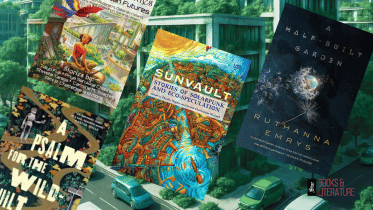
The anti-dystopia: Why solarpunk is the future of science fiction
For years, speculative dystopian fiction has trained readers to expect the worst: scorched planets, collapsing governments, ruthless technologies, and futures where survival is the only victory left. Solarpunk pushes back against that narrative. Instead of asking how the world ends, it asks a far more radical question: what if we fix it? What if cities worked with nature instead of against it? What if technology served communities, not corporations? And what if hope wasn’t naive, but necessary?
29 January 2026, 16:00 PM
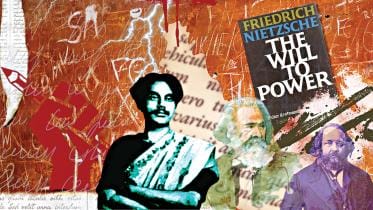
Symphonic overtures of Nietzsche-Marx-Bakunin in Nazrul’s ‘Bidrohi’
Kazi Nazrul Islam’s Bangla poem “Bidrohi” (first published in January 1922), in Bijli magazine during British colonial rule, is more than just anti-imperialist literature—it is a striking philosophical rendition.
10 January 2026, 00:00 AM

On mothers, monsters and myths: A look at the Mary before the Mary
In a wilting summer swelter of 1797 in London, a name was born twice–mother Mary Wollstonecraft wound the clock of daughter Mary Wollstonecraft (Godwin)’s life, for the very first time.
5 December 2025, 18:57 PM

Lessons from our literary girls: Why freedom framed as favour is no freedom at all
Fiction has long chronicled that women have always worked more than what is counted, felt more than what is acknowledged, and lost more than what anyone will ever quantify.
3 December 2025, 18:00 PM
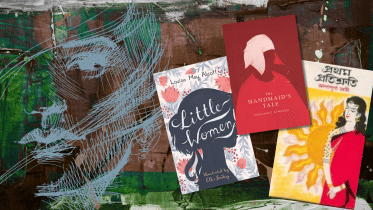
Lessons from our literary girls: Why freedom framed as favour is no freedom at all
If the girls we read about could speak today, their voices would be both sharp and unflinching.
26 November 2025, 11:18 AM
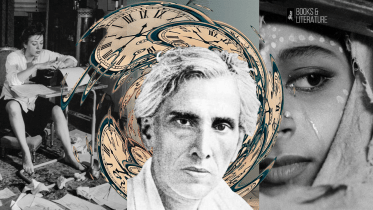
When old patriarchies wear new faces
To understand the deep-seated relevance of this modern debate, we must embark on a journey into the heart of Sarat Chandra’s literature, where these battles first found voice.
25 November 2025, 12:57 PM
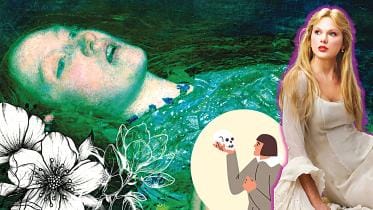
Taylor Swift talks back to Shakespeare
I first heard Taylor Swift’s song “The Fate of Ophelia” on the radio during a road trip to New Hampshire the day after it was released on October 3.
19 November 2025, 18:00 PM

Two awakenings: Reading ‘Dhorai Charita Manas’ and ‘Things Fall Apart’
My readings of the two books—the subject of this write-up—happened to be on two momentous occasions, set two decades apart in utterly contrasting ways.
14 November 2025, 20:03 PM

Discourse around the Heathcliff casting
Heathcliff portrays a very unique strain of masculinity. It is not one that comes from being a man in a patriarchal society, nor from one being amongst majority women.
2 November 2025, 12:00 PM

Everyone is migrating to Substack, and you should too
It’s very likely that Substack will become the “drawing room” of intellectuals and creative elites.
28 October 2025, 13:24 PM

Leonard Cohen: Verses of mercy and turmoil
Before he was “Leonard Cohen—the celebrated singer”, he was “Cohen, the poet”.
22 October 2025, 13:45 PM
Why academic writing deserves to be beautiful
The refusal to write beautifully is often justified in the name of neutrality, of detachment, of discipline.
17 October 2025, 04:45 AM

Babitz vs. Ephron: The cool girls from the coast
Where Babitz is like the intimidating older sister you could only listen to in an obsessed quiet, Ephron feels more like a friend translating my internal monologue into the perfect words.
15 October 2025, 13:45 PM

Cages of flesh and bone: Deconstructing social hierarchies with ‘The Zamindar’s Ghost’ and ‘Shakchunni’
In the mist-covered hills of Ooty and the famine-ravaged villages of Bengal, they speak of ghosts. They whisper of a Zamindar’s phantom haunting a grand manor and a shape-shifting shakchunni preying on a crumbling estate.
8 October 2025, 18:00 PM
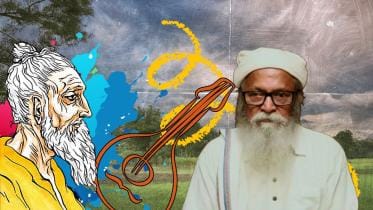
Farhad Mazhar and the Being of Lalon Fakir
Farhad Mazhar has long stood at the unpredictable intersection of poetry, politics, and philosophy.
19 September 2025, 19:10 PM
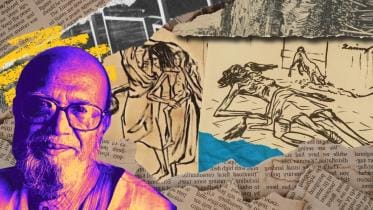
Sonnet of the riverbank: Remembering Al Mahmud, the poet
Some poets arrive like rain on parched soil—needing no defense, only recognition. Al Mahmud (1936–2019) was one of them. And yet, in the usual crookedness of history, we have found ourselves having to defend what should already have been canonised. There was a time—not long ago—when his name uns
29 August 2025, 19:49 PM
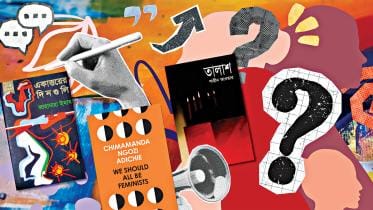
Who is feminist literature for?
For today’s feminists, the focus isn’t just on challenging or breaking social norms, but also on asking, who gets to break these norms? And to what extent?
26 June 2025, 18:00 PM
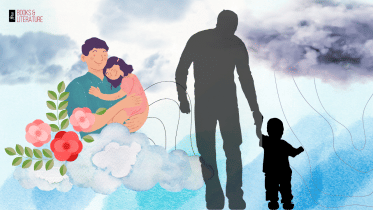
Daddy issues and female writers: About absent fathers in pop culture
In "Daddy," the speaker's inability to speak is not merely personal trauma but a symbol of women's historical silencing.
16 June 2025, 14:30 PM

Panic, puke and Palahniuk
Now, two decades later, the question lingers: Did "Guts" really cause waves of fainting spells, or did the legend grow legs of its own?
14 May 2025, 18:00 PM
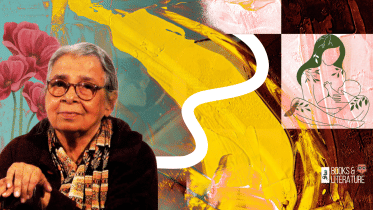
On motherhood and Mahasweta Devi’s ‘Breast-Giver’
I couldn’t help but think of the cultural significance of the word “ma” in our own society today; it is lead-heavy with meaning and so frequently invoked—from commonplace addresses of tender respect for women to motherly depictions of the landscape of Bengal in artworks, songs, and films
11 May 2025, 15:55 PM