


The danger of past tense

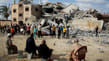
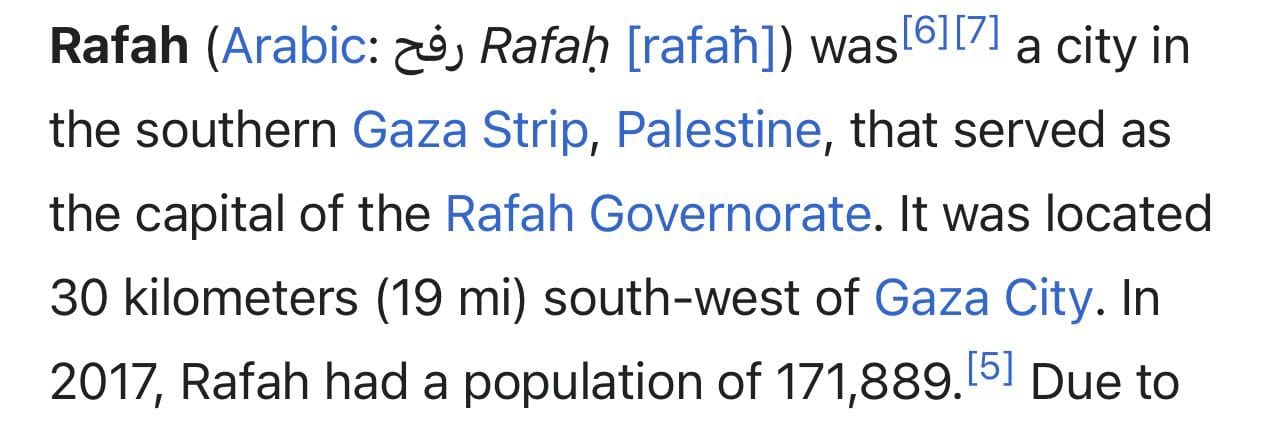
In recent months, entries for several Gaza localities on Wikipedia -- including Rafah, Beit Hanoun, Al Qarya as Suwaydiya, and Om al-Nasr -- have been quietly rewritten. Places once described in the present tense are now labeled as “former” or “destroyed.”
Most notably, the article on Rafah now opens with “Rafah was a city…” and references widespread destruction and changes in control due to the ongoing war. Meanwhile, Al Qarya as Suwaydiya is described as “destroyed in 2024,” and other localities have similar language indicating they “were” places that once existed.
 For all latest news, follow The Daily Star's Google News channel.
 This shift set off conversations across Reddit, Twitter, and other platforms, where users questioned both the accuracy and implications of such wording. One widely upvoted Reddit post pointed out that despite Wikipedia’s phrasing, many people still live in Rafah, and argued that the city should still be described in the present tense rather than as if it no longer exists at all.
Before delving deeper, it is important to acknowledge that Wikipedia allows anyone to edit its pages, and its articles are constantly evolving. Yet its language carries authority far beyond individual contributions.
Encyclopedic phrasing is often treated as neutral fact, consulted by millions worldwide, shaping perceptions of geography, history, and human experience.
So, labelling these cities and villages as “former” may intend to reflect physical destruction or depopulation, but it ultimately conveys something far more insidious: absence and erasure.
On the contrary, the ground reality is that even amid devastation, thousands continue to live in Rafah and Beit Hanoun, while parts of Al Qarya as Suwaydiya and Om al-Nasr remain inhabited, sustaining daily life, schools, markets, and social networks.
To describe these localities as gone is to ignore this continuity of daily existence, the persistence of culture, and the lived experiences of the people who still call these places home.

Some defenders may argue that using past tense is simply factual, reflecting the scale of destruction in Gaza’s cities. Wikipedia editors may view it as a neutral way to indicate that buildings, roads, and other infrastructure have been largely ruined. They may also intend to distinguish between fully abandoned sites and partially inhabited ones.
But the problem lies in normalising the idea that the obliteration of infrastructure equates to erasure of existence -- a dangerous precedent in reporting on conflict.
William Faulkner once wrote, “The past is never dead. It’s not even past.” This is particularly relevant for Gaza, since its cities, though scarred, endure in memory, culture, and daily life.
Historical precedent reinforces the need for nuance. Permanently uninhabited sites, like Pompeii, appropriately use past tense. Cities partially destroyed by war, like Pripyat, Mosul or Aleppo, are described in the present tense while acknowledging damage. Gaza’s localities, despite widespread destruction, deserve the same careful distinction.
Linguistic nuance is also critical for humanitarian accountability.
Presenting Gaza’s neighbourhoods as “former” risks obscuring ongoing needs. Aid, reconstruction, and relief efforts depend on recognition of affected communities. Portraying these localities as erased can desensitise global audiences, diminish attention to aid, and reduce advocacy for those still struggling to survive amid rubble.
So yes, Wikipedia’s past-tense framing must be challenged. Not merely as a semantic quibble, but as a matter of moral and ethical responsibility.
Jannatul Naym Pieal is a Dhaka-based writer, researcher, and journalist. He can be reached at jn.pieal@gmail.com.


Comments