


Stigma, Stress, Sugar Spikes: Diabetes at work is a real thing

Diabetes was once seen as an "old person's disease," but that myth has collapsed. Today, many Bangladeshi professionals in their 20s and 30s are being diagnosed with Type 2 diabetes, struggling to manage it amid long hours, stress, deadlines, and workplaces that leave little room for self-care.
The 2025 World Diabetes Day sub-campaign, "Diabetes and the Workplace," highlights this growing crisis and while offices must adapt, diabetic employees also need practical strategies to stay healthy in environments not built with them in mind.
 For all latest news, follow The Daily Star's Google News channel.
 Younger, busier, sicker
"Diabetes is no longer an old person's disease," says endocrinologist Dr Marufa Mustari. She points to screen addiction, late nights, processed food, and long hours of sitting as the real culprits. A decade ago, her youngest Type 2 patients were in their mid-40s. Now, many are under 30.
Dr Mirza Sharifuzzaman, Associate Professor at Dhaka Medical College, adds that even children and teenagers are now being diagnosed. "Urbanisation, inactivity and poor diets are pushing diabetes into younger age groups."
For young professionals, this creates a perfect storm: long workdays, no breaks, and energy crashes dismissed as "just stress." In reality, these are early signs of metabolic dysfunction.
Stigma in the office
Several doctors highlight one uncomfortable truth: many diabetic employees hide their condition. They fear being seen as weak, "high-maintenance", or less promotion-ready. This secrecy leads to skipped glucose checks, pushing meals, or ignoring symptoms like thirst, sudden fatigue, or blurred vision.
"People overlook the earliest symptoms because they're nonspecific," says Prof Dr Kazi Shahnoor Alam, Head of Nephrology at Mitford Hospital. "Fatigue, frequent urination and infections appear early, but most people dismiss them as stress." That dismissal often delays care. Kidney disease, for example, develops silently. "By the time symptoms show, the damage is often advanced," he warns.
The burnout loop
Diabetes isn't just physical. It carries a heavy mental load. Constant monitoring, meal schedules, medication, and fear of complications weigh on the mind, and workplace pressure pushes many into diabetes burnout, a recognised state of exhaustion. "Stress and poor sleep can significantly worsen blood sugar control," says Dr Mustari. Dr Sharifuzzaman adds that many patients delay care until complications like retinopathy or neuropathy appear because they "don't have time." Burnout at work disrupts glucose control, triggering symptoms that fuel even more stress. It is a cycle that steadily erodes both productivity and mental well-being.
The heart takes a hit too
"You need to do more than exercising for a healthier heart," warns cardiologist Prof Dr A.F. Khabir Uddin Ahmed. Young diabetic professionals who sit all day face increased cardiac risk even if they appear muscular or slim. He emphasises that diabetics must control both blood sugar and cholesterol: "They're interconnected. You can't protect the heart by treating sugar alone."
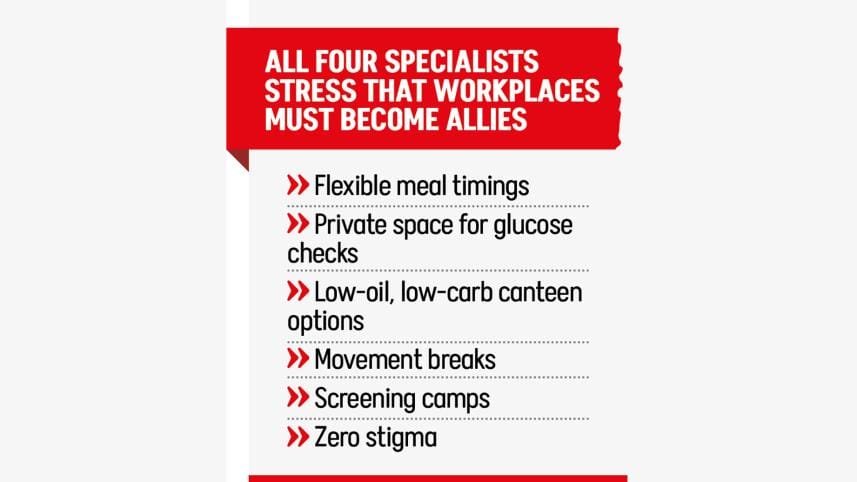
What workplaces must do — and what diabetics CAN do
But diabetic employees also have agency. They can take steps today, even in imperfect work environments:
Protect your meal schedule: Use reminders, carry small snacks, and don't skip meals for meetings.
Move every hour: Refill water, stand during calls, or take the stairs to keep glucose stable.
Monitor regularly: Do discreet glucose checks before long meetings or after stressful tasks.
Prioritise sleep: Poor sleep raises cortisol, which disrupts blood sugar control.
Speak up when needed: A simple disclosure to HR or a supervisor ensures support during emergencies.
The bottom line
Diabetes doesn't stop someone from being productive, creative or high-performing. With the right environment, and the right habits, diabetic employees don't just survive at work, they can truly thrive.
Comments