


Banking through the Ramadan Economy: Commercial Bank of Ceylon PLC
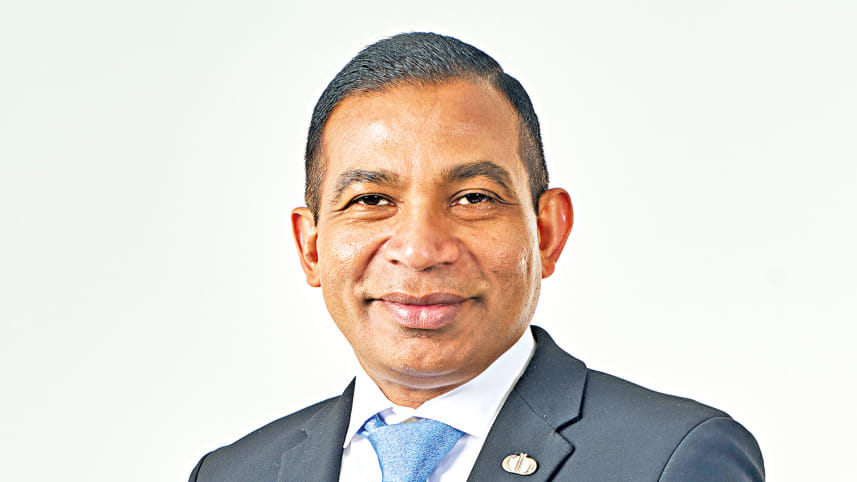
Najith Meewanage
Chief Executive Officer
Commercial Bank of Ceylon PLC Bangladesh Operations
 For all latest news, follow The Daily Star's Google News channel.
 With digital transactions growing at double-digit rates annually, fraud monitoring systems powered by AI-driven anomaly detection and behavioral analytics have become critical components of our risk management framework.
Ramadan increasingly shapes Bangladesh’s annual economic rhythm. Financial institutions are adapting to shifting consumer behaviour, rising digital adoption, and growing expectations around convenience and security. Najith Meewanage, Chief Executive Officer of Commercial Bank of Ceylon PLC Bangladesh Operations, speaks with The Daily Star about how festive spending patterns are evolving and how banks are responding with smarter financial solutions.
The Daily Star (TDS): With Ramadan approaching, how has consumer spending behaviour evolved in recent years?
Najith Meewanage (NM): Ramadan has become a structurally significant economic cycle in Bangladesh. Spending now accelerates several weeks before Eid as households plan budgets more carefully. We also see strong growth in instalment-based consumption for electronics and lifestyle products. For banks, this period brings higher transaction volumes, increased remittance inflows, stronger card usage and rapid digital adoption across customer segments.
TDS: What trends are emerging in the shift from cash to digital payments during Ramadan and Eid?
NM: The transition towards digital payments is now clearly structural. Everyday Iftar and Sehri purchases are increasingly completed through cards, mobile wallets, and QR payments. On the other hand, Eid shopping is moving rapidly to POS terminals and e-commerce platforms. Customers prefer digital channels because they are faster and traceable, also because of cashback and instalment offers.
TDS: How is the bank ensuring smooth transactions during peak Eid demand?
NM: Instant transfers between bank accounts and mobile financial service wallets ensure seamless fund flows during high-traffic periods. Our systems are built for operational resilience, while integrated core banking allows instant processing for Zakat payments and Eidi transfers.
TDS: How are merchants and remittance recipients benefiting from digital solutions?
NM: We are strengthening POS acceptance and evaluating Bangla QR solutions to help small merchants receive payments directly into bank accounts with faster settlement and reduced cash dependency. At the same time, digital remittance integration enables quick crediting of funds nationwide, which is particularly important during Ramadan.
TDS: What safeguards are in place as transaction volumes rise?
NM: As a PCI DSS–compliant bank, we deploy advanced encryption, multi-layer authentication, real-time monitoring and strengthened API security frameworks. Customers also receive instant alerts via SMS, email, and app notifications. With digital transactions growing at double-digit rates annually, fraud monitoring systems powered by AI-driven anomaly detection and behavioral analytics have become critical components of our risk management framework. Transactions are monitored 24/7 with dedicated support by Call Centre to ensure prompt anomaly response.
TDS: How do you see festive spending evolving in the future?
NM: Internet banking transactions grew 47.5% year-on-year in August 2025, rising from BDT 759.39 billion in August 2024 to BDT 1.12 trillion, while card transactions surged 228% over the past five years, according to Bangladesh Bank. Festive spending will become increasingly digital now.
Comments