


The first World Cup final: Two footballs, 300 bayonets and a death threat

The final of the first FIFA World Cup was not just a match -- it was a nerve-wracking battle between two neighboring rivals: Uruguay and Argentina. Held at the Estadio Centenario in Montevideo, on July 30, 1930, that match remains etched in the annals of football history.
At that time, the hosts Uruguay were passing their footballing golden period. Having won consecutive gold medals at the 1924 and 1928 Olympics, they had already proven their supremacy. On the other hand, Argentina was also in excellent form. The team, champions of the 1927 and 1929 South American Championship (now Copa America), had been content with silver at the 1928 Olympics, having lost to Uruguay.
 For all latest news, follow The Daily Star's Google News channel.
 Road to the final
A total of 13 teams participated in the inaugural World Cup, including the hosts Uruguay. The teams were divided into four groups. Group 1 included Argentina, France, Chile, and Mexico. Argentina advanced to the semifinals with three wins. Uruguay was in Group 3, facing Romania and Peru, and topped their group with two victories to also reach the semifinals.
In the semifinals, Uruguay crushed Yugoslavia 6–1 to secure a place in the final. Argentina, meanwhile, defeated the United States by the same margin to reach the title-deciding match.
Dispute over the ball and an unusual resolution
Before the match, an unusual problem arose: both team captains could not agree on which ball to use. Belgian referee Jean Langenus delivered a remarkable decision. It was decided that the first half would be played with Argentina’s ball, and the second half with Uruguay’s.
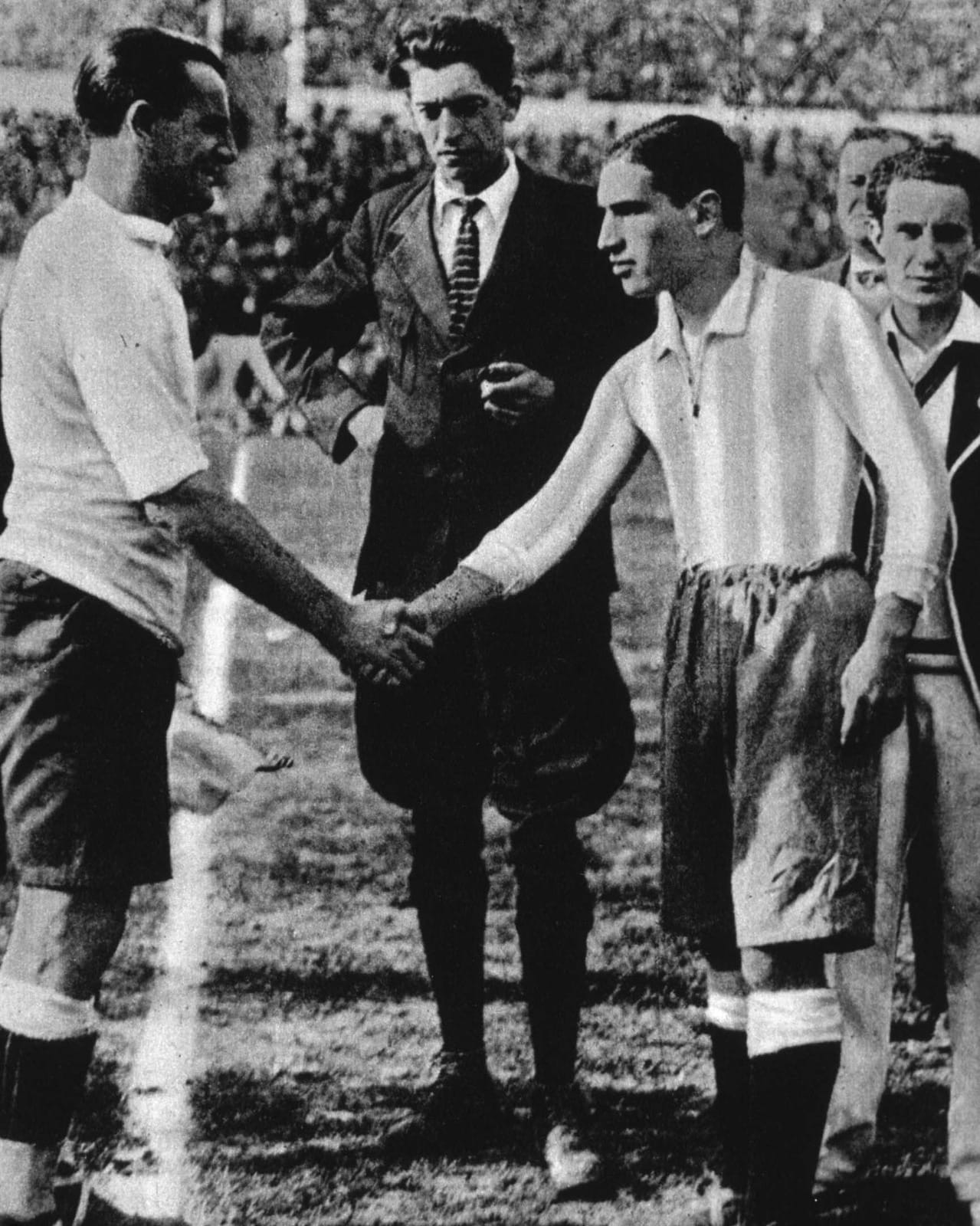
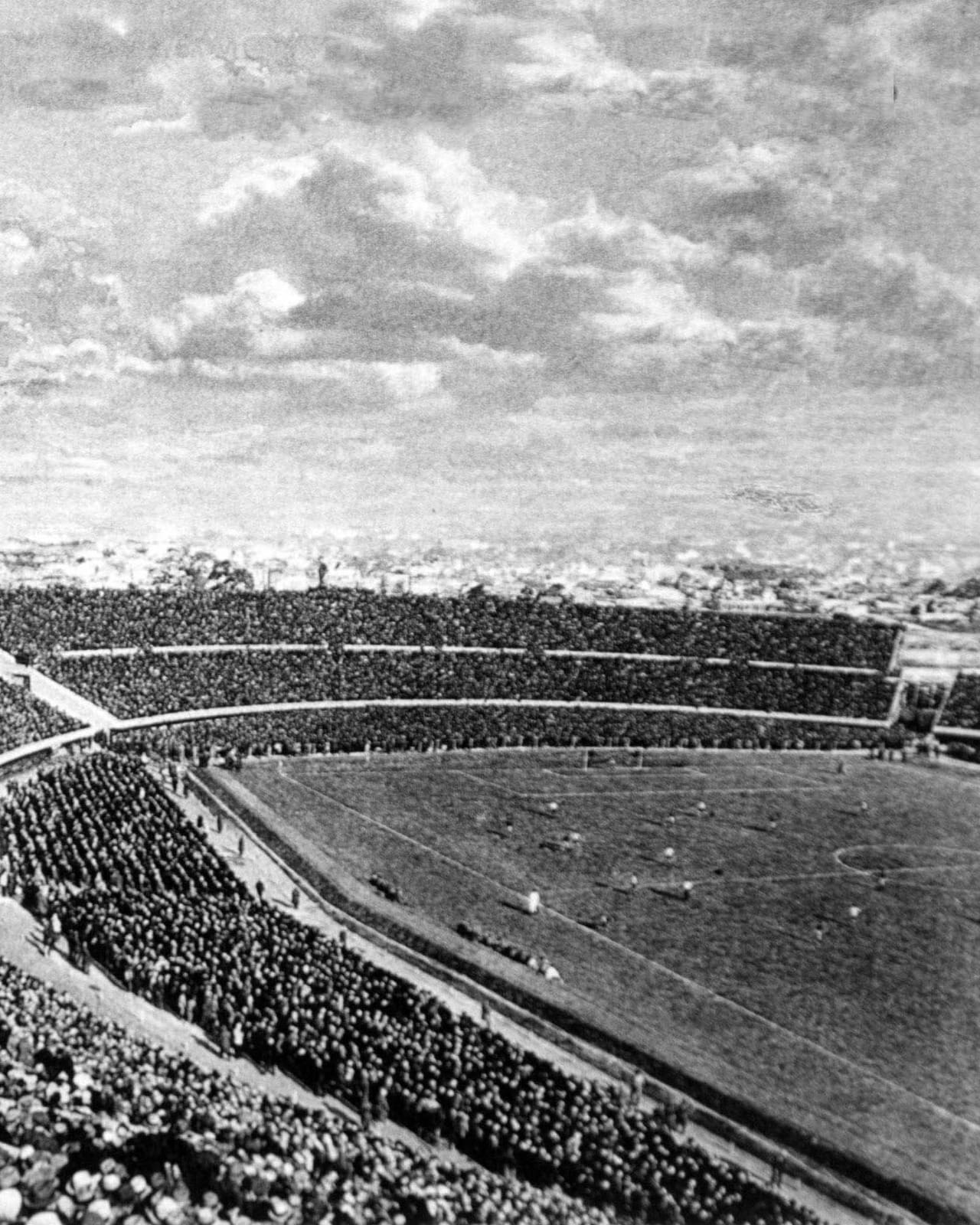
Interestingly, although Argentina led 2–1 in the first half in front of around 69,000 spectators, Uruguay ultimately triumphed 4–2, celebrating their championship. Many believe that this change of ball shaped the course of the match.
The final: Centenario as a battlefield
Before the final, the Argentine players were not in the best mental state. Roberto Cherro withdrew from the match, Adolfo Zumelzu was injured, and even Francisco Varallo, known as “The Little Cannon,” was reluctant to play due to a knee injury.
The most sensational fact was that Luis Monti and his family had received death threats from unknown sources. Rumors suggested that the Italian mafia was behind it. Their plan was for Monti to lose while wearing Argentina’s jersey and, under pressure, join Italian club Juventus while acquiring Italian citizenship. Monti later admitted, “I was very afraid during that match because they threatened to kill me and my mother.”
Within just the 12th minute, Pablo Dorado sparked celebrations in the stands by scoring, putting Uruguay 1–0 ahead. But the joy was short-lived. Just eight minutes later, Carlos Peucelle’s powerful shot was stopped by Uruguay goalkeeper Enrique Ballestero, leveling the score for Argentina. Argentina then increased their attacking momentum, and eight minutes before halftime, Guillermo Stábile (top scorer of the tournament with 8 goals) scored, giving La Albiceleste a 2–1 lead at the break.
In the second half, the scene completely changed, as if the hosts had gained new life. By the 12th minute of the half, Pedro Cea equalized for La Celeste. The stadium erupted in ecstasy. Then, in the 68th minute, Santos Iriarte scored to regain the lead for Uruguay. Finally, in the 89th minute, Hector Castro found the net to secure a 4–2 victory and the glory of lifting the first-ever football World Cup trophy.
From the start, the match seemed like a battlefield. Argentina repeatedly complained about fouls and physical assaults by the Uruguay players. Argentine goalkeeper Juan Botasso said Castro kept hitting him using the remaining part of his right hand, which he had lost part of as a child.
The second half grew even more dramatic. According to Monti, around 300 Uruguayan soldiers stood at the touchline with bayonets raised. In such a terrifying environment, the contrast in playing style between the two teams became evident.
Contemporary newspaper reports suggested that the Argentine players were struck by an unusual lethargy. Their game lacked any offensive intent.
According to El Gráfico, while Uruguay “gave 100%” on the field, Argentina seemed to have “chose not to play”.
Even after many years, Varallo could not accept the defeat. In his view, Argentina lost because their opponents “were bigger bullies and cheats, not because they were better players.” However, Uruguay captain José Nasazzi’s reply was straightforward: “We won the Cup because we put more blood and guts into it.”
Untouched records and the final legacy
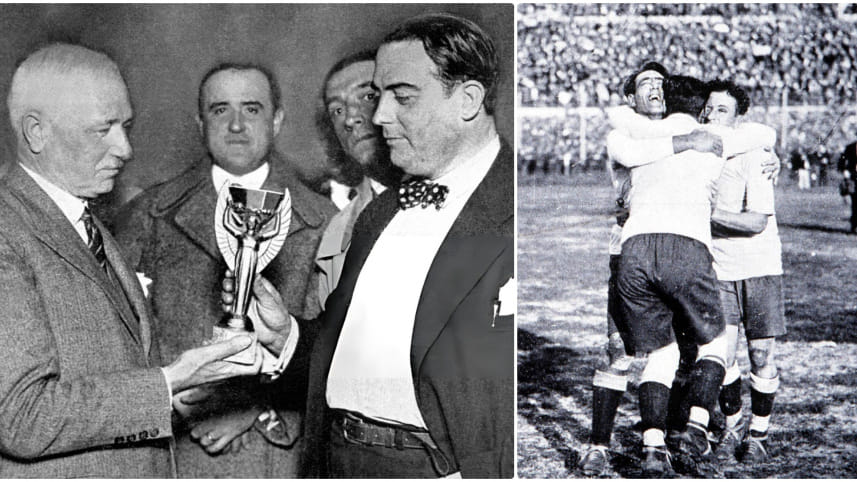
The manager of the World Champion Uruguay team, Alberto Suppici, was just 31 years old at the time. To this day, he holds the record as the youngest coach to win a World Cup. After the final, the then-FIFA president Jules Rimet presented the coveted golden trophy, which was later named after him.
The last surviving Argentine player from that historic final, Varallo, passed away in 2010 at the age of 100. Uruguay’s last representative, Ernesto Mascheroni, had passed away in 1984.
Comments