


A year when hockey carried the flag
In a country where cricket and football command almost every headline, 2025 became the rare year when hockey forced its way into the national conversation. At a time when lesser-known disciplines usually struggle for space, Bangladesh hockey managed to capture attention through performance, organisation and belief -- offering a powerful reminder of the untapped potential that still exists beyond the big two.
The year began under the shadow of turbulence that continued since the July uprising last year, which disrupted almost every sports federation. By the latter half of 2025, however, around 42 national federations were gradually replaced by ad-hoc committees, reviving activities across the board. Preparations were aligned with three major events -- the Youth Asian Games in Bahrain, the Islamic Solidarity Games in Turkey and the South Asian Games in Pakistan next year.
 For all latest news, follow The Daily Star's Google News channel.
 More than 500 athletes from 23 disciplines were enrolled into structured training programmes, many under foreign coaches, and medals followed at the Youth Asian Games and Islamic Solidarity Games. Yet no achievement resonated like what hockey delivered.
When hockey rose high
Bangladesh had already broken new ground in 2024 by qualifying for the FIH Hockey Men's Junior World Cup for the first time. What followed in 2025 was a performance by the under-21 team that reignited belief in a sport long starved of structure.
Under Dutch coach Siegfried Aikman, the juniors produced a spirited World Cup debut in India, finishing 17th among 24 teams and winning the newly introduced Challenger Trophy -- the best finish among the bottom eight. They fought bravely against former champions Australia and two-time runners-up France and ended the tournament ahead of Austria, Korea, China, Egypt and Canada.
Drag-flicker Amirul Islam was the face of that success, ending the tournament as the top scorer with 17 goals, outshining players from established hockey nations. Teammates such as Rakibul Hasan, Din Islam, Mahmud Hassan, Obaidul Joy, Hozifa Hossain, and Mehrab Hossain embodied the unity that surprised even seasoned observers.
The impact went beyond the pitch. Two Bangladeshi umpires -- Salim Lucky and Shahbaz Ali -- also made history by officiating at a World Cup for the first time. Between them, they were involved in 28 matches, handling roles as field, video and reserve umpires. Lucky spoke of learning modern officiating techniques, earning encouraging feedback from the FIH and the pride of hearing "Salim Lucky from Bangladesh" announced before matches.
Yet the euphoria carried a warning. Aikman urged authorities to act swiftly, saying the momentum would vanish without sponsors and government backing within weeks. Bangladesh Hockey Federation (BHF) general secretary Lt Col (Rtd) Riazul Hasan admitted finances remain the sport's biggest obstacle, acknowledging that retaining a foreign coach, keeping the squad together and restarting domestic leagues will be difficult without meaningful support.
For a nation whose last major hockey wave dates back to the 1985 Asia Cup, the Junior World Cup campaign did not just bring a trophy -- it brought attention, belief, and a rare sense that revival is possible.
Arrows hitting new targets
Archery followed hockey in delivering both performance and organisational breakthroughs. Despite the departure of established names such as Ruman Sana, Abdul Hakim Rubel and Diya Siddique to the United States, a new generation stepped up.
Abdur Rahman Alif won gold in the men's recurve individual at Asia Cup Stage-2, while Bonna Akter and Himu Bachhar earned silver in the compound mixed team event. Kulsum Akter Mone added bronze in the women's compound individual category at the Asian Archery Championships.
The biggest moment, however, came off the field when former federation general secretary Kazi Rajib Uddin Ahmed Chapol was elected president of World Archery Asia in Dhaka. By defeating Thomas Han 29-9, Chapol became the first Bangladeshi to lead the continental body, a four-year mandate that places the country at the heart of the sport's regional development.
Glimpses of promise elsewhere
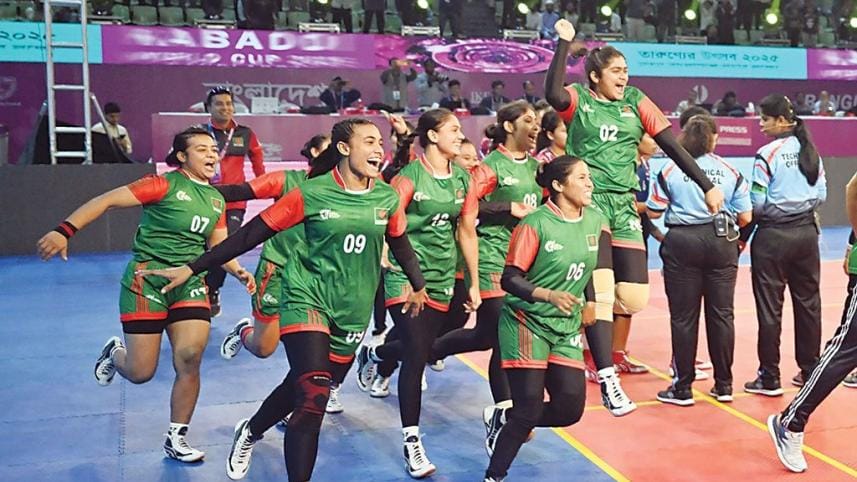
Elsewhere, women's kabaddi claimed historic bronze medals at the Asian Championship and the World Cup in Dhaka, while youth teams got medals at the Asian Youth Games. Tennis produced a landmark when Zarif Abrar became the first Bangladeshi to win an ITF World Tennis Tour Juniors J-30 singles title. Chess, gymnastics, badminton and table tennis also added international medals and milestones, while Bangladesh hosted events in archery, kabaddi, volleyball and chess.
The medal tally may not have been overwhelming, but 2025 made one thing clear: when athletes from so-called secondary sports are given training, exposure, and even limited resources, they respond.
As 2026 approaches, the responsibility now lies with the authorities to ensure that this long-awaited momentum in Bangladesh's lesser-known disciplines does not fade back into obscurity.
Comments