


‘Women’s team needs exposure’

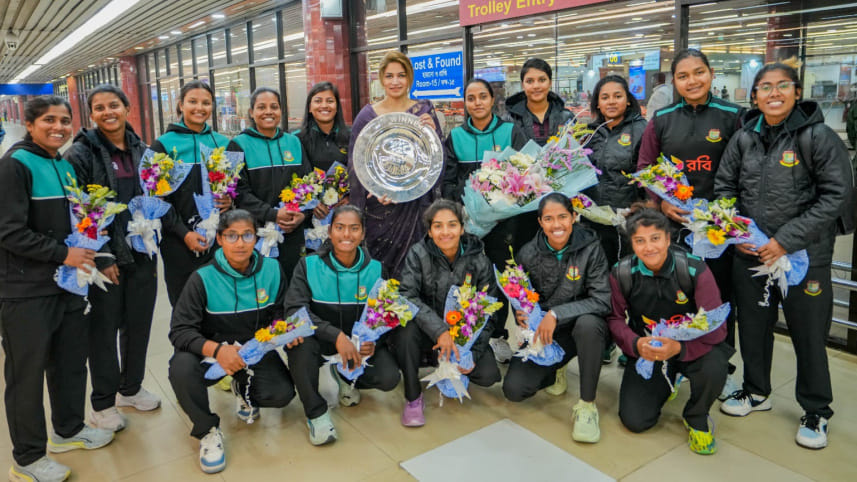
Since her appointment as a Bangladesh Cricket Board (BCB) director in November last year, renowned corporate figure Rubaba Dowla has been actively involved in several key areas of women’s cricket. In an exclusive interview with The Daily Star’s Samsul Arefin Khan, Rubaba shared her experience at the BCB so far, her vision for women’s cricket and various challenges. Excerpts are given below:
The Daily Star (DS): How would you rate your time with the BCB so far?
 For all latest news, follow The Daily Star's Google News channel.
 Rubaba Dowla (RD): The last four months have been foundational. We have prioritised governance structure, formed structured committees, initiated the WBPL [Women’s Bangladesh Premier League], developed clearer planning frameworks, and a defined roadmap for cricket development. I have received excellent support from the BCB team, and I am genuinely grateful for the opportunity to contribute at this level.
DS: What steps are you planning to take to ensure better preparation for the women’s team ahead of June-July’s ICC Women’s T20 World Cup?
RD: We are working toward securing more international matches, and structured high-performance camps. I would like to integrate sports science and fitness. After the women's BPL, we have a home series with Sri Lanka and then a tri-series in Scotland.
Basically, the primary goal is to gather experience. Playing against international players provides a different perspective. The most important thing is confidence and mindset and we tried to work on that. We chose Scotland because the conditions and weather will be similar to England, where we will be playing in the World Cup and will gather experience of playing against foreign players.
DS: The women's team currently has an all-local coaching setup. Is there a plan to bring in foreign coaches?
RD: The board's position is that the women's team is not a secondary priority. The women’s team now needs exposure. While local coaches are showing results, we are looking into what is needed to better equip the players. It's not necessarily true that only foreign coaches are “good” coaches. However, we are looking for specific trainers for areas like batting and will make data-driven decisions to bring in the right support staff within a structured system.
DS: How do you envision the WBPL benefiting women’s cricket in the long term?
RD: The WBPL will Increase match exposure, create financial opportunities, attract overseas professionals, and develop market value for our players. If women’s cricket does not have a commercial engine, it will always remain dependent. WBPL is about independence.
DS: What kind of response have you received for franchise ownership so far?
RD: Several parties have shown interest, including team owners of current men’s BPL franchises. We are waiting for the EOI process to finish [on March 4] to finalise them. We are also discussing about the title sponsorship. I don’t want to see it as a one-off tournament and want this to be a regular tournament that sets a benchmark for professional career paths for female cricketers.
DS: A major concern in the men's BPL has been player payments and integrity. What steps are you taking to ensure these problems don’t occur in the women’s BPL?
RD: Credibility and financial capacity are our top criteria for selecting franchise owners. We are taking franchise fees and security deposits to ensure player payments are guaranteed, just like the men’s BPL. Since we just finished the men's BPL, we have the structure in hand to expedite these processes and avoid gaps.
DS: You’ve selected a slot in April when many international teams are free. What is the response from foreign players?
RD: We are allowing minimum two and maximum three international players per team. We have already received direct emails and interest from players who want to know the schedule. Even some of them talked to our players as well. Once the teams are selected on the 4th, we will start the process for other things.
DS: What initiatives are you planning to strengthen talent development?
RD: For the first time, we are starting a High Performance (HP) programme for the women’s team. About 15 to 20 female players will be there and it will start after the World Cup. They will train to the same standards as the men's HP team, under the same coach [David Hemp]. We are also focusing on decentralization, starting with a setup in Sylhet, and we plan to include girls' cricket at the school level. We are now working to finalise the structure in the next six months.
DS: What do you think about the inquiry committee’s report on Jahanara Alam’s harassment allegations?
RD: This matter relates to incidents alleged to have occurred during 2021–22 period. When this current board received the complaint, we treated it with utmost seriousness and constituted an independent inquiry committee. Following its findings, the board reviewed the report and, where prima facie evidence was established in one of the complaints, we took action within our jurisdiction by banning the accused individual from cricketing activities under the BCB.
Our priority has been to ensure accountability, uphold due process, and reinforce that player safety and dignity are our priorities and we have zero tolerance against any form of harassment.
DS: You are also chairing a new complaint committee. Have you received any complaints?
RD: Yes, we are handling few harassment cases now. We have already started working on some complaints. I am also initiating training on sexual harassment and policies for players, officials, and higher management. I have already talked to few international authorities who provide such training. We have a five-member committee to review written complaints and conduct full investigations where necessary.
DS: What motivates you to continue in this honorary role?
RD: I am looking for impact, not visibility. Having worked with cricket sponsors in the past, I have a soft corner for the sport, but my main goal is to support female cricketers and ensure the women's wing is treated with equal importance and becomes self-sufficient.
DS: You joined the board as a nominee of the National Sports Council. With a new government in place, do you believe you will get to continue in this role?
RD: That decision rests with the appointing authority. For now, my focus is to ensure that the foundations laid in these months translate into measurable long-term outcomes for women’s cricket.
Comments