


The hands that clean, the Harijans we refuse to see

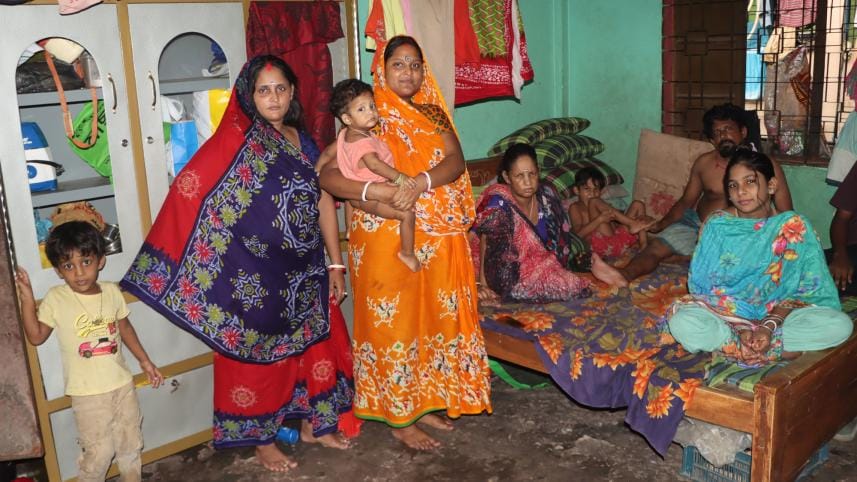
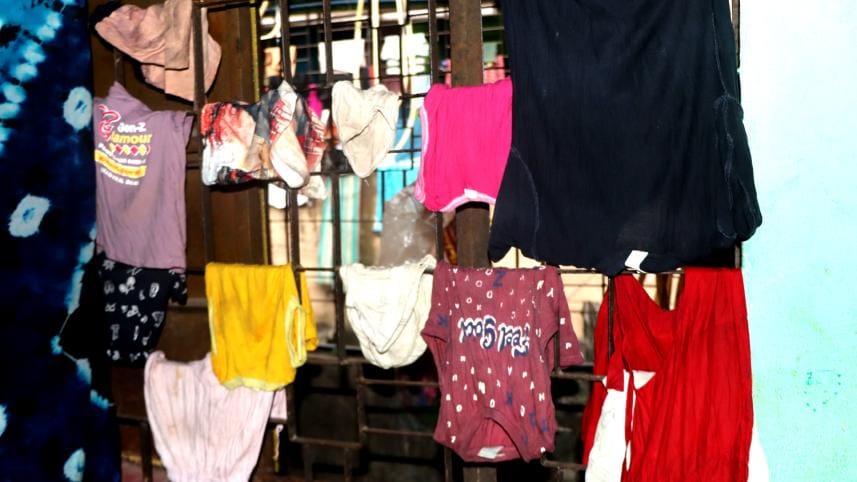
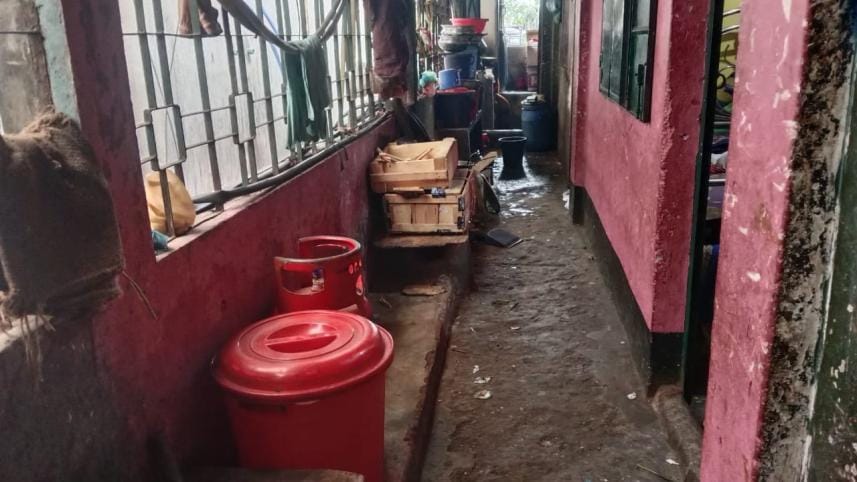
Her name is Rani, which literally means "queen". But her life could not be further from royalty. She lives in a ten-by-twelve-foot, single, damp room at the Harijan Colony in Moulvibazar's Kulaura Upazila. The room, and 199 others, are cluttered with kathas and pillows for sleeping, a rope strung across to hang clothes, and a stove in one corner. Even though the condition is unliveable, Rani Basfor is more concerned about what to cook and feed her family of five.
This is not an isolated case. It is the reality of the Harijan people across the country, who spend hours cleaning civilised cities and municipalities but are forced to live a life not suited to a civilised society.
Rekha Basfor of Moulvibazar's Sreemangal goes to work in the morning after drinking only a glass of water. "I don't have the luxury of having breakfast — a piece of bun and half a cup of tea costs about Tk 15, and my daily wage is Tk 33," she said. For the family, she often cooks only rice and sometimes mashed potatoes. Fish and meat are never part of her meals except on special occasions, when she manages to get some extra money from somewhere.
A Harijan seeking anonymity said that the "extra income" often refers to income from drug peddling, as many of them are being forced into the business to cover the increasing cost of living. Santa Basfor of Sreemangal said, "We cannot afford to put basic food on our table. Proper nutritional food, even some snacks, are nothing but a luxury to us."
According to the Bangladesh Harijan Oikkya Parishad, the lowest municipal salaries are alarmingly low: Shariatpur pays Tk 3,000, Madaripur Tk 2,000, Kumarkhali Tk 1,800, Rajbari Tk 2,300, Akhaura Tk 1,500, Kushtia Tk 2,700, Natore Tk 2,100, Bogura Tk 3,300, and Shanthar Tk 1,200. Sylhet City Corporation offers Tk 3,200 a month (up from Tk 2,200 last July), Sreemangal pays Tk 1,000 (previously Tk 550), while Kulaura provides the highest rate at Tk 3,800.
Sumita Basfor of Sreemangal said, "Our stomachs often remain empty—not because we do not work hard, but because life is unfair. What hurts most is not only the hunger, but the humiliation of being treated as less than human." Rani from Kulaura said, "When we go to hospitals, doctors don't examine us properly, considering us contaminated. Even during pregnancy, it's hard to secure proper treatment or safe delivery."
According to the book Study on the Wages of Urban Cleaners, published by Nagorik Uddog in January 2025, 75 percent of workers do not receive protective equipment, and only 8 percent of workers have access to healthcare. The deprivation hits hardest among the children, as education remains out of reach for most of them. Shabitri, an eleven-year-old student, said she no longer wishes to attend school. "No one in my class wants to sit next to me, and they refuse to talk to me. It makes me feel like never going back again."
Pannanlal Basfor, organising secretary of Bangladesh Harijan Oikkya Parishad, said, "The British brought Harijans to this land over 200 years ago to work as sweepers. Even after two centuries, we are still excluded from being incorporated into the official system." He said that the Harijan community is estimated to number 1.5 million people, living in 124 colonies across 55 districts, and all of them face the same unfortunate conditions.
Sumita Basfor of Sreemangal said, "Our stomachs often remain empty—not because we do not work hard, but because life is unfair. What hurts most is not only the hunger, but the humiliation of being treated as less than human."
According to the book Harijans of Bangladesh, a study conducted by the Society for Environment and Human Development (SEHD) in 2019 estimated that 95.52 percent of Harijan families depend on their work as cleaners, 78 percent of the families are in debt, and only 0.85 percent of the families are under the Social Safety Net Programme (SSNP).
Of the Harijans, only 21.83 percent complete primary education, 5.89 percent complete SSC, and less than 5 percent pass beyond HSC, giving them meagre scope for other forms of work.
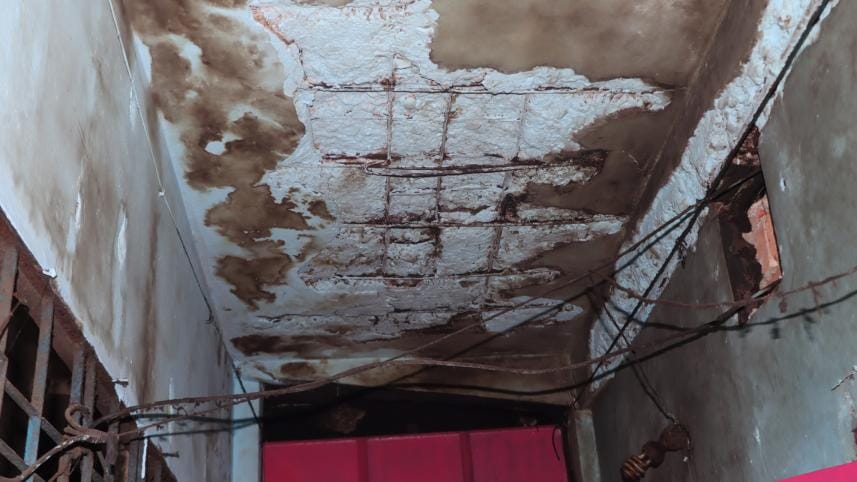
A field-level survey by The Daily Star among 100 Harijans in four colonies in Moulvibazar found that 90 percent are in a debt trap and none has ever owned a piece of land. It finds that the average family size was six, with an average monthly income of Tk 4,500. Their daily diets rely on carbohydrates, with only occasional protein and rare intake of vegetables, fruits, or dairy. There is no change in diet for pregnant women.
According to the study Harijan Communities in Bangladesh and SDG-11: A Critical Analysis (published in May 2025), around 85 percent of Harijans live below the poverty line, where low income severely restricts their access to adequate food, proper nutrition, and healthcare. Living conditions are equally alarming: only 22 percent of households have access to piped water, while 90 percent lack proper drainage systems, creating an environment that worsens disease and undermines nutritional security. Educational and social indicators also reflect deep marginalisation, with 68 percent of Harijans having limited access to education, 74 percent facing workplace harassment, 41 percent experiencing child marriage, and 55 percent reporting domestic violence.
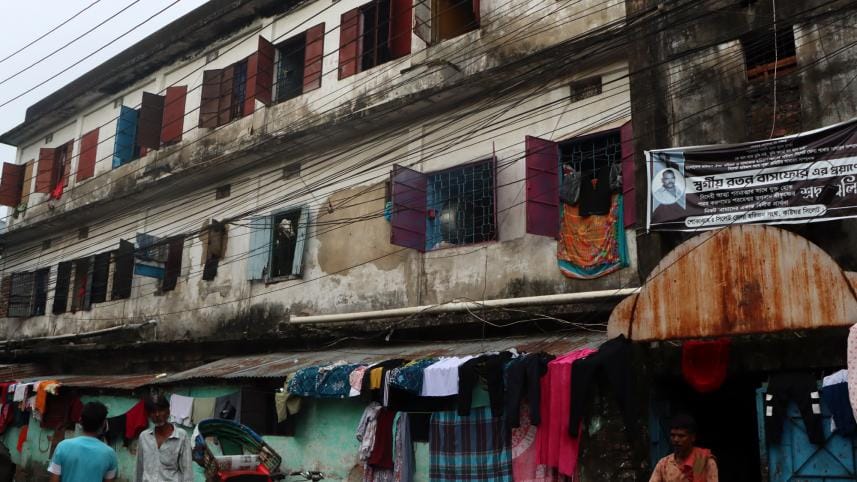
Sagar Basfor, general secretary of the Bangladesh Harijan Rakkha Parishad's Sreemangal Upazila unit, said, "Many journalists, NGOs, and government officials come, capture photos, write stories or reports. They all promise everything, but nothing changes."
Md Shah Jahan, Deputy Director (Beggars, Harijans, Tea Workers and Hijras), Social Security Branch, Department of Social Services, said, "Now only two programmes are being run for Harijans — a scholarship for students and a monthly allowance of six hundred taka for people from the Harijan community above 50 years of age. However, these allocations are given subject to the availability of the budget. We distribute whatever allocation we get."
Supreme Court lawyer and rights activist Sara Hossain said Harijans should unite to achieve their rights and they should not be divided among themselves. A quota system should be maintained to protect the rights of the backward communities.
"To build a society without discrimination, the first task is to establish the rights, stability, and dignity of those who are most oppressed. This is the state's responsibility. The existing organisations working on the rights of Harijans must be organised to fulfil their righteous demands," said noted economist and activist Professor Anu Muhammad.
Mintu Deshwara is a journalist at The Daily Star.
Send your articles for Slow Reads to slowreads@thedailystar.net. Check out our submission guidelines for details.
The Price of Labour
Those who remain invisible in Bangladesh’s political imagination

Interview / “Don’t reduce garment workers to victims—recognise their struggles”

The weight of untouchability: Rabidas community in Bangladesh
Bengali and Non-Bengali Riots at Karnaphuli Paper Mills

What the government can really do for returnee women migrants

Unthreading Partition: The politics of jute sharing between two Bengals

The hands that clean, the Harijans we refuse to see
Bound by dadan
Fish stocks collapse in the Bay of Bengal, fishermen at risk

Shifting lives in the haor / A wetland losing its farmers
